
Sealdah Railway Station: Colonial Infrastructure, Partition, and the Making of Urban Calcutta
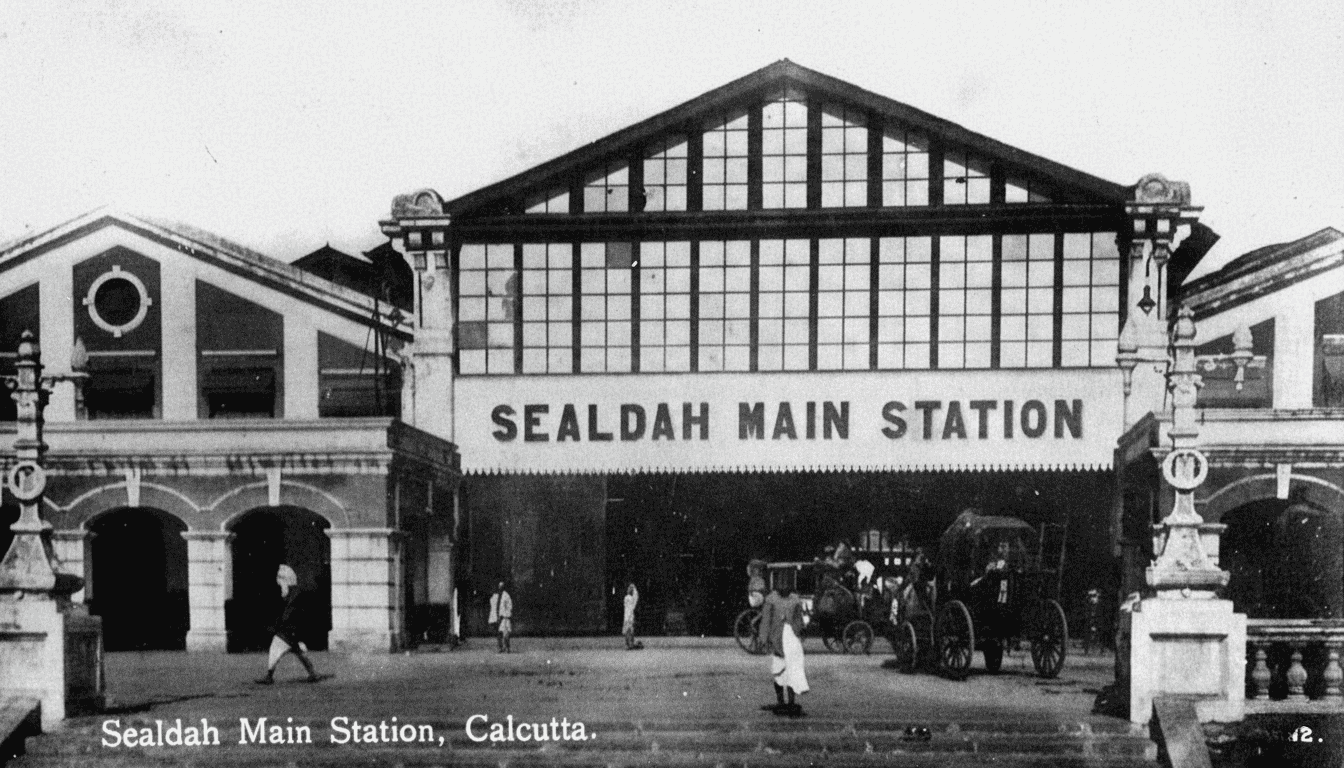
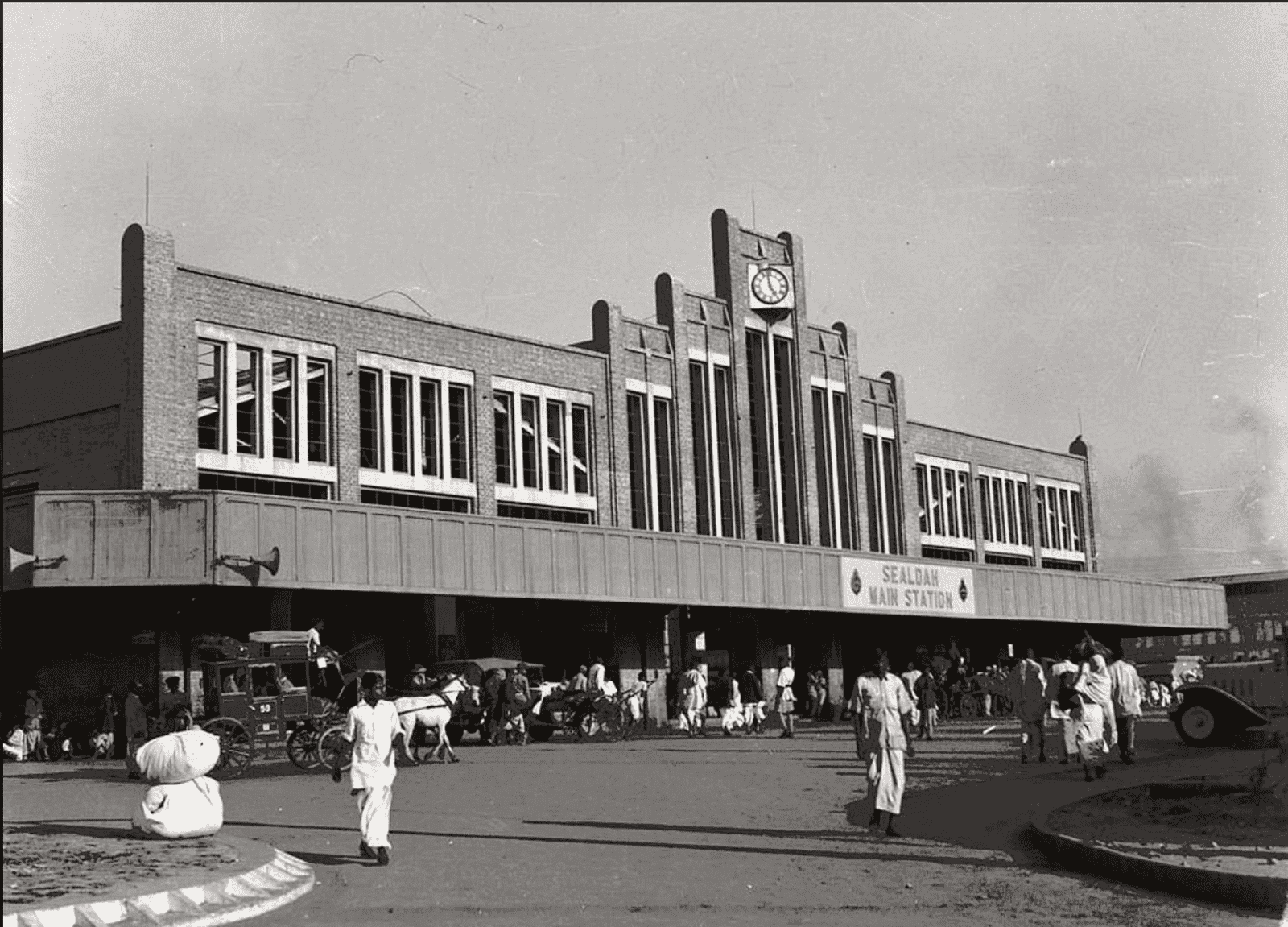
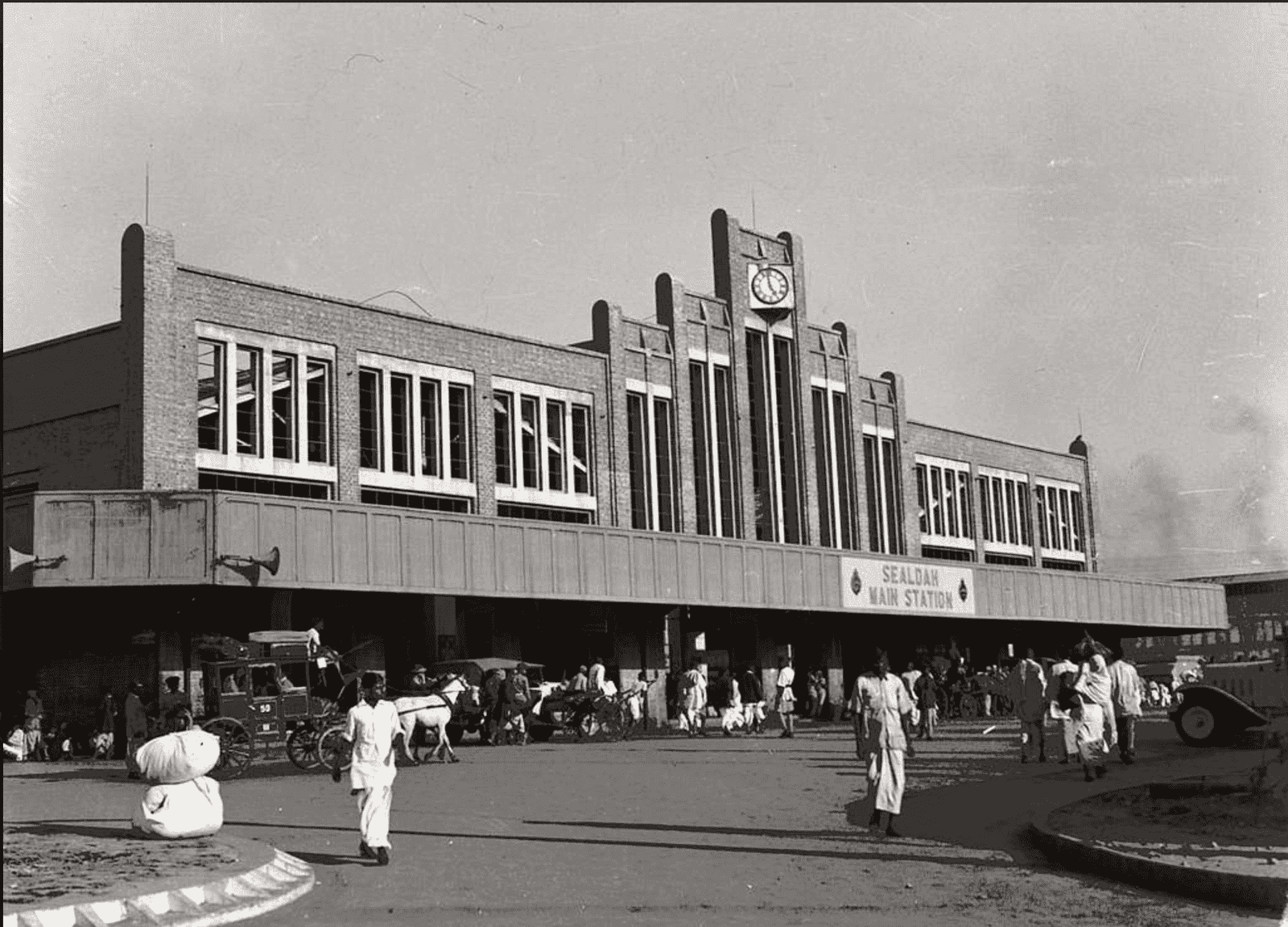
Sealdah Railway Station stands at the heart of Kolkata’s mobility, a layered transportation complex whose history mirrors the evolution of the city from colonial port to post-partition metropolis and contemporary regional hub. Located on the eastern side of central Kolkata and operating within the Sealdah Railway Division of the Eastern Railway zone, the station gathers together lines and services that bind the city to its suburbs, the Sundarbans deltaic region, and cross-border routes to Bangladesh. Its immediate urban context is dense and interlinked: Sealdah lies near the Eastern Railway headquarters and remains functionally and historically entwined with Howrah, Kolkata’s twin city across the Hooghly River. The station’s original main building dates to 1869, designed by Walter Glanville at a time when the newly established Eastern Bengal Railway was pushing rail connectivity across flood-prone terrain and toward the towns and river ports of eastern Bengal beyond the Ganges (Padma). Over time, the Sealdah complex grew to include North Sealdah and, later, the Kolkata Terminal at Chitpur (operational since 2001), accommodating heavy suburban traffic as well as long-distance and international services. Today, Sealdah is known for its extensive suburban operations-over 1,200 daily services-and for facilitating journeys that are economic, social, and cultural in character, from daily commutes to pilgrimages and trade. Its identity is inseparable from both the infrastructural rationality of the colonial rail network and the ruptures and reconfigurations following the partition of India in 1947. Sealdah’s platforms and yards have served as corridors of escape and settlement, sites of civic assembly, and workplaces in their own right. The station’s material fabric, adapted to difficult ground conditions and urban constraints, has remained in dialogue with technology and demand: escalators, automated ticketing, solar energy projects, and integration with the Kolkata Metro since 2022 reflect a long-running pattern of incremental modernization. As such, Sealdah is not only a place of arrival and departure but also a lens on Kolkata’s making-through circulation, disruption, and the continuity of everyday movement.
Historical Background
The origins of Sealdah Railway Station are inseparable from the trajectory of the Eastern Bengal Railway Company, registered in 1857 with a mandate that carried strategic, commercial, and territorial implications: to secure rail links between Calcutta and the towns and riverine landscapes of eastern Bengal beyond the Ganges (Padma). Within five years the railway had advanced into the region, with the first section from Calcutta to Champahati completed in January 1862, extended to Port Canning by May that year, and further to Ranaghat by September. These early alignments established a template for connecting agrarian hinterlands, river ports, and trading centers to the colonial metropolis, while negotiating the geomorphology of wetlands, waterways, and densely populated settlements. The main Sealdah station, designed by Walter Glanville and completed in 1869, was the urban hinge for this outward push, receiving and dispatching traffic that would grow in volume as suburbs expanded and agricultural and industrial markets intensified. In the decades that followed, the station’s network radiated south into the 24 Parganas, in keeping with the suburbanization of that district. Lines to Diamond Harbour, Lakshmikantapur, Canning, and Budge Budge were developed, enhancing commuter and freight flows along the lower delta and contributing to patterns of peri-urban growth. The subsequent emergence of the south section at right angles to the main station reflected not only rising traffic but also an operational response to a constrained urban site. The mid-twentieth century brought a decisive break: partition in 1947 severed direct railway continuities into eastern Bengal while simultaneously thrusting Sealdah into a new role as a refuge and passage point. Platforms that had functioned primarily as instruments of circulation became spaces of provisional settlement for displaced populations arriving from East Pakistan (now Bangladesh), while lines in the north and main sections-towards Ranaghat, Krishnanagar, Naihati, and Bangaon-reoriented movement across a political boundary. Even as geopolitical lines were redrawn, the station continued to serve as a site for political gatherings associated with the freedom movement. In the administrative reorganization that followed, Sealdah Division was formally constituted on 14 April 1952 within the Eastern Railway zone, whose headquarters sit near the station. The division covers a geography framed by the Hooghly River on the west, Bangladesh to the north and east, and the Sundarbans to the south, incorporating both thickly settled suburban districts and ecologically sensitive deltaic zones. The establishment of the Kolkata Terminal at Chitpur in 2001 marked a further adjustment to growing long-distance demand, dispersing traffic and providing additional capacity beyond the historic core. Across these shifts-colonial expansion, post-partition reconfiguration, and contemporary rationalization-Sealdah has remained central to the mobility architecture of Kolkata and its wider region.
Architecture & Design
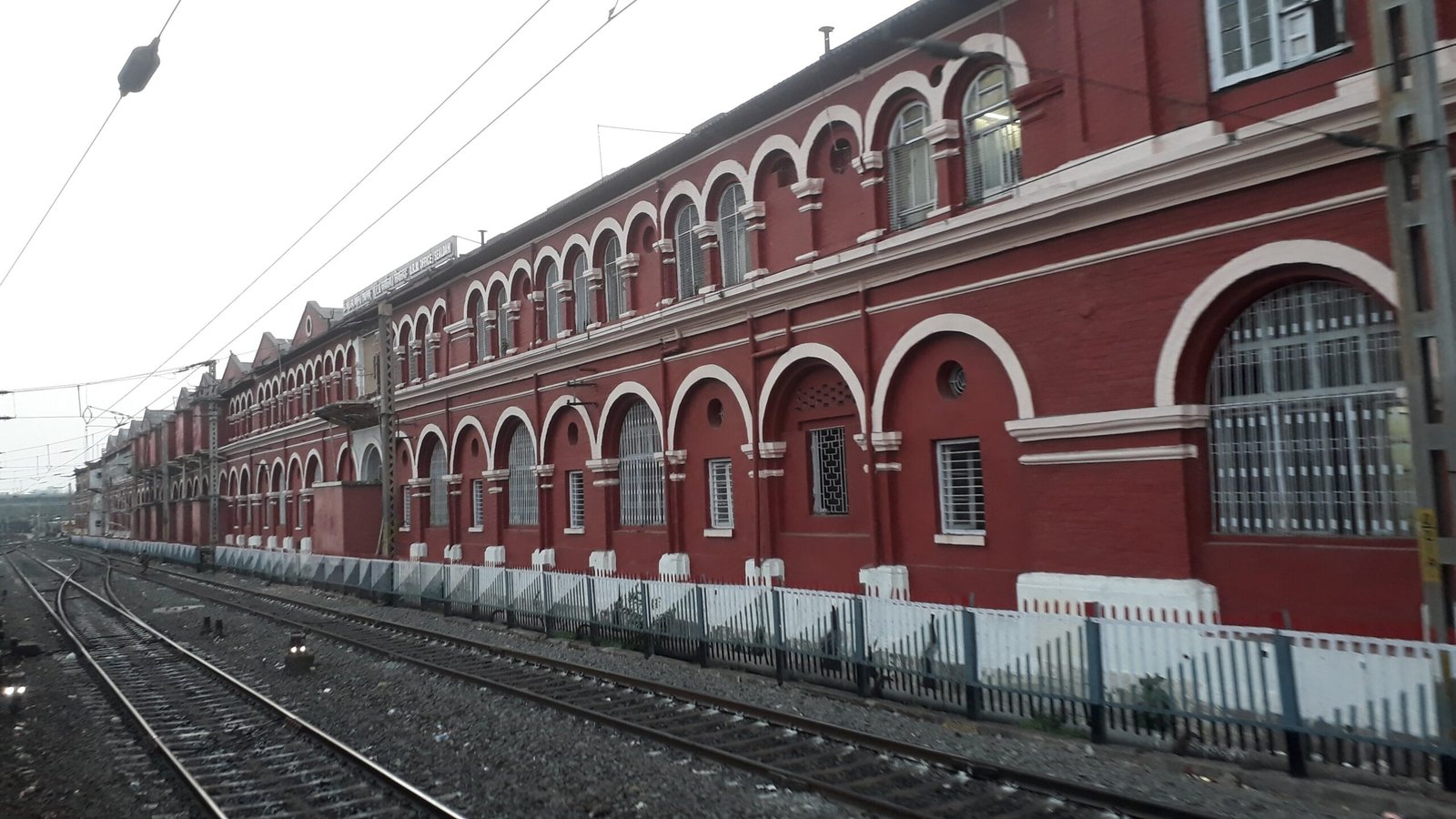
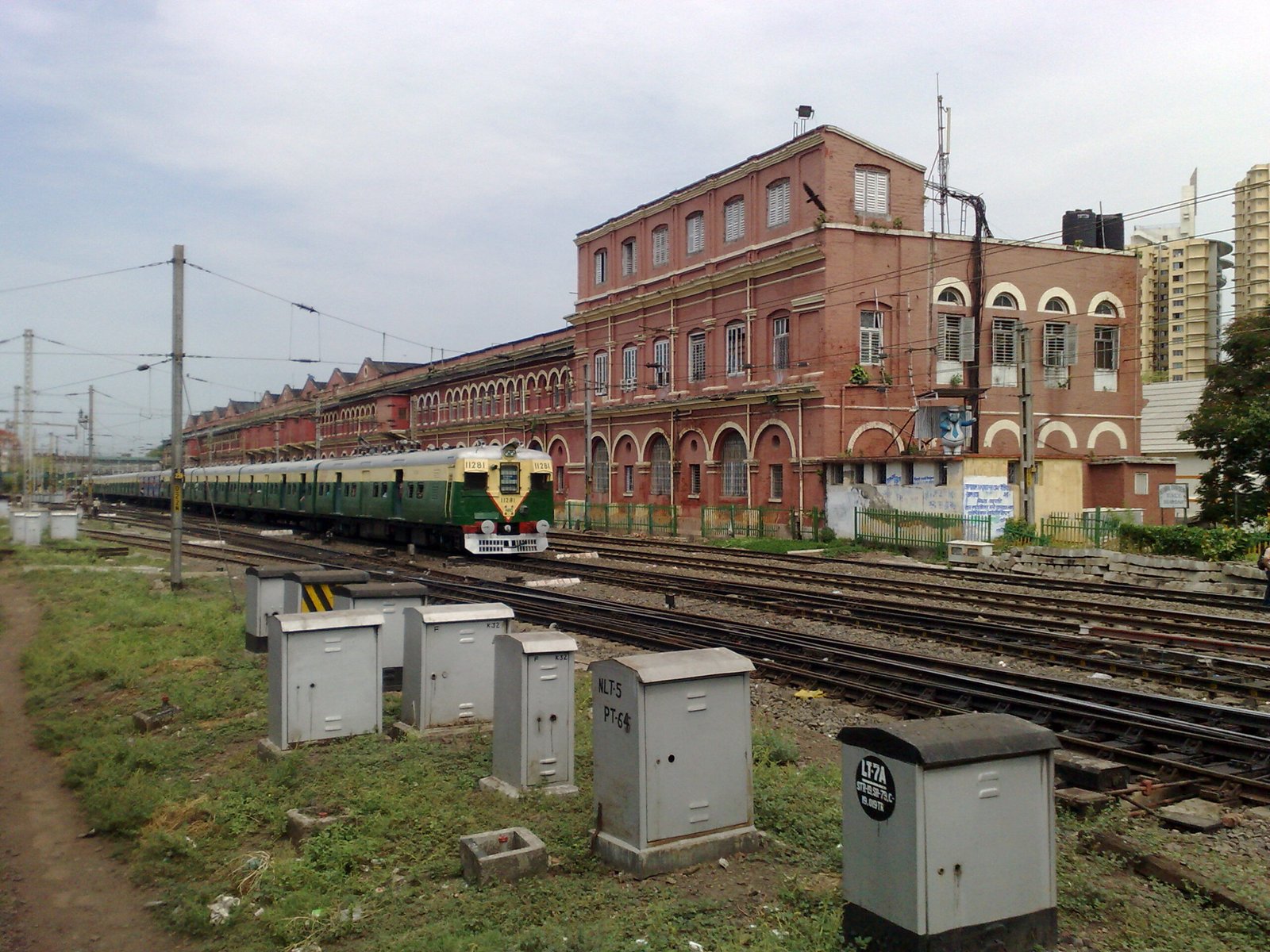
Sealdah’s architecture is defined less by monumental display than by strategic engineering responses to ground conditions and operational complexity. The original station of 1869 had to contend with a substratum marked by underground tanks and pits; abnormally deep foundations, extending to roughly 45 feet below ground level, were required to establish stability. At that depth, the walls were built exceptionally thick-between eight and ten feet-to resist settlement and to distribute loads across unreliable soil. This foundational strategy points to a colonial-era pragmatism: the design was anchored in local knowledge of waterlogged terrain and the need to reconcile a new industrial structure with an already intricate hydrological and urban fabric. Above ground, the station developed as a composite of platforms and yards arranged to separate and sequence flows. The south section’s alignment at right angles to the main station is emblematic in this regard, demonstrating how track geometry and land availability were negotiated to shape circulation patterns and maintenance functions. Over time, the complex adapted incrementally to heavier throughput, scaling its platform lengths and shunting capacity to accommodate longer suburban rakes and more intensive turnarounds. While the historic building embodies the logic of nineteenth-century rail construction in eastern India, the station’s contemporary fabric illustrates a layered modernization. Escalators and automated ticketing systems address vertical movement and queuing, while solar energy projects indicate a gradual insertion of sustainability considerations into a legacy infrastructure. Integration with the Kolkata Metro in 2022 has added a high-capacity, grade-separated mode directly into the station’s operational ecology, enabling transfers that redistribute passenger loads and shorten access times between rail segments and inner-city destinations. This multimodal linkage is supported by wayfinding improvements and interchange zones that privilege functional clarity over stylistic visibility. Though Sealdah handles over 1,200 suburban services daily, its architectural coherence is found in the orchestration of temporal and spatial schedules: a choreography of arrivals, departures, stabling, and crossovers that is more infrastructural than iconic. The resulting environment is neither frozen in colonial time nor wholly transformed by contemporary upgrades; it is a palimpsest where nineteenth-century foundations coexist with twenty-first-century equipment. Information on formal conservation or heritage preservation of the original station buildings is not clearly available, but the trajectory of ongoing expansion suggests a balancing act in which the requirements of safety, capacity, and service quality have guided interventions. In this sense, the design story of Sealdah is one of continuity through adaptation, with engineering decisions consistently made in response to ground realities-geological, spatial, and social.
Social Context & Cultural Memory
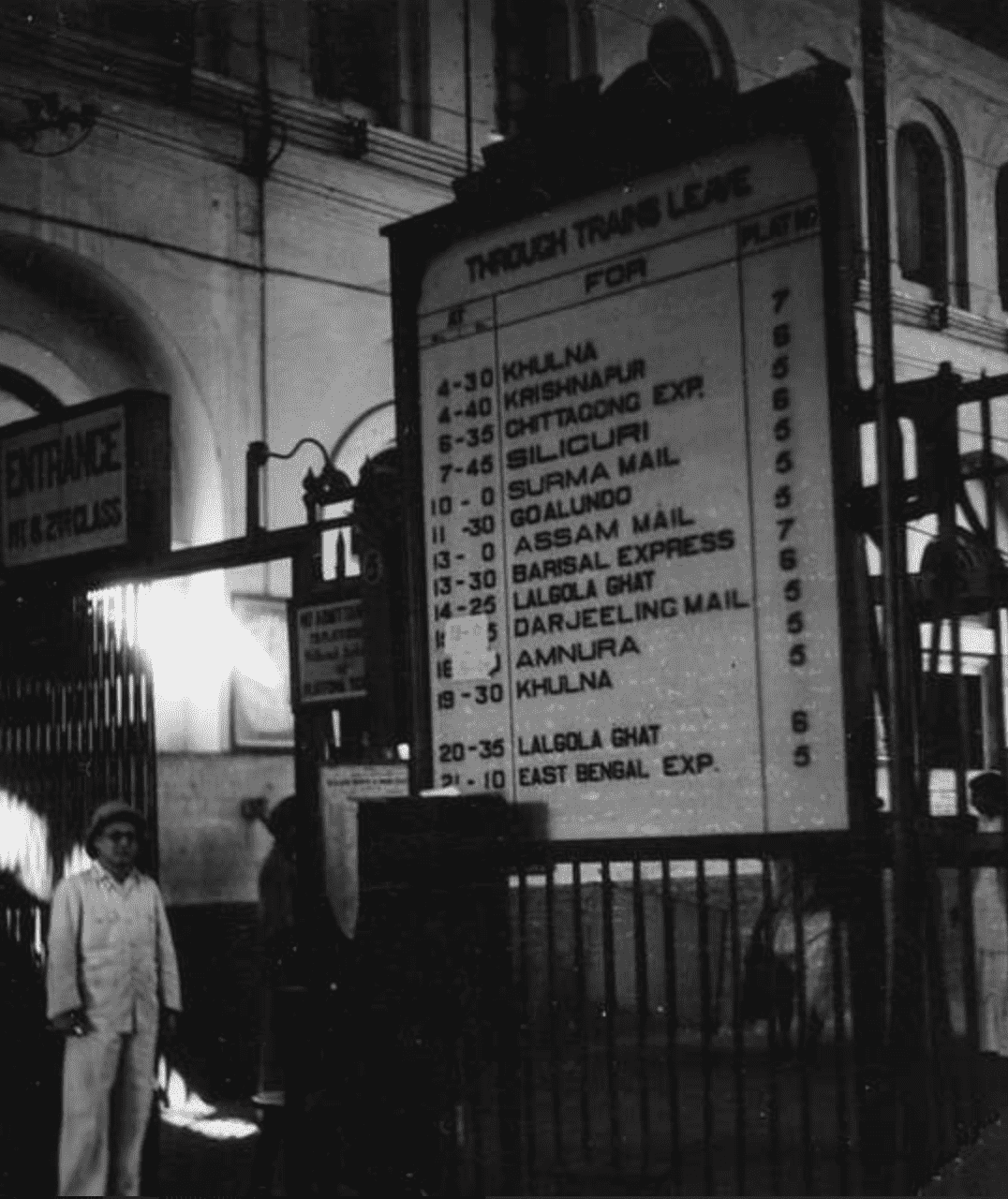
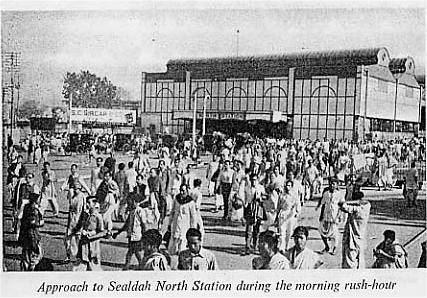
As a railway terminus that became a social threshold, Sealdah holds a distinctive place in Bengal’s collective memory. The disruptions of 1947 gave the station an unexpected role as a humanitarian infrastructure, where platforms and concourses evolved into transitional homes for refugees arriving from East Pakistan. In this liminal space, movement and immobility intersected: the very architecture intended for rapid transit enabled occupies of waiting, and in this waiting, refugees negotiated with authorities and networks of aid to shape their resettlement. This history is part of the station’s intangible heritage, remembered not just as a logistical hub but as a civic arena in which vulnerable populations exercised agency. Earlier, during the freedom movement, Sealdah had also served as a site for political gatherings, underscoring how transport nodes frequently become stages for public life. The longue durée of Sealdah’s social significance extends into the rhythms of daily commuting that have defined Kolkata’s metropolitan culture. The station anchors two principal suburban corridors-North & Main Section to Ranaghat, Krishnanagar, Naihati, and Bangaon; and South Section to Lakshmikantapur, Diamond Harbour, Budge Budge, and Namkhana-structures of mobility that bind work, education, ritual, and leisure into a shared urban time. Around these flows, livelihoods proliferate: hawkers, stall-keepers, and service providers have long formed an ecosystem that depends on-and stabilizes-the station’s constant circulation. This informal economy, while often precarious, contributes to the texture of urban life that many passengers associate with Sealdah’s platforms and underpasses. The station’s reach exceeds the strictly metropolitan. By linking Kolkata to the Sundarbans, Sealdah supports travel tied to eco-tourism, conservation-related work, and delta-based livelihoods; by providing connections to heritage towns like Nabadwip and Krishnanagar, it sustains circuits of pilgrimage and craft that are central to Bengal’s cultural identity. Its international services to Bangladesh, including the Maitree and Bandhan Express, restore an older geography of movement across a border that once fractured regional continuities. In tandem, Sealdah’s proximity to Howrah and the shared networks of road, rail, and river traffic between the twin cities reinforce a metropolitan amalgam that is economic as much as cultural. What emerges from these layers is a station that symbolizes resilience not through abstraction but through the ordinariness of use: its everyday capacity to carry commuters, host trades, and accommodate historical ruptures while continuing to function. The making of urban Calcutta is, in this sense, inseparable from the continuities of Sealdah’s tracks and timetables; the station is both stage and backstage of the city’s collective life.
Visiting / Access Information
Sealdah is among Kolkata’s principal railway gateways, positioned within the Eastern Railway zone and operating at the nexus of suburban, long-distance, and cross-border services. The station complex comprises the original main station, North Sealdah, and the Kolkata Terminal at Chitpur, which has been operational since 2001 to handle expanding intercity demand. As a suburban powerhouse, Sealdah manages over 1,200 daily services, integrating North & Main Section routes toward Ranaghat, Krishnanagar, Naihati, and Bangaon with South Section lines to Lakshmikantapur, Diamond Harbour, Budge Budge, and Namkhana. International connectivity includes services to Bangladesh such as the Maitree and Bandhan Express, embedding Sealdah within a transnational mobility corridor. Multimodal access is supported by integration with the Kolkata Metro since 2022, enabling efficient transfers between suburban rail, intercity trains, and urban transit. Within the station, infrastructure upgrades-escalators, automated ticketing, and other passenger amenities-are designed to manage high volumes and improve circulation. Sealdah functions as an origin point for journeys to cultural and natural destinations across West Bengal, including the Sundarbans, Murshidabad, Dakshineswar Kali Temple, and historically significant sites within Kolkata. It serves a very large user base, with access available to millions of daily passengers, and acts as a conduit for routine commuting, regional trade, and leisure travel. Owing to its location near the administrative center of the Eastern Railway and its close relationship with the broader transport web of Kolkata and Howrah, Sealdah is well-placed for onward travel across the metropolis and beyond. While the station’s role continues to expand with urban growth and system upgrades, its utility rests on dependable schedules and clear interchange points, making it a consistent and central point of access to the city’s wider social and cultural landscapes.
Conclusion
Sealdah Railway Station encapsulates the negotiation between infrastructure and society that has shaped Kolkata’s historical development. Conceived in the context of the Eastern Bengal Railway’s expansion, the station fused nineteenth-century engineering with the spatial and hydrological particularities of its site, anchoring its superstructure in deep foundations and thick load-bearing walls. Its trajectory since then has been marked by adaptation: suburban expansion into the 24 Parganas prompted new alignments and yards; partition reoriented flows and transformed platforms into makeshift shelters; post-independence reorganization formalized the Sealdah Division within a region that stretches from the Hooghly to the Sundarbans and the border with Bangladesh. In the present, Sealdah’s identity lies in its capacity to connect: over 1,200 suburban services daily knit together neighborhoods, towns, and workplaces; long-distance and international trains carry passengers across states and borders; integration with the Kolkata Metro embeds the station within the city’s evolving multimodal framework. The social imprint of these connections is deep-sustaining livelihoods in and around the platforms, enabling cultural itineraries to places such as Nabadwip and Krishnanagar, and supporting economic activity linked to trade and the Sundarbans. Although formal conservation details for the original station building are not clearly available, the cumulative record of careful engineering and pragmatic modernization suggests a living heritage approach in which serviceability and historical continuity coexist. Sealdah’s story is not one of a single architectural gesture but of infrastructural endurance: a system built to respond to ground conditions and social needs, and repeatedly reassembled as those conditions and needs shifted. In that layered resilience, the station remains integral to the making of urban Calcutta-a place where the material lines of rail meet the more elusive lines of memory, migration, and daily time.