
Kali in Indian Art: Iconography, Power, and the Visual Language of the Goddess
Kali stands among the most potent figures in Indian art, her presence etched across temple walls, preserved in museum collections, and sustained in living worship. As a central member of the Mahāvidyās-the cluster of goddesses consolidated in eastern India between the ninth and thirteenth centuries-Kali’s visual language embodies paradox: ferocity and beneficence, cosmic dissolution and creative potential, orthodox ritual and heterodox esotericism. Far from an isolated figure, she appears within a dense constellation of beliefs, practices, and images that link Śaiva and Śākta Tantras, Vajrayāna Buddhism, Vaiṣṇava bhakti, and Brahmanical Purāṇic traditions. This article traces how Kali’s iconography took shape within this broad landscape, how artists and patrons gave material form to her power, and how her image continues to organize sacred geographies and cultural meanings.
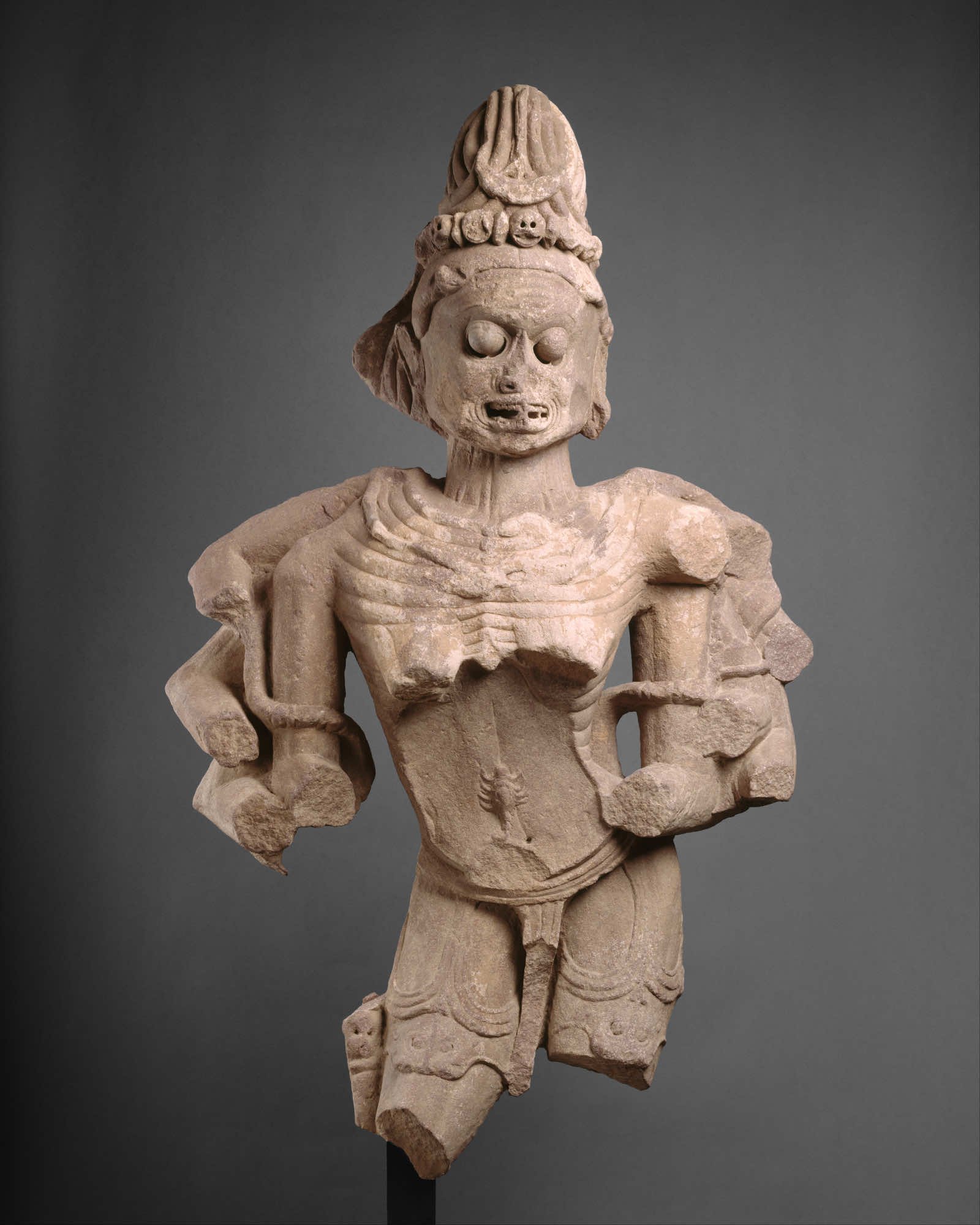
To attend closely to Kali in Indian art is to recognize the historical processes that produced her recognizable forms, the ritual and textual systems that authorize her worship, and the shifting social contexts that have reframed her significance. From the early medieval sacralization of sites such as Nīlācala Hill in Kāmarūpa to the interpretive currents of colonial Bengal and beyond, Kali’s image operates as a complex sign-at once local and transregional, iconic and aniconic, terrifying and protective. The visual field around the goddess is neither static nor monolithic; rather, it reflects centuries of synthesis, negotiation, and adaptation that have bound the goddess to place, polity, and personhood.
Historical Context
The Mahāvidyās emerged as a distinctive group in early medieval eastern India, with their consolidation occurring roughly from the ninth to the thirteenth centuries. Within this horizon, multiple religious strands intertwined: earlier yoginī worship, the cults of Kālī and Tripurasundarī, Śaiva and Śākta Tantras, Vajrayāna Buddhism, Vaiṣṇava devotional currents, and Brahmanical Purāṇic frameworks. Early textual enumerations of the goddesses vary, and only by the twelfth century does the group stabilize into the recognized set of ten (Daśamahāvidyās). This formation did not simply supplant earlier practices; it reframed and absorbed them, carrying forward continuities while generating new patterns of iconography and ritual. The result was a shared repertoire that could accommodate both benign, auspicious forms and fierce, liminal presences within one overarching Śākta vision.
The sacred landscape that nurtured this consolidation centered on places such as the Nīlācala Hill in Kāmarūpa (modern Assam), where the goddess Kāmākhyā presides. Shrine complexes and pilgrimage at such sites articulated the Mahāvidyās not only as theological constructs but also as spatial and ritual orders. The cult drew on and transformed earlier mātṛ and yoginī groupings, integrating them into Brahmanical and Tantric cosmologies. Royal patronage-by dynasties including the Pālas, Mlecchas, Koches, and Ahoms-played a significant role in sustaining these developments, underscoring the political valences of goddess worship in the Brahmaputra Valley and related regions. Through such support, temples, sculptures, and ritual systems were endowed, creating a material and institutional framework for the continued elaboration of Kali and her sister goddesses.
These developments were embedded in broader socio-religious changes. From the Gupta period onward, the expansion of agrarian settlements and the spread of Brahmanical influence in eastern India encouraged the assimilation of local and tribal goddess traditions into Śākta forms. The resulting syntheses forged new identities for cults such as that of Kāmākhyā, aligning them with Tantric ritual while integrating them into Puranic narratives. Political authorities in Kāmarūpa and Bengal employed goddess worship not only as an instrument of personal devotion but also as a means of legitimizing and consolidating power. Over time, especially from the twelfth century onward, Brahmanical social structures, including caste hierarchy and Vedic ritual orthodoxy, increasingly shaped the contours of Tantric practice and Mahāvidyā worship, even as heterodox elements persisted within specific lineages and locales.
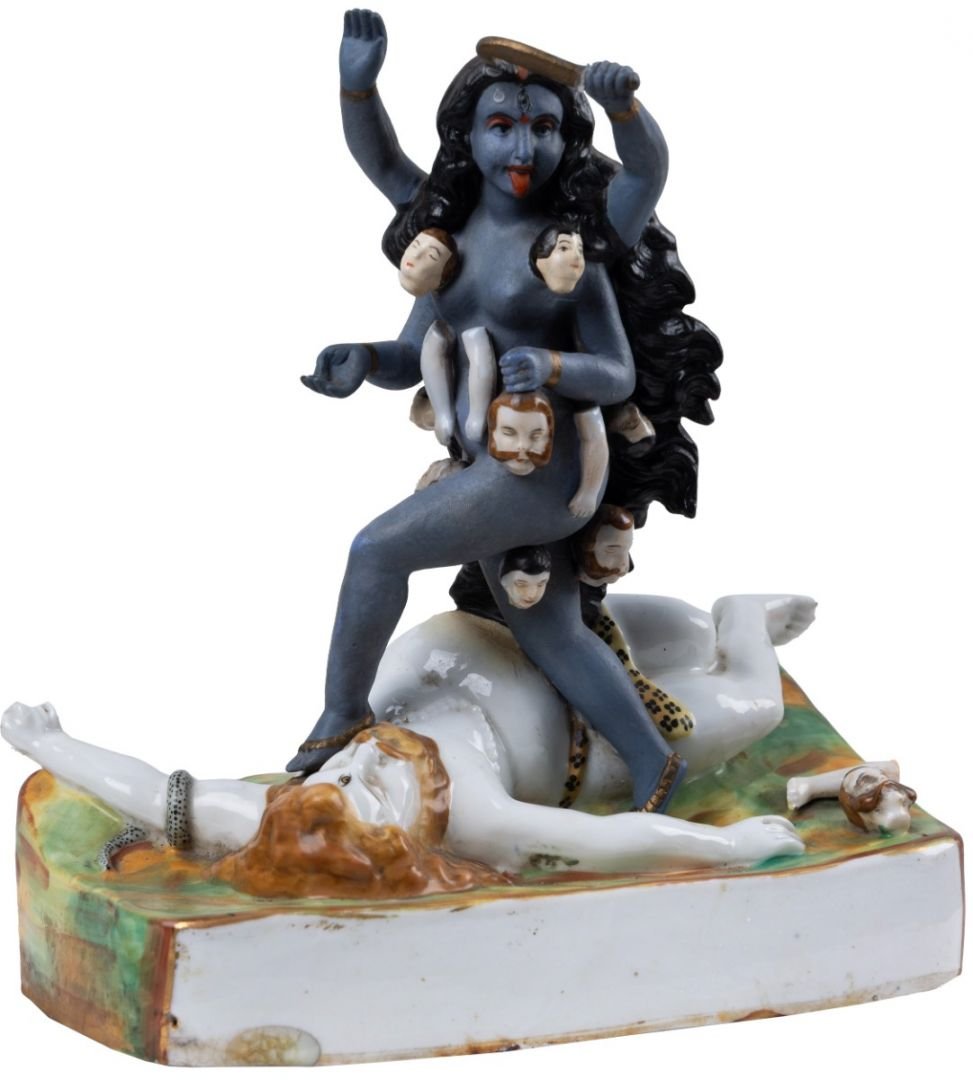
Past the medieval period, the cult of the Mahāvidyās continued to evolve. Literary figures and ritualists such as Kṛṣṇānanda Āgamavāgīśa and Pūrṇānanda Giri composed influential texts, while saint-poets like Rāmprasād Sen helped disseminate Kali devotion through vernacular idioms. Later, in colonial Bengal, Kali and the Mahāvidyās were reinterpreted as symbols of cultural identity and resistance, transforming the goddess’s imagery into a visual and devotional touchstone for communities negotiating modernity and political upheaval. The enduring vitality of these traditions is evident in the persistence of worship practices across eastern India and in transregional adaptations, illustrating the long arc of the goddess’s visual and ritual lives.
Stylistic Characteristics
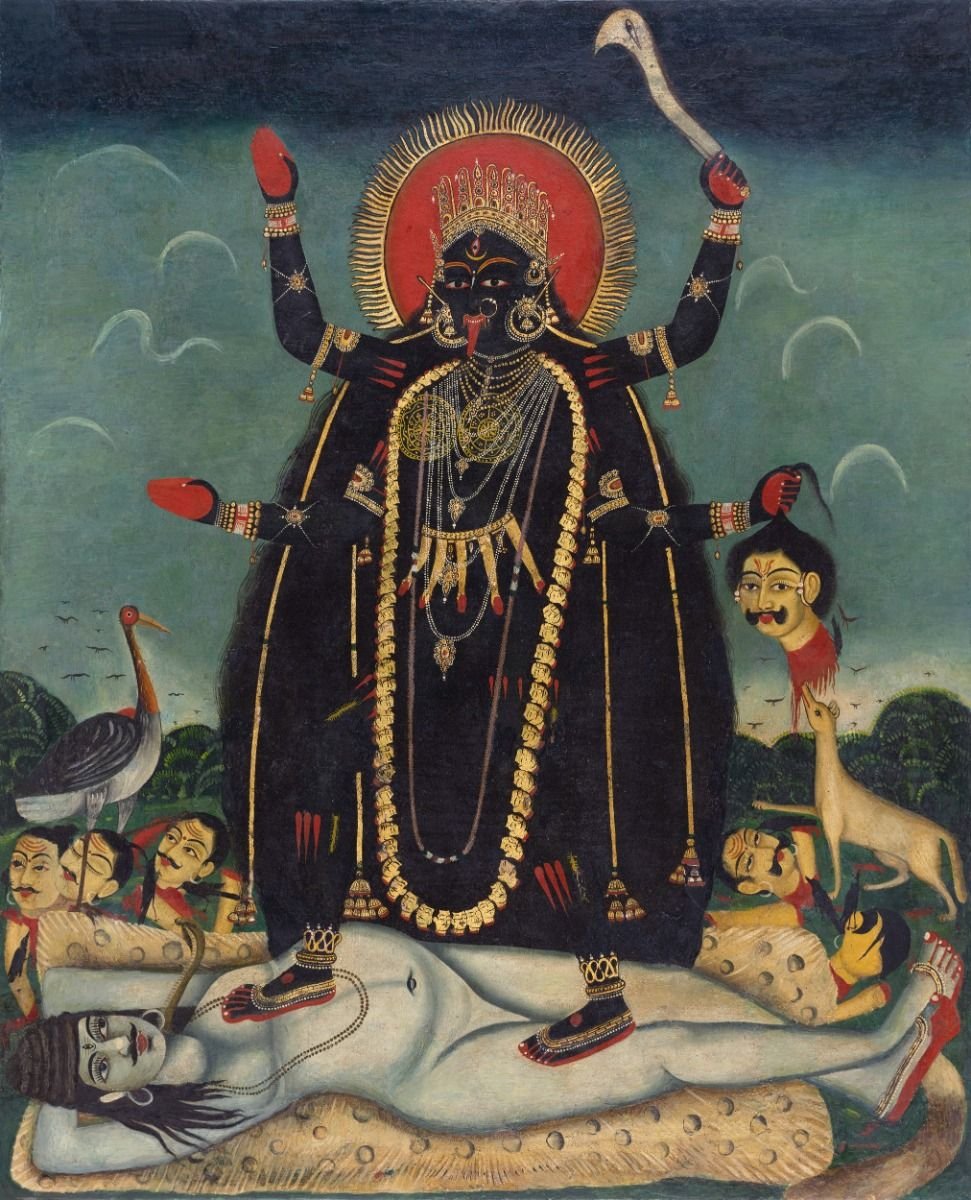
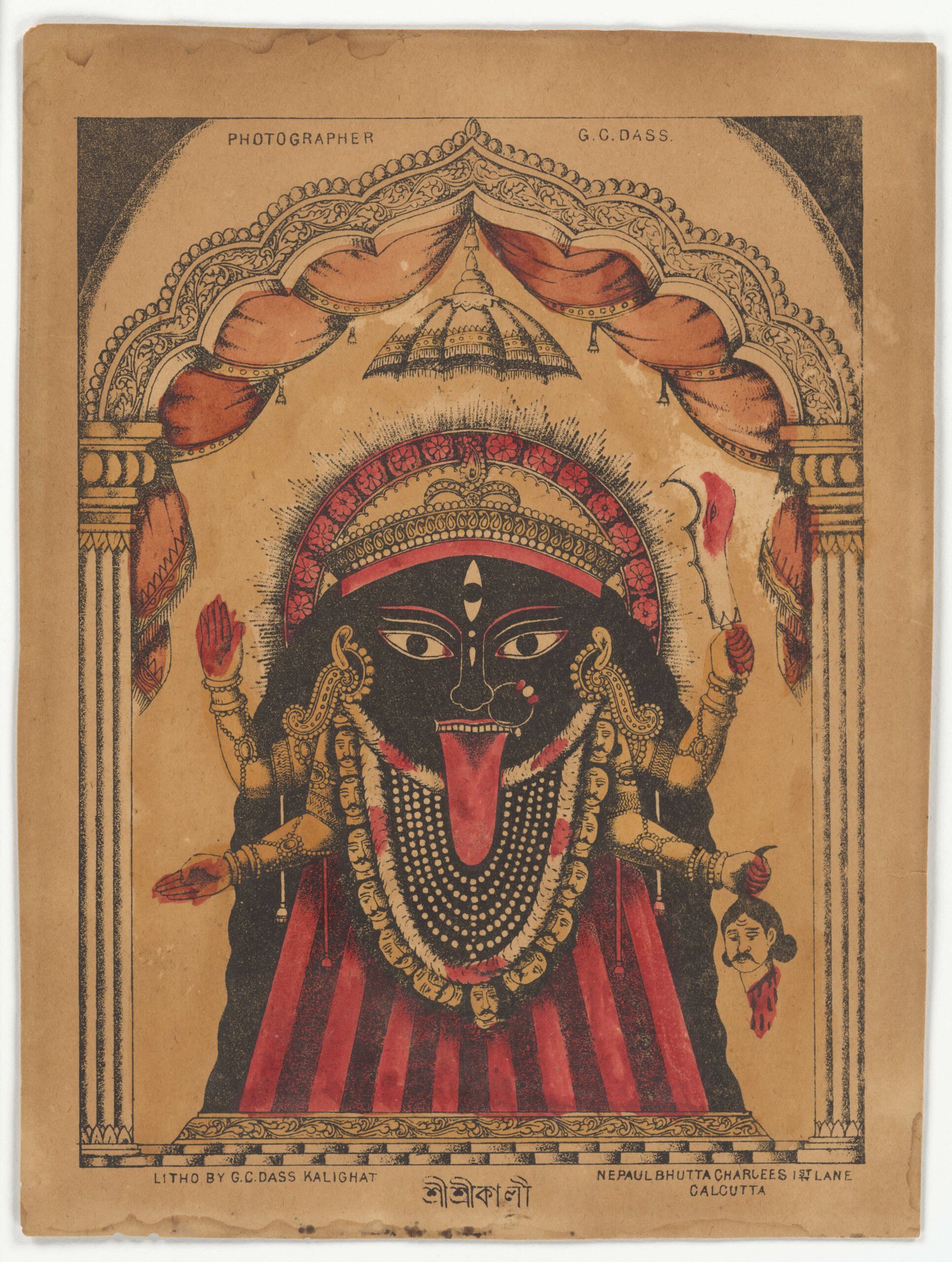
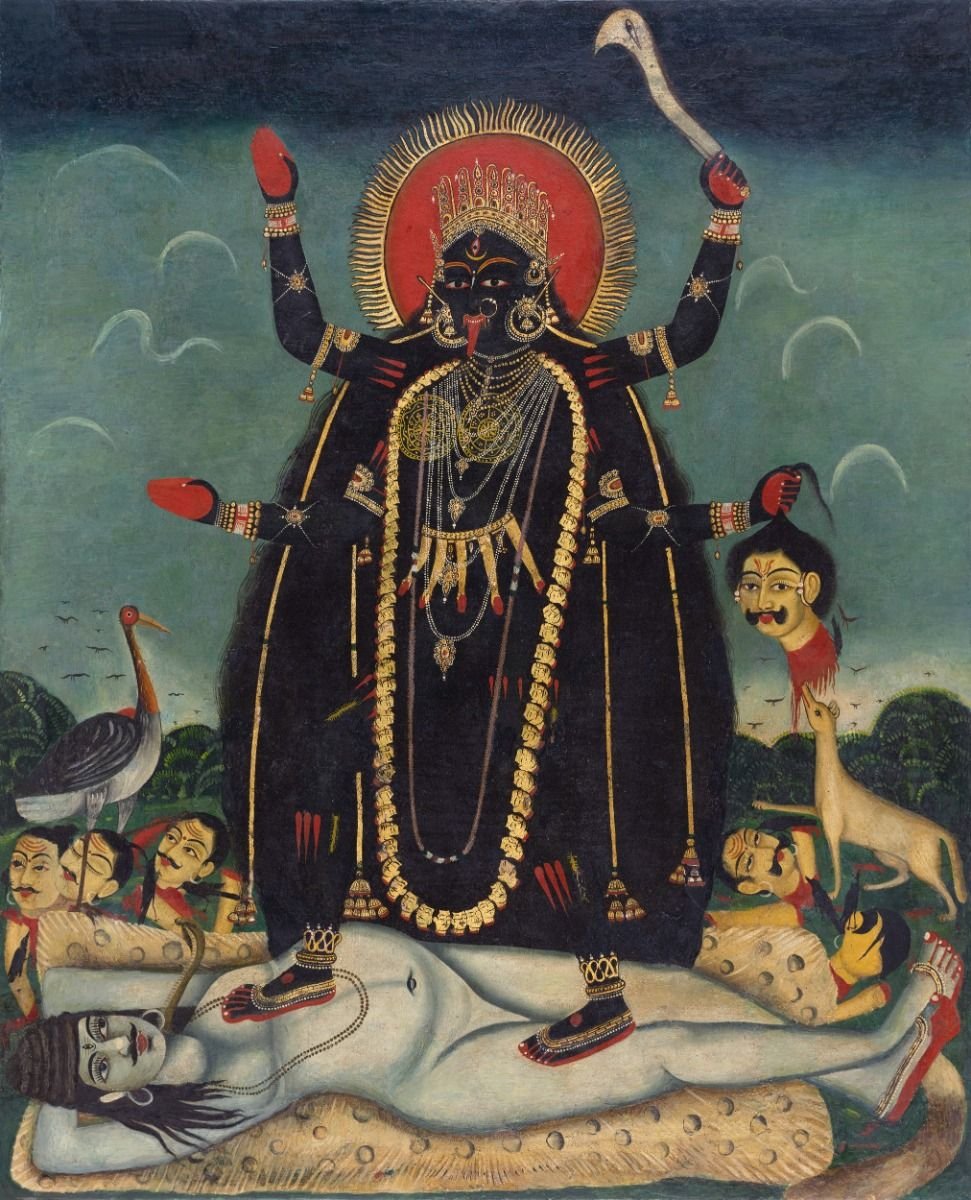
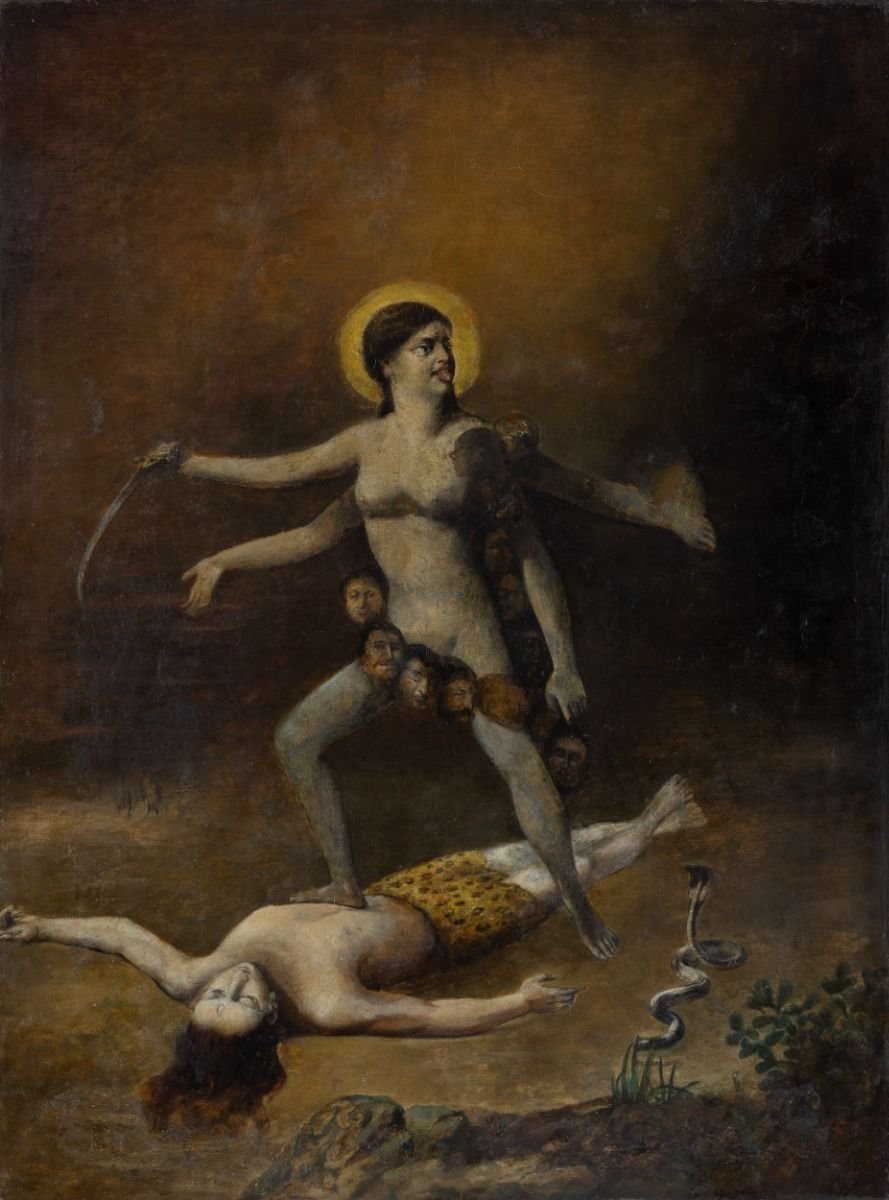
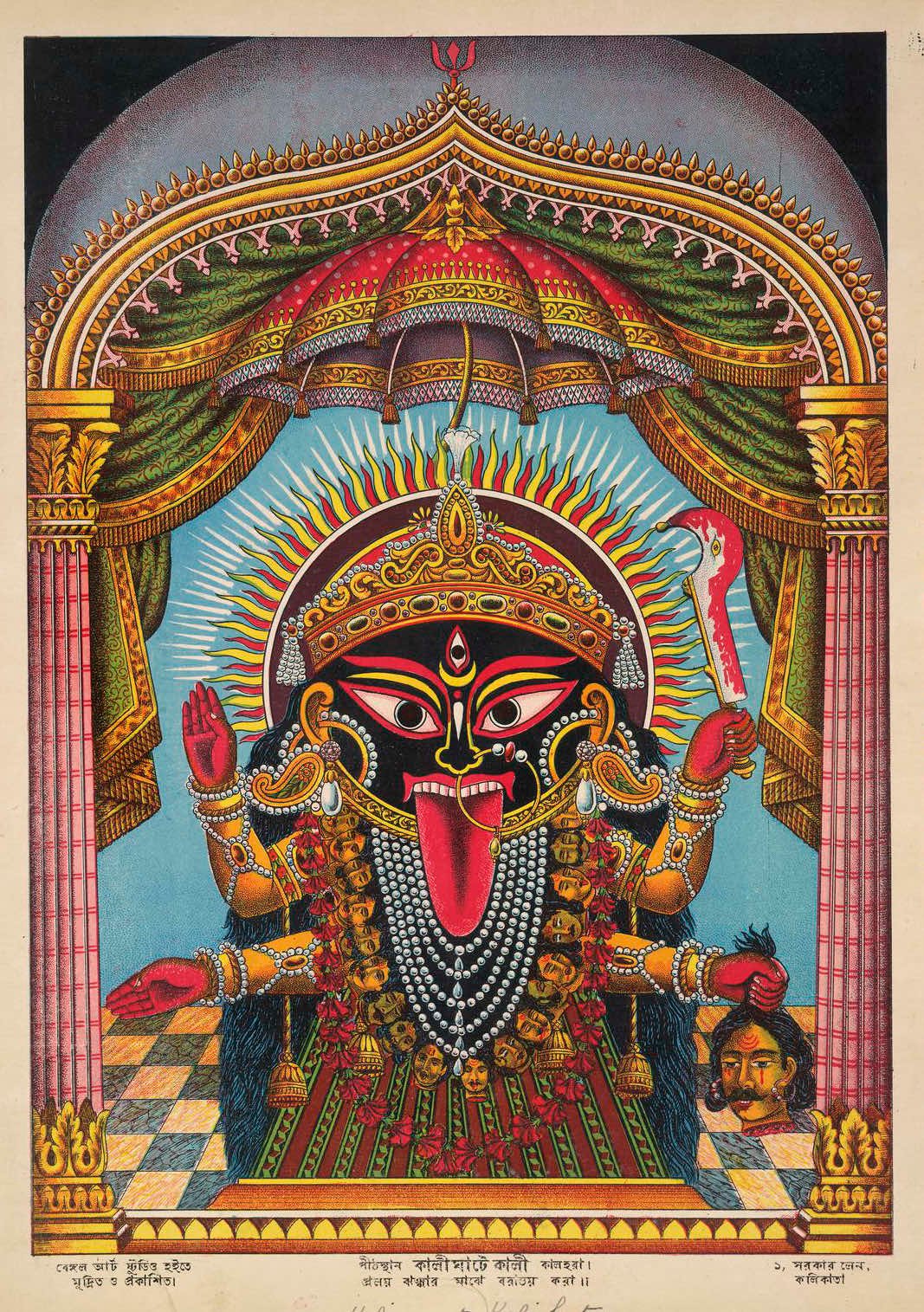
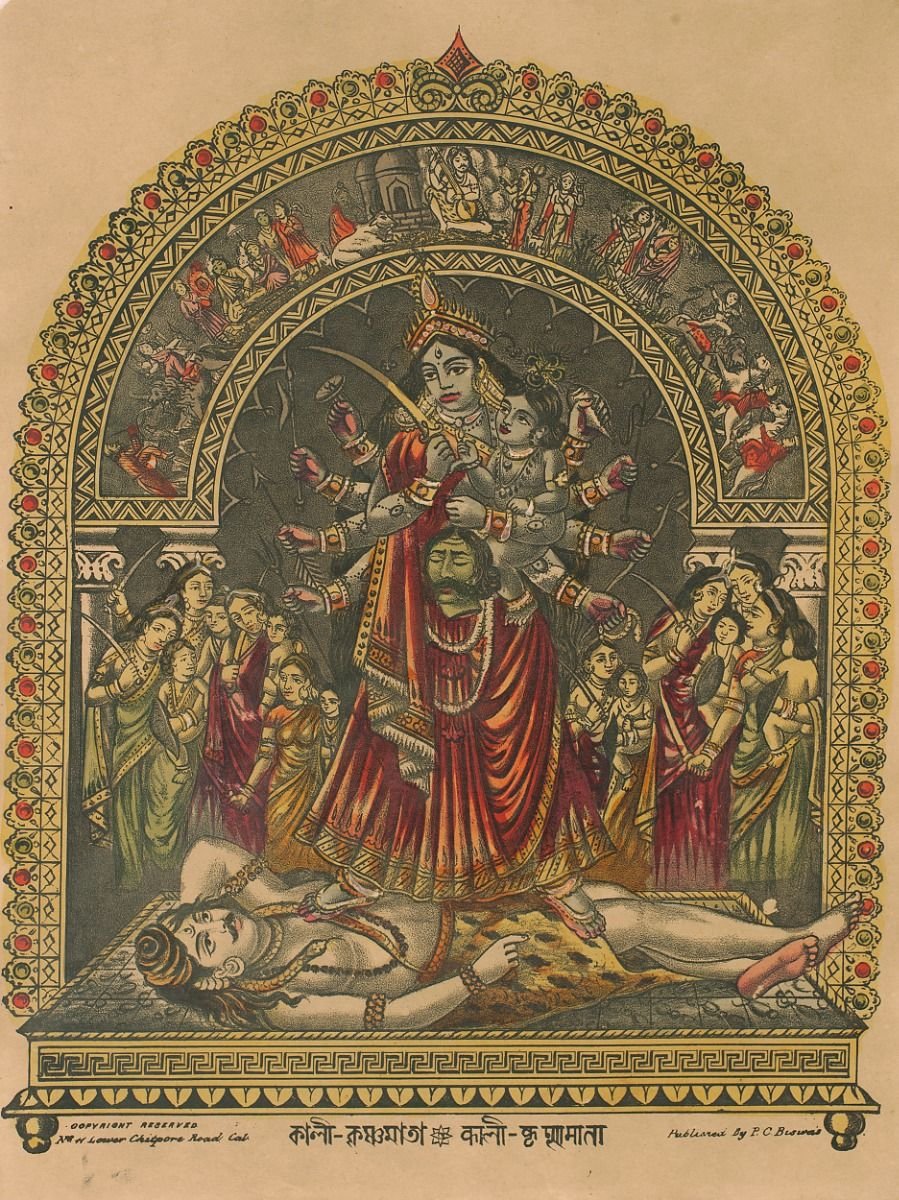
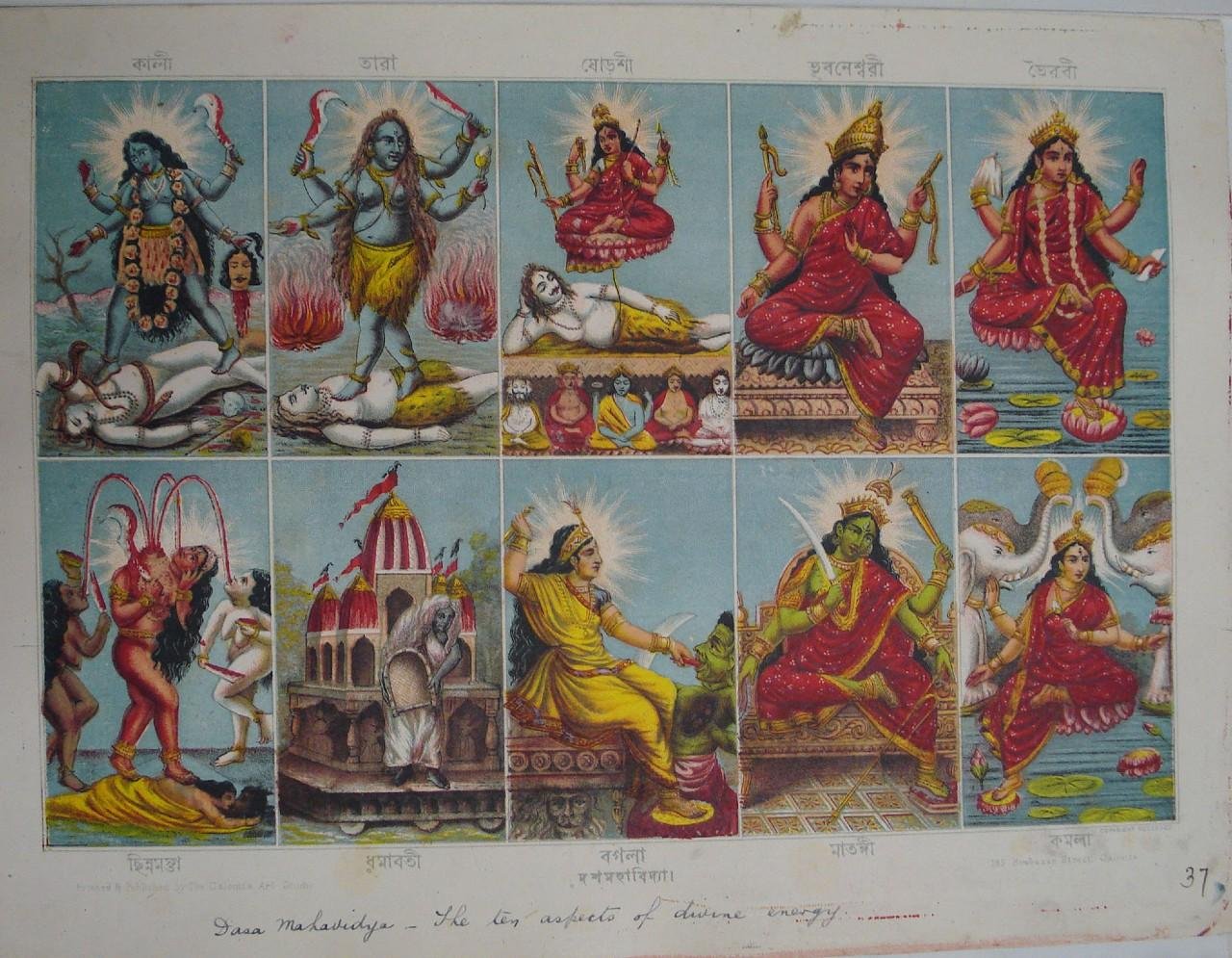
Within the spectrum of the Mahāvidyās-ranging from auspicious, benevolent forms like Tripurasundarī, Bhuvaneśvarī, and Kamalā to fierce manifestations such as Kālī, Tārā, Chinnamastā, Bhairavī, Dhūmāvatī, Bagalāmukhī, and Mātaṅgī-Kali’s iconography crystallizes the paradoxes that define the Śākta vision of divine energy (śakti). Her depictions emphasize transformational power, cosmic boundary-crossing, and the unsettling presence that simultaneously threatens and protects. Images from temple sculpture to painted and printed formats portray the goddess with multiple arms, a hallmark of divine capacity. In these hands, she bears weapons and ritual implements that both destroy and renew. Skulls, nooses, lotus flowers, and other symbolic items circulate within this visual vocabulary, articulating the themes of mortality, bondage and liberation, auspiciousness, and cosmic order that structure her mythic persona.
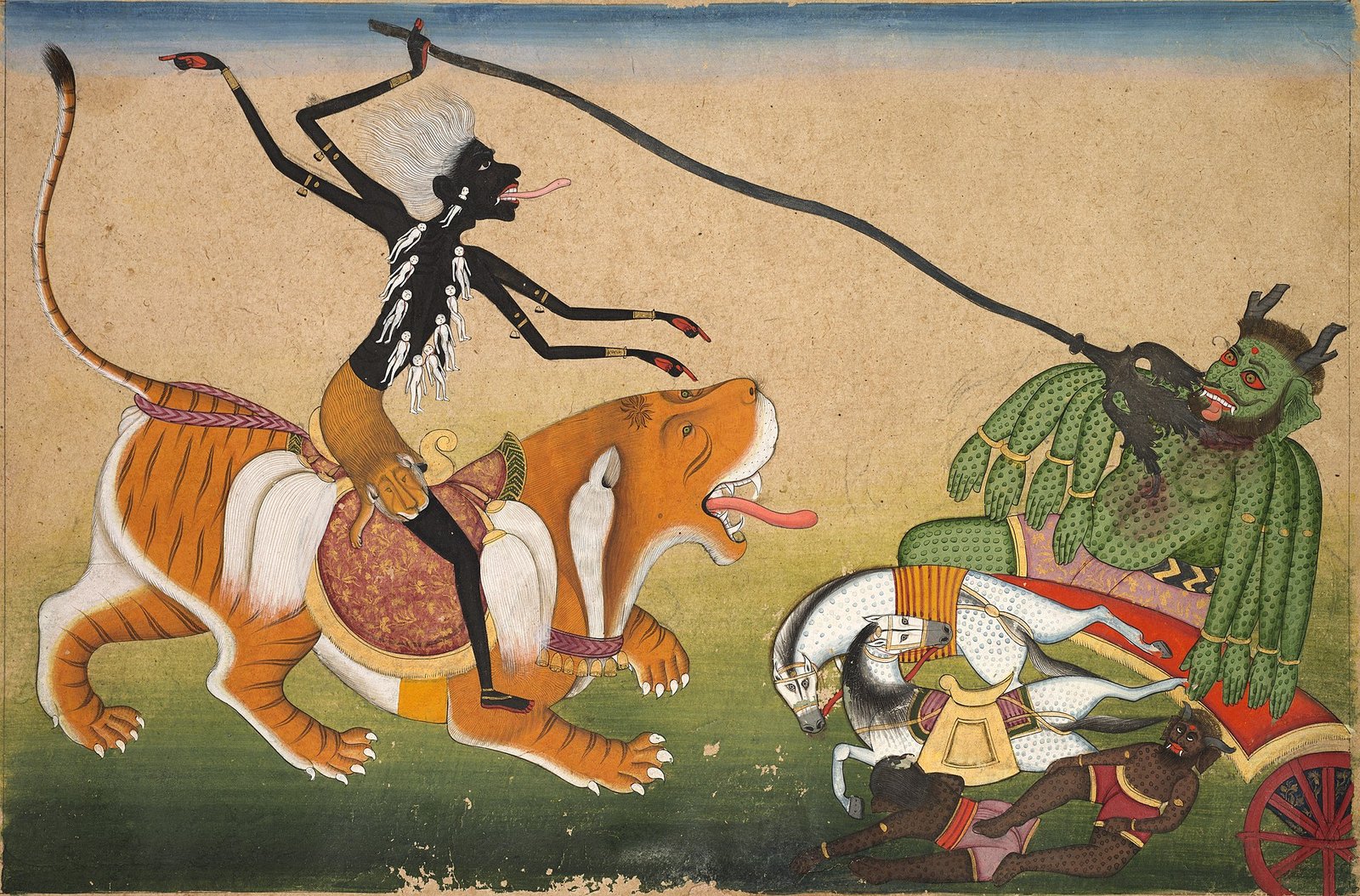
The Mahāvidyās inherit therianthropic and animal-bird attributes from antecedent mātṛ and yoginī traditions, signaling liminality and magical potency. Such features underscore the goddesses’ status as beings who move between domains-wild and cultivated, outside and inside the ritual precinct, edged with danger yet capable of bestowing boons. Kali’s fierce aspect conveys transformative potency rather than mere destructiveness. She occupies thresholds: between night and day, cremation ground and temple, the terrifying and the auspicious. Artistic renderings heighten these thresholds through compositional contrasts-smooth, ordered attributes paired with transgressive signs-resulting in images that resist domestication without relinquishing protective force.
These iconographies do not exist in isolation; they often appear within mandala-like arrangements that place a male deity, frequently Śiva, at the center, with the Mahāvidyās arrayed as emanations that define and protect cosmic space. Such arrangements operate as visual cosmograms for ritual use and as symbolic maps of sovereignty, order, and power. Spatial articulation is echoed by material differentiation: some goddesses appear in royal adornment, others in ascetic or fearsome guise, thereby presenting a continuum of divine possibilities. Kali’s presence in these ensembles gives emphasis to fierce compassion and the radical energies that underwrite cosmic balance.
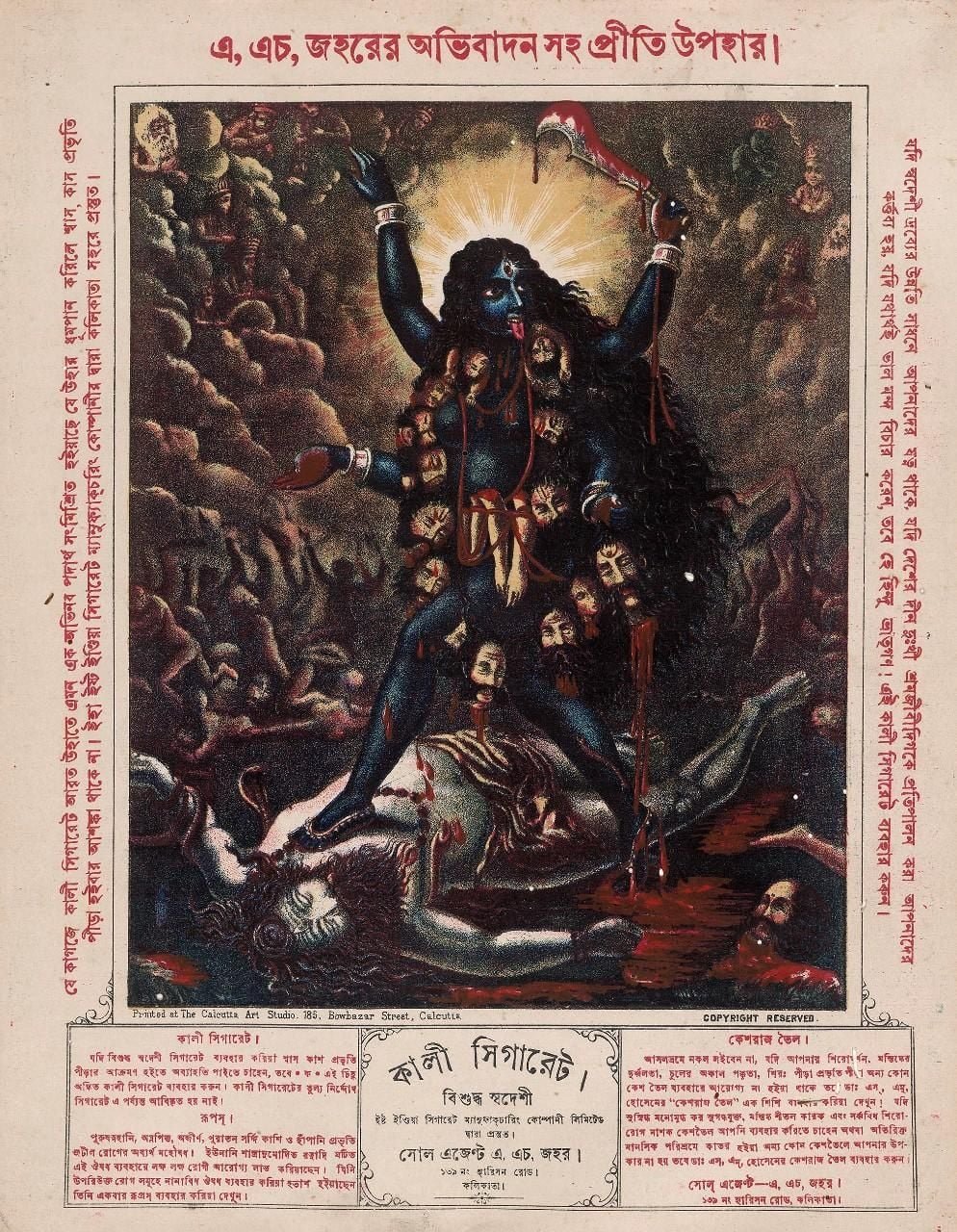
The spatial idiom extends beyond the icon to encompass landscape and aniconic forms. At Nīlācala Hill, the yoni-shaped rock and its water spring are central sacred symbols, framing the goddess as primordial ground and ever-flowing source. In this visual and ritual ecology, the absence of an anthropomorphic image does not diminish legibility; rather, the rock and spring index the very processes of generation and dissolution that Kali and the Mahāvidyās collectively articulate. The coexistence of iconic and aniconic practices underscores the breadth of the Śākta visual language and the elasticity with which the goddess is encountered in different milieus.
Key Artists & Works
The literature surrounding Kali and the Mahāvidyās functions as a major “work” in its own right, supplying textual blueprints that artists and ritualists translated into images and practices. Key sources include the Devīpurāṇa, Devībhāgavatapurāṇa, Mahābhāgavatapurāṇa, Bṛhaddharmapurāṇa, Kālikāpurāṇa, the Tantrasāra of Kṛṣṇānanda Āgamavāgīśa, the Yoginītantra, the Hevajratantra, the Mahākālasaṃhitā, and a range of Śākta Upapurāṇas and Tantras. The Kālikāpurāṇa, particularly associated with twelfth-century Bengal, is pivotal in articulating Kali’s paradoxical nature and in prescribing heterodox forms of worship that leave discernible traces in visual and ritual repertoires. The Tantrasāra distilled ritual and doctrinal currents that informed later practice and representation, while saint-poets such as Rāmprasād Sen helped to popularize Kali’s image in Bengal’s devotional culture.
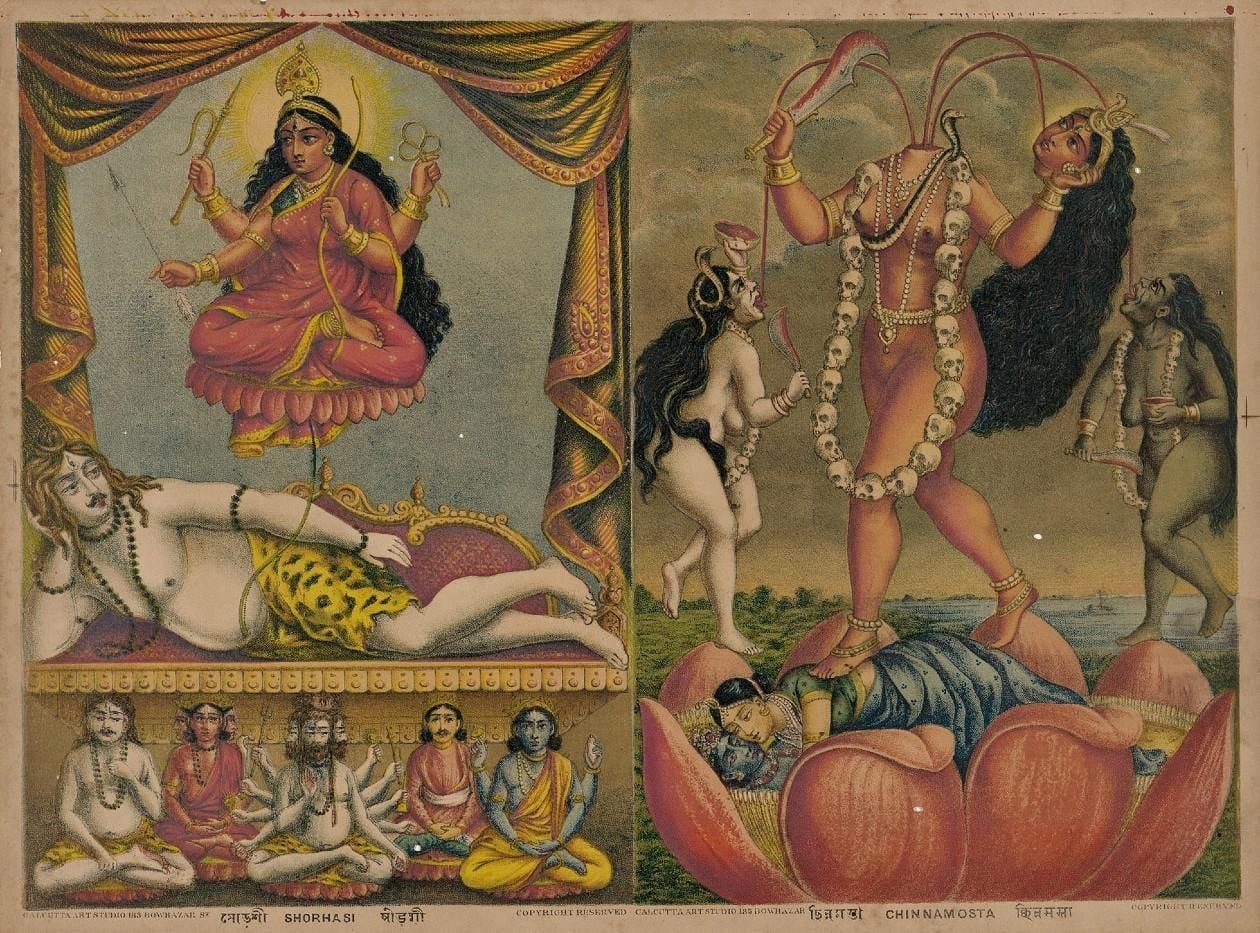
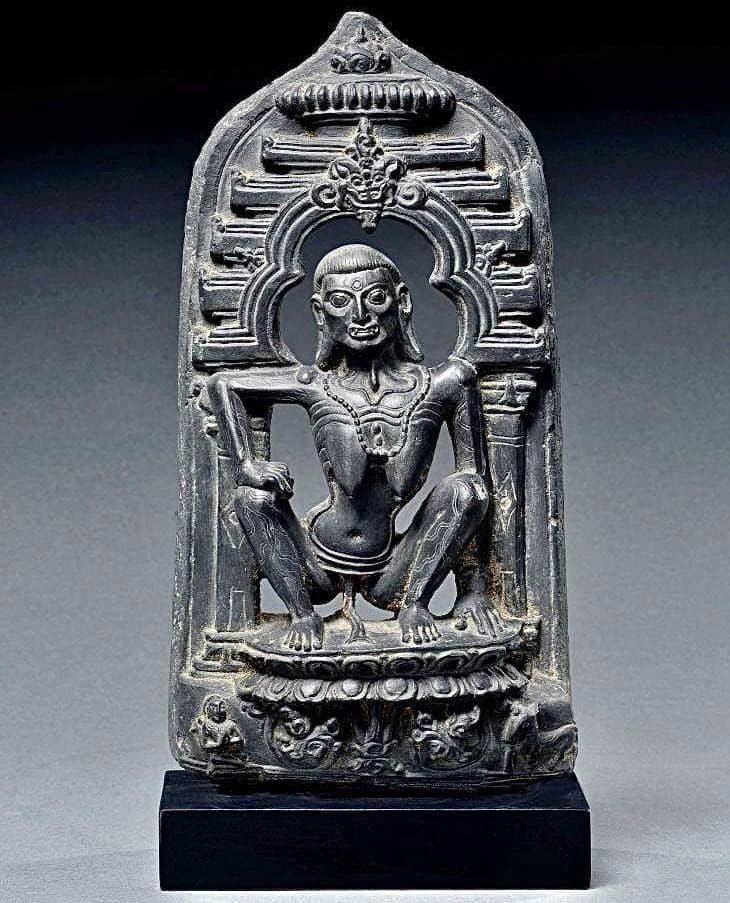
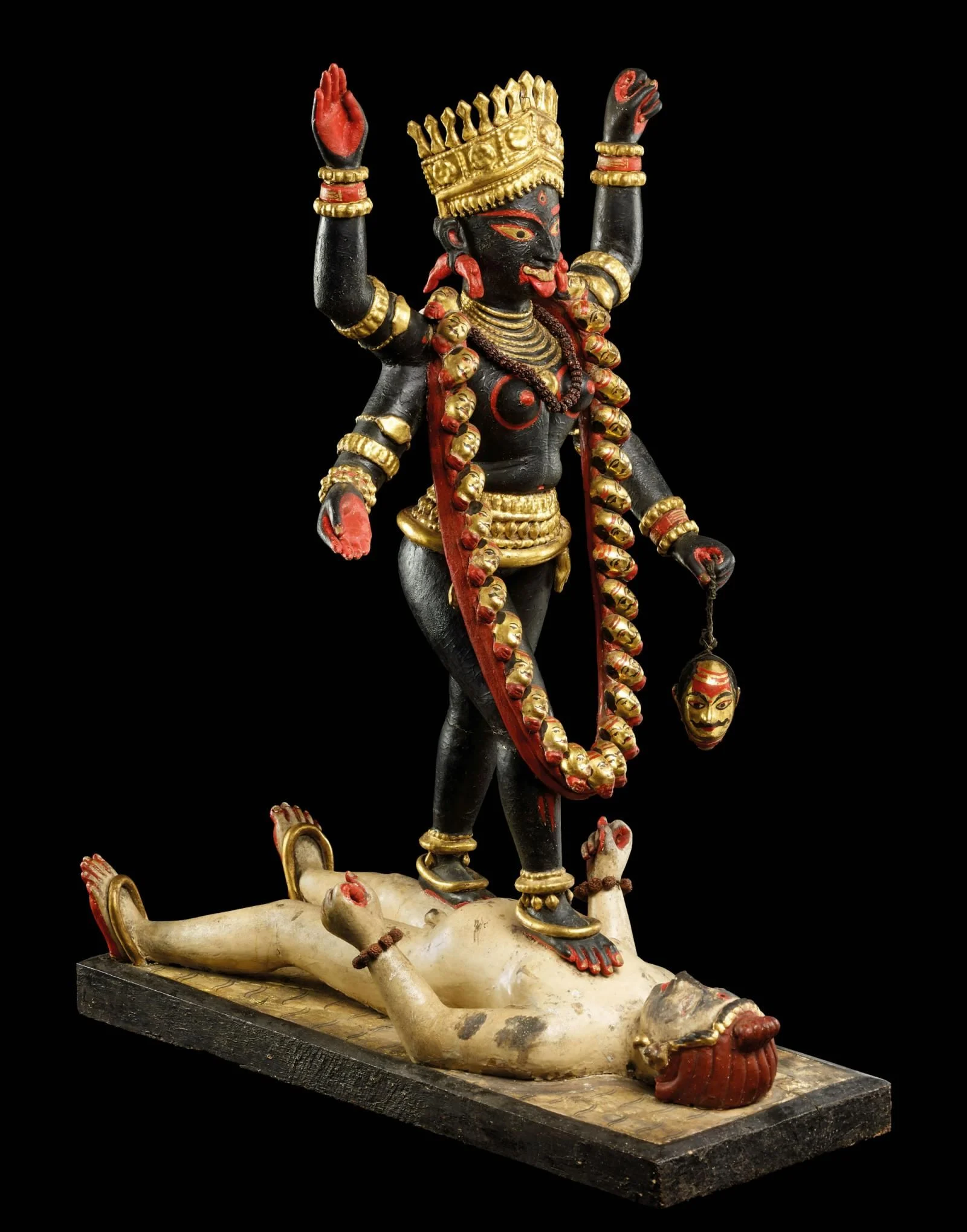
Archaeological remains anchor these textual worlds in stone and metal. Sculptures and temple complexes at the Nīlācala Hill in Assam, at Bangarh and Bishnupur in West Bengal, and at other Śākta centers across eastern India contribute to a mapped history of Mahāvidyā worship. Museum collections further extend this archive. The British Museum and the Indian Museum in Kolkata preserve sculptures and related objects of the Mahāvidyās and associated goddesses, including significant depictions of Vajratārā, Ekajāṭā, and Bhairava with mātṛs. Nineteenth-century painted and gilded clay figures from Bengal testify to the ongoing reinterpretation and circulation of Tantric imagery in new mediums and markets.
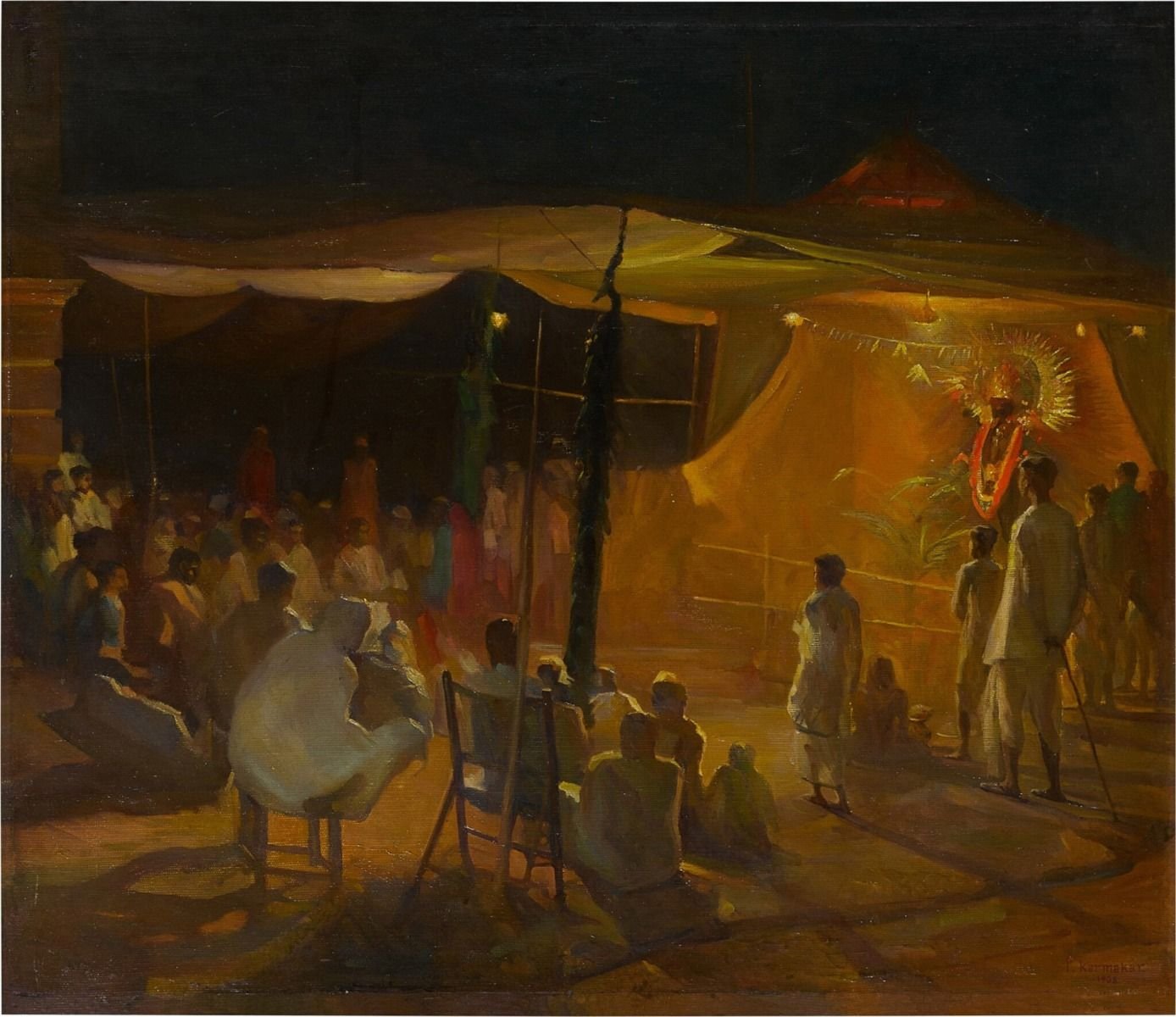
Beyond sculpture, printed and painted forms have played a crucial role in disseminating Kali’s image. Lithographs and temple murals visualize narratives and ritual sequences, while festival tableaux-especially in contexts such as Durgā pūjā-bring the Mahāvidyās into public space in ambitious, ephemeral forms. The recurrence of mandalic arrangements, the interplay of fierce and auspicious motifs, and the careful calibration of weapons and emblems demonstrate the fidelity to textual prescriptions and the latitude of local styles. Through such works, Kali’s iconography remains both codified and continuously adaptive.
Materials & Techniques
Kali’s presence in Indian art is materially diverse, encompassing stone sculptures, wooden carvings, metal images-often in bronze-and painted media including lithographs and temple murals. Each medium structures the viewer’s encounter with the goddess. Stone temples and sculptural reliefs encode durability and sacred authority, while metal icons facilitate portability and ritual handling. Painted formats allow narrative elaboration, color symbolism, and the repetition of motifs that cumulatively teach viewers to read the goddess’s signs. In all cases, the distribution of attributes-arrangements of hands, selection of emblems, and orchestrated gestures-provides a grammar for perceiving Kali’s power and its relation to the other Mahāvidyās.
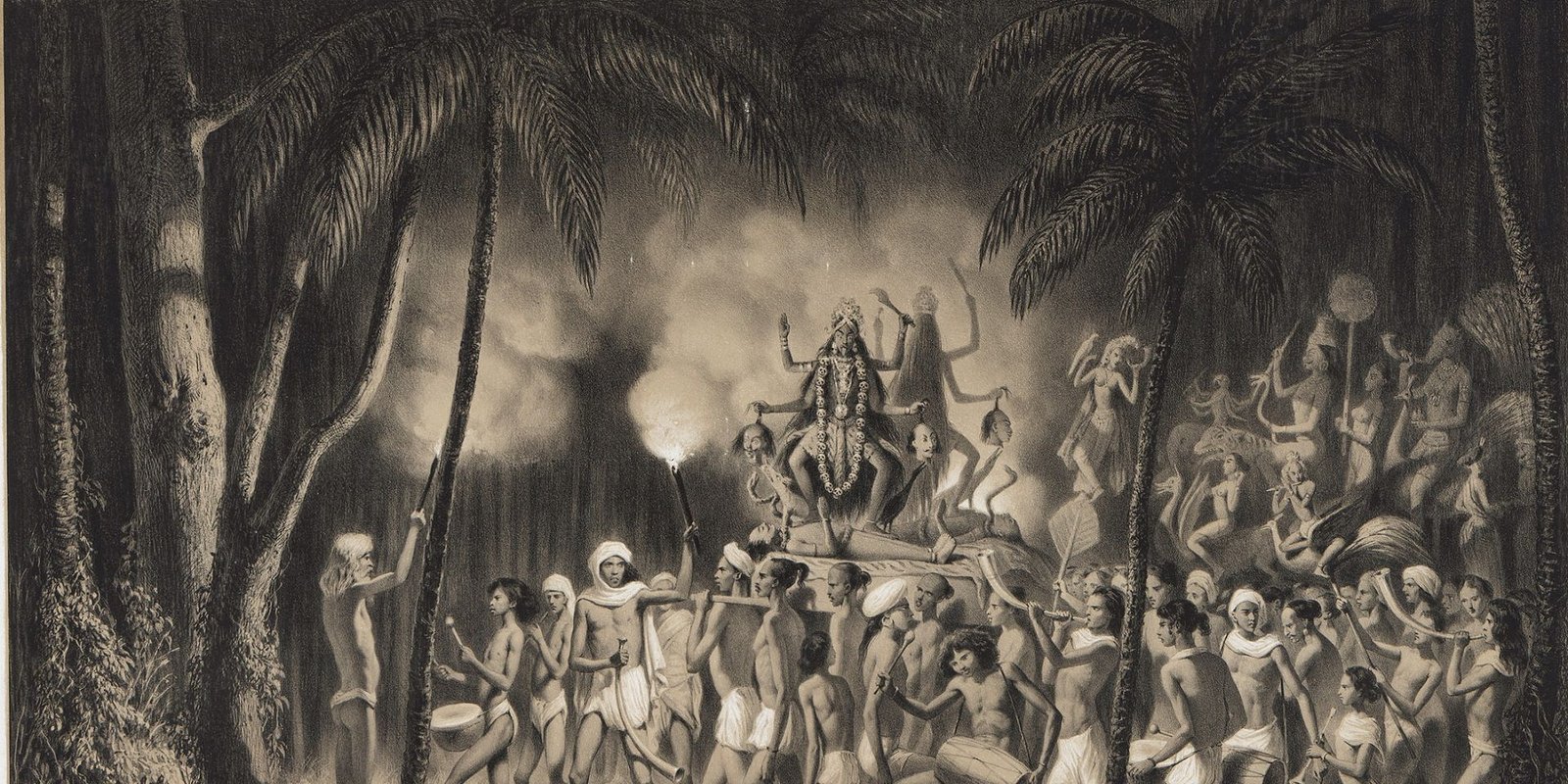
Aniconic worship constitutes a parallel visual language. Natural rock formations, especially yoni-shaped stones, and water springs function as potent signs of divine generativity. In certain settings, symbolic objects such as skulls and bones likewise mark the ritual terrain, reminding practitioners and pilgrims alike of mortality, transformation, and the razor’s edge between fear and fearlessness that the fierce goddesses navigate. Temple architecture accommodates these forms, evolving from earlier stone structures to later brick and modern constructions, each adapted to local resources and ongoing patterns of pilgrimage and ritual.
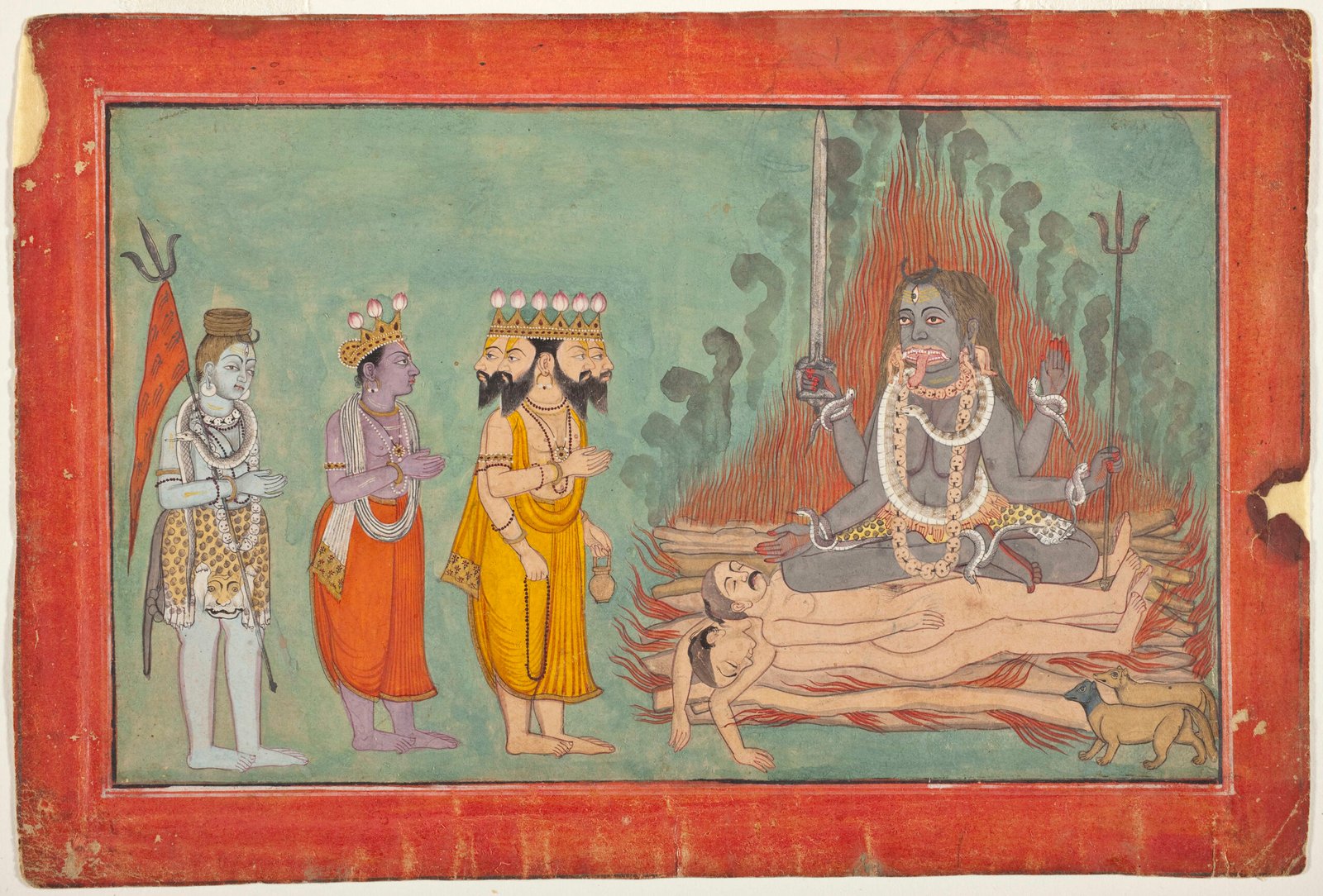
Ritual techniques inform and animate the image. Mantra recitation, yantra visualization, homa (fire sacrifice), and pūjā (worship) structure daily and festival practices. In right-hand (dakṣiṇācāra) lineages, orthodox Brahmanical norms shape offerings and conduct, aligning visual presentation with liturgical propriety. In left-hand (vāmacāra) contexts, heterodox rites prevail, including offerings of meat and liquor and, in some traditions, sexual rites. Such practices, where they persist, do not simply accompany the image; they define the conditions under which the image becomes efficacious. The mandala tradition is central here, organizing deities and implements within a spatial logic that equates ritual control with cosmic ordering. Kali’s image, arrayed within these visual and performative systems, serves as a focal point for transformative experience.
Influence & Legacy
The Mahāvidyās, with Kali at their apex of ferocity and grace, crystallize a syncretic pantheon that encompasses multiple religious traditions and social strata of eastern India. Their worship forged regional religious identities and reinforced sacred geographies such as the Śākta pīṭhas. Political rulers across the medieval period used goddess cults for legitimization, anchoring dynastic authority in sanctified landscapes and practices. The Nīlācala Hill’s continued prominence, sustained through patronage from the Mlecchas, Pālas, Koches, and Ahoms, demonstrates how images, sites, and institutions cohere into durable cultural forms. Kali’s visual language, by holding together purity and pollution, order and danger, proved especially fertile for articulating power at individual and state levels.
In colonial Bengal, Kali and the Mahāvidyās acquired renewed resonance as emblems of cultural identity and resistance. Intellectuals and devotional leaders reframed the goddess within emerging discourses, and devotional traditions associated with figures such as Rāmprasād Sen provided affective and linguistic resources for this reframing. The artistic implications were considerable: new formats, including lithographs and festival installations, carried the goddess into public spheres of display and devotion, negotiating modernity while preserving Tantric idioms of power. These modern visualizations did not erase earlier strata but layered them with accessible, reproducible images that circulated widely.
The reach of Kali’s image extends beyond the subcontinent’s religious demography. In Sri Lanka, practices of Kali worship intersect with transgender and gender-nonconforming identities, exemplifying transreligious engagements in a Buddhist-majority context. Such practices challenge normative boundaries of gender and religious affiliation, highlighting the goddess’s role as a focus of negotiation for identity and agency. The iconographic lexicon-fierceness, liminality, the crossing of boundaries-carries into these contexts, reactivating themes long encoded in the Mahāvidyā tradition. These developments have in turn contributed to scholarly debates on gender, sexuality, and power within South Asian religious studies, with Kali’s imagery serving as a particularly charged site of interpretation.
Institutional preservation and scholarly publication have supported this continuity and reexamination. The British Museum and the Indian Museum, Kolkata, care for significant objects related to Kali and the Mahāvidyās, including sculptures and nineteenth-century painted and gilded clay figures from Bengal. Temple sites such as Nīlācala Hill, Bishnupur, Bangarh, and Konark remain active nodes of worship and heritage. Texts like the Kālikāpurāṇa and other related works have been studied and published by academic presses, including Motilal Banarsidass and Manohar, ensuring broader access to the doctrinal and ritual frameworks that inform visual practice. Contemporary documentation and communication initiatives, supported by organizations working in cultural heritage, further disseminate research and imagery, promoting informed engagement with the tradition’s complexity.
Ongoing research continues to refine the field. Questions remain regarding the earliest phases of Mahāvidyā temple construction at Nīlācala Hill and other centers, the historical trajectories of ritual specialists-including the migration and institutionalization of Brahmanical priests in Kāmarūpa and Bengal-and the precise contours of South Indian Śrīvidyā influence on eastern traditions. Ethnographic and textual studies alike seek to clarify the relationships between yoginī cults and Mahāvidyā worship across regions, the detailed mechanisms by which orthodox and heterodox elements coexist in contemporary practice, and the scope of Kali’s transreligious significance, particularly in Sri Lanka. Each of these lines of inquiry bears directly on how we interpret Kali’s image, read her attributes, and understand the power they are meant to convey.
Conclusion
Kali’s place in Indian art is an index of the Mahāvidyā tradition’s depth and reach. Her image condenses the historical synthesis of yoginī, Śākta, Śaiva, Buddhist, Vaiṣṇava, and Puranic elements into a visual language that is instantly legible yet endlessly reinterpretable. From the early medieval organization of goddess worship in eastern India to the complex ritual environments of sites such as Nīlācala Hill, Kali inhabits and shapes sacred geographies. Artists and patrons have given her durable form in stone, wood, and metal; printers and painters have adapted her for circulating images; and ritualists have set her at the heart of mandalas that map the cosmos onto the body and the temple.
Stylistically, Kali’s iconography articulates paradox through multiplication-of arms, attributes, and significations. Weapons and ritual implements sit beside emblems of auspiciousness, while skulls and nooses recall mortality and bondage to underscore the goddess’s capacity to protect and liberate. The coexistence of iconic and aniconic modes, especially the centrality of the yoni-shaped rock and water spring at Nīlācala Hill, extends the visual field beyond anthropomorphic representation, binding the goddess to elemental forms of earth and flow. In ritual life, right-hand and left-hand Tantric practices frame her efficacy, shaping the ethics and aesthetics of her worship and thus the iconographies that materialize around her.
Kali’s legacy is multifaceted. She has been a resource for regional statecraft and sacred geography, a catalyst for devotional expression in colonial Bengal, and a figure through whom gendered and transreligious identities have been negotiated, including in Sri Lanka. Museum collections and temple complexes ensure the preservation and continuity of her images, while scholarly publications and cultural heritage initiatives broaden the interpretive conversation. In each setting, the goddess’s visual language remains anchored to the same core principles: power that transforms, paradox that instructs, and presence that binds disparate practices into a coherent, if complex, Śākta whole.
At the same time, much remains to be clarified. Precise dating of early Mahāvidyā centers, the institutional histories of priestly lineages, the dynamics of Śrīvidyā influence, and the articulation of yoginī and Mahāvidyā traditions in different regions persist as important areas for research. Ethnographic study of contemporary worship-especially the interplay of orthodox and heterodox elements-will continue to refine our understanding of how Kali’s image acts within communities today. Such work promises not only to deepen the historical record but also to illuminate how a single goddess can carry so many meanings, and how art makes those meanings tangible across time, place, and practice.