
Bonbibi Worship in the Sundarbans: Ritual, Ecology, and Community Life
Bonbibi worship is a living folk religious tradition rooted in the deltaic mangrove landscape of the Sundarbans, which spans parts of West Bengal, India, and Bangladesh. Centered on Bonbibi, a guardian deity invoked by those who depend on forest resources, the tradition is practiced by Hindu and Muslim communities alike. For fishers, honey collectors, woodcutters, and others whose livelihoods involve navigating tidal creeks and mangrove thickets, Bonbibi represents a vital protective presence that both mitigates existential risk and structures the terms of human engagement with the forest. At its core, the cult weaves together oral myth, ritual performance, iconography, and communal festivals to produce an encompassing moral and practical framework for life at the forest’s edge.
The Sundarbans is a place where ecological uncertainty is immediately palpable. The threat posed by the Royal Bengal tiger remains an enduring symbol of that hazard, and Bonbibi’s guardianship is consistently articulated against this backdrop. Yet the tradition is not reducible to fear-management; it operates as a complex cultural system that stabilizes social relations, channels ecological knowledge, and confers meaning on labor conducted in risky environments. Ritual specialists who undertake magical practices inside the forest, public festivals performed at its margins, and narrative performances that circulate Bonbibi’s story together compose a repertoire through which communities define right conduct, demarcate sacred space, and mediate the unequal relationship between human actors and the mangrove’s powerful nonhuman forces.
This article presents Bonbibi worship as a dynamic field of practice with historical depth and contemporary relevance. Rather than isolating a single ritual moment or visual motif, it examines the tradition’s origins, ritual structure, social significance, and expressive culture as mutually reinforcing elements that have evolved alongside patterns of migration, livelihood, and religious interaction in the Sundarbans. The analysis emphasizes how Bonbibi worship articulates a shared ethical vocabulary across communities and how it encodes ecological restraint, social solidarity, and spiritual protection in a coherent ritual order.
Origins & Historical Background
The Sundarbans’ cultural landscape took shape through layered processes of settlement and resource extraction, especially intensifying with British colonial reclamation efforts from the late eighteenth century. These interventions brought diverse migrant populations into contact with the forest margins, establishing new villages and transforming estuarine ecologies through embankments and land clearance. Against this historical canvas, the cult of Bonbibi emerged as a folk response to the dangers and uncertainties of forest life. It provided psychological assurance to those exposed daily to predation, tides, and isolation, and it offered a social mechanism for regulating entry into, and conduct within, the forest’s interior.
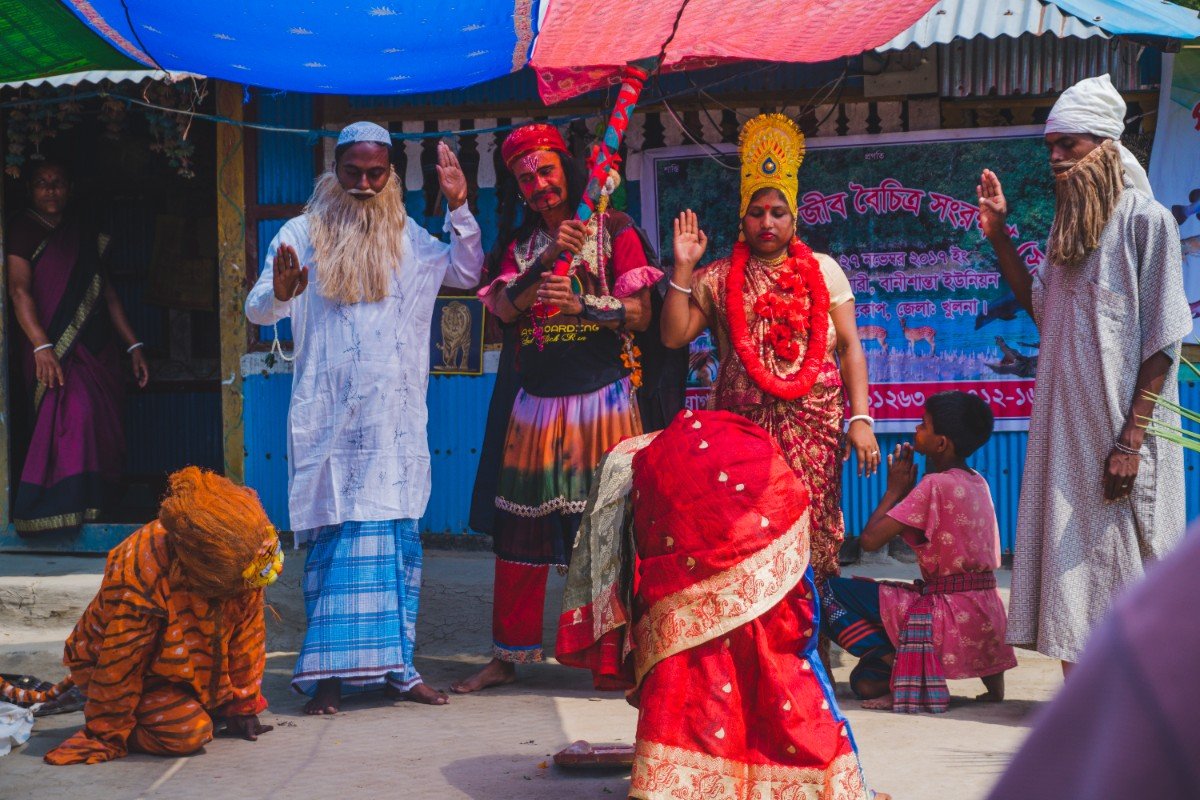
Bonbibi’s mythological narrative draws on Islamic tradition with Sufi resonances, while also reflecting local syncretism characteristic of the region’s plural religious life. In Bengali verse texts known collectively as the Bonbibi Jahuranamas, codified in the nineteenth century, Bonbibi is introduced as a figure whose authority tempers the forest’s dangerous forces. Her primary adversary is Dakshin Ray, often addressed as a tiger-king or a lord of the southern realms, who personifies the forest’s malevolent or untamed aspects. The dramatic tension between Bonbibi’s protective justice and Dakshin Ray’s predatory power encodes a historical imagination of the Sundarbans as a space of both peril and divine oversight, and it mirrors wider social negotiations between competing claims to power, protection, and resource access.
As the Sundarbans’ economy expanded through honey gathering, fishing, and timber extraction, Bonbibi worship evolved in tandem. Diverse migrant groups—tribal populations, Hindu and Muslim castes, and communities crossing the present India–Bangladesh borderlands—carried and reshaped the tradition across settlements. The cult functioned as a traveling moral charter that could be adapted to new localities while maintaining a recognizable structure of obligations, prohibitions, and ritual assurances. This adaptability allowed Bonbibi worship to remain relevant under shifting conditions of livelihood and environmental management.
The settlement history also affected the cult’s institutional profile. In some regions, especially where infrastructure and formal religious establishments developed more intensively, processes of Hinduisation became visible. Here, Brahmin priests increasingly presided over public worship, and Bonbibi was addressed as Bondevi within a broader Hindu pantheon. This shift did not erase the tradition’s earlier cross-communal texture, but it did change the social locations of ritual authority and the ways in which sacred narratives were embedded in village religious life. Meanwhile, in forest-proximate areas, older patterns of practice led by folk ritual specialists continued to structure forest entry, risk management, and communal rites.
Certain historical details remain difficult to pinpoint precisely. The emergence of Bonbibi-r Palagaan—the dramatic folk performance that narrates Bonbibi’s myth—almost certainly developed alongside the consolidation of the Jahuranamas in the nineteenth century, but definitive archival timelines are limited. Regional variations in ritual practice and iconography are acknowledged within local narratives yet remain under-documented in systematic form. These gaps do not diminish the tradition’s historical significance; rather, they highlight the need for ongoing documentation that respects both the textual record and the living memory of practitioners.
Ritual Structure / Performance Framework
Bonbibi worship operates through a dual structure that distinguishes public communal rites undertaken at the forest’s margins from secretive magical practices conducted within the forest interior. This division does not separate two unrelated spheres; instead, it binds them into a single ritual economy where public vows and shared narratives are complemented by specialized protective actions in spaces of heightened risk.
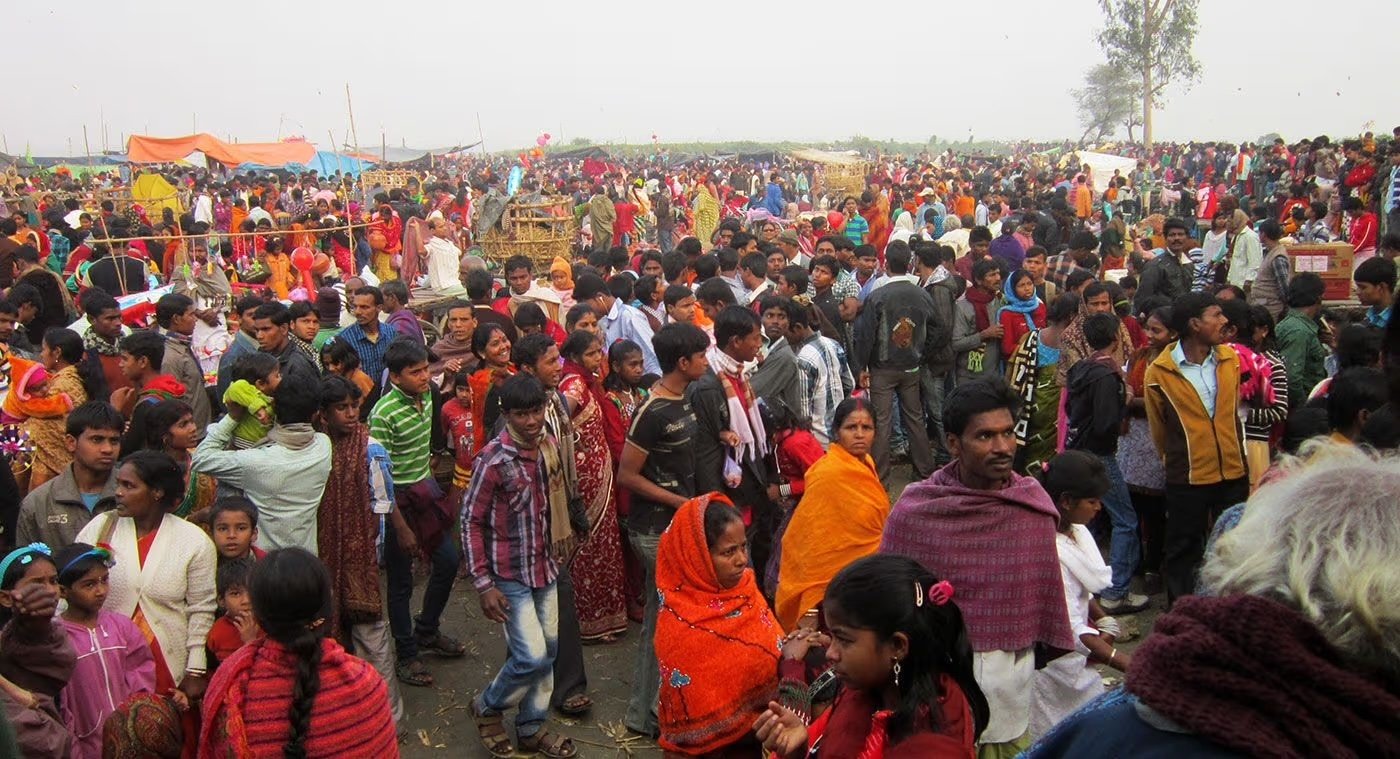
The most visible layer is public worship performed in village settings or at shrines near forest approaches. Offerings, known locally as hajot, are made to Bonbibi alongside recitations of the Bonbibi Jahuranama. Community festivals, most prominently observed on the first day of the Bengali month of Magh (January–February), assemble households and occupational groups to renew vows and collective commitment. Ritual fasting, or roja, appears in these settings, reflecting the Islamic vocabulary of devotion that has long coexisted with Hindu participation. Offerings of sweetmeats and other modest gifts are common, and the rites emphasize mutual aid and shared responsibility for safe conduct in the months of intense forest activity.
A second, more restricted layer involves magical practices intended to secure protection during forest entry and travel. Specialists variously called Gunin or Faqir lead these rites. Their authority rests on knowledge of mantras and procedures believed to invoke Bonbibi’s intervention at moments of danger, especially in relation to tiger attacks. Before expeditions depart, the Gunin performs checks to detect signs of a tiger’s presence and calibrates the group’s readiness in terms of ritual purity and moral disposition. During forest forays, adherence to prescribed codes—including restraint in harvesting and avoidance of tabooed acts—underpins the belief that Bonbibi’s protection remains active. The team’s safety is conceptualized as a collective undertaking grounded in ritual correctness and courage more than in individual bravado.
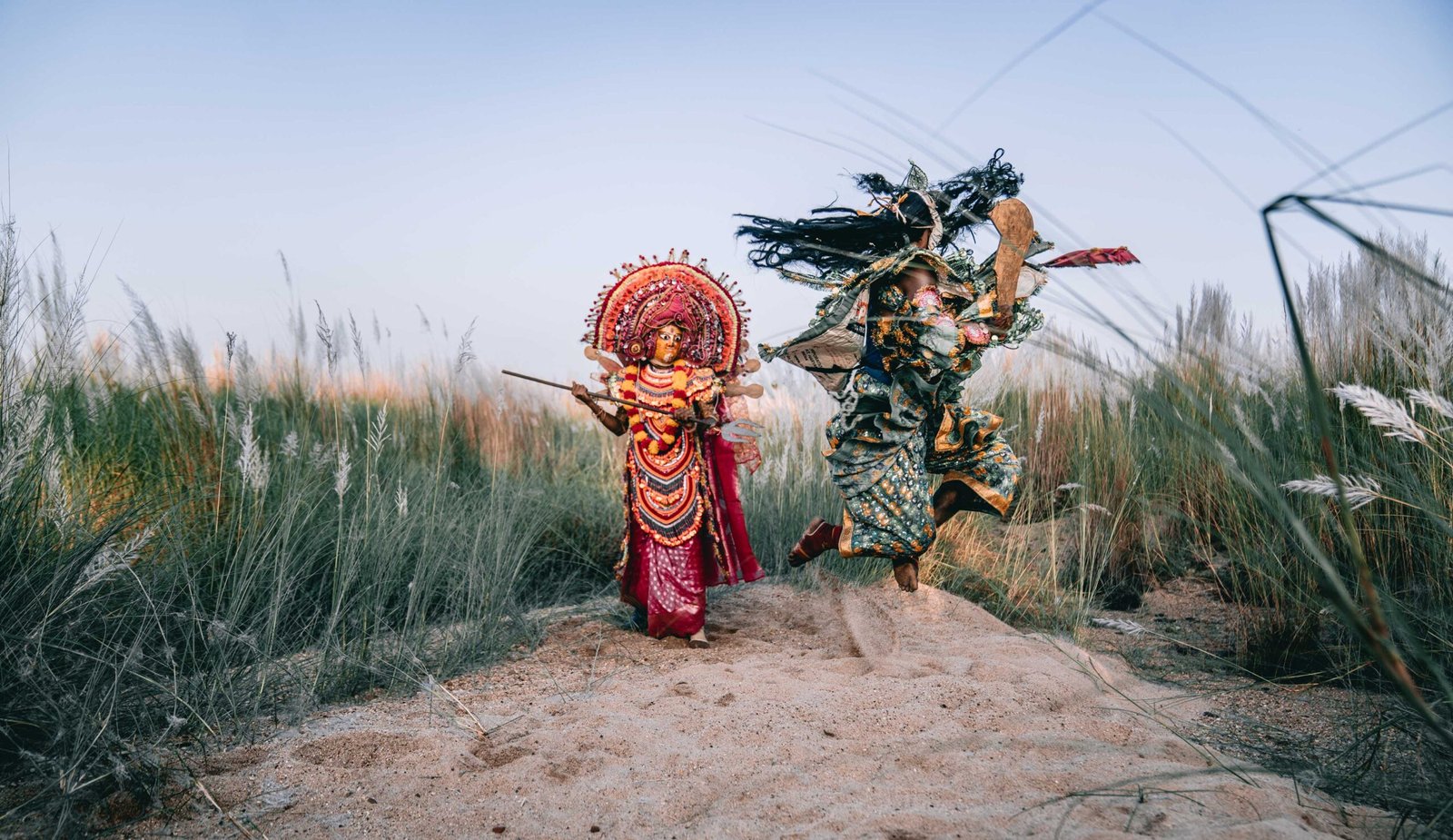
A complementary domain of performance is Bonbibi-r Palagaan, a dramatic art form that enacts the deity’s story through singing, storytelling, and staged scenes. Traditionally performed by individuals whose lives are themselves tied to the forest, Palagaan communicates the myth’s theological and ethical motifs to broad audiences. The narratives situate characters like Dukhe, a poor youth dependent on the forest, as emblematic figures whose trials and deliverance by Bonbibi model both humility and adherence to communal norms. In recent decades, Palagaan has been adapted for cultural promotion and tourism, sometimes staged beyond its ritual calendar. While these adaptations amplify the tradition’s visibility, they remain anchored by a storyline whose core elements are widely recognized by practitioners and audiences alike.
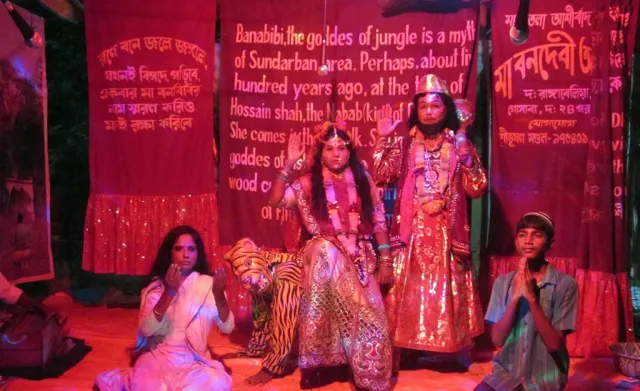
Spatial orientation is central to this framework. The village and forest edge serve as the stage for public rites and community gathering, while the forest’s interior is a ritually charged zone accessed under the Gunin’s supervision. This boundary is not simply geographic; it is also moral and procedural, signaling a shift from public declaration to specialist mediation. The coherence of Bonbibi worship arises from the disciplined interplay of these modalities, in which communal performances affirm shared values and specialist rituals enact those values under conditions of danger.
Community & Social Meaning
Bonbibi worship is knit into the social fabric of a notably diverse population. Tribal communities such as the Santhal, Oraon, Munda, and Bedia participate alongside migrants from neighboring districts and Bangladesh and various Hindu and Muslim castes. What unifies this constellation of groups is not a single creed but common exposure to the forest’s vicissitudes and a shared ethic of careful harvesting, mutual reliance, and observance of ritual codes. In this sense, Bonbibi worship functions as a social compact that acknowledges difference while producing solidarity through practice.
The figure of Dukhe, recurrent in narrative performances and local discourse, crystallizes this orientation toward the vulnerable and the marginal. As a poor youth whose survival depends on the forest, Dukhe stands for those whose choices are constrained by necessity. His relief through Bonbibi’s grace carries a message about restraint, obedience to communal norms, and trust in protective authority. Rather than glorifying risk, the stories elevate humility and cooperation as the preconditions for safe passage and livelihood.
Customary norms associated with the cult regulate access to forest resources, linking ritual observance with sustainable use. Entry into the forest is treated as a request for permission as much as a technical operation, and the rules articulated in community rites reinforce a respectful stance toward the forest’s sanctity. These norms are policed less by formal institutions than by the authority of ritual specialists and community elders whose reputations are bound up with the safety of expeditions and the moral standing of households.
The role of the Gunin exemplifies this embedded authority. Acting as mediator between human communities and the forest’s unseen powers, the Gunin translates communal vows into concrete ritual protections and interprets signs encountered along the way. While not all regions of the Sundarbans accord the same prominence to this figure—especially where more formalized religious structures have developed—the office remains a touchstone for communal responsibility, risk management, and ethical conduct around resource extraction.
In some more developed localities, elements of Hinduisation have reorganized public worship. Bonbibi may be venerated as Bondevi, and Brahmin priests can replace or supplement folk ritual specialists in leading ceremonies. These changes mirror broader shifts in social hierarchy and religious practice without erasing the tradition’s foundational emphasis on protection, restraint, and cross-community participation. Across these variations, the cult sustains a moral economy in which spiritual authority, ecological awareness, and livelihood strategies are mutually implicated.
Symbols, Music, Dance & Material Culture
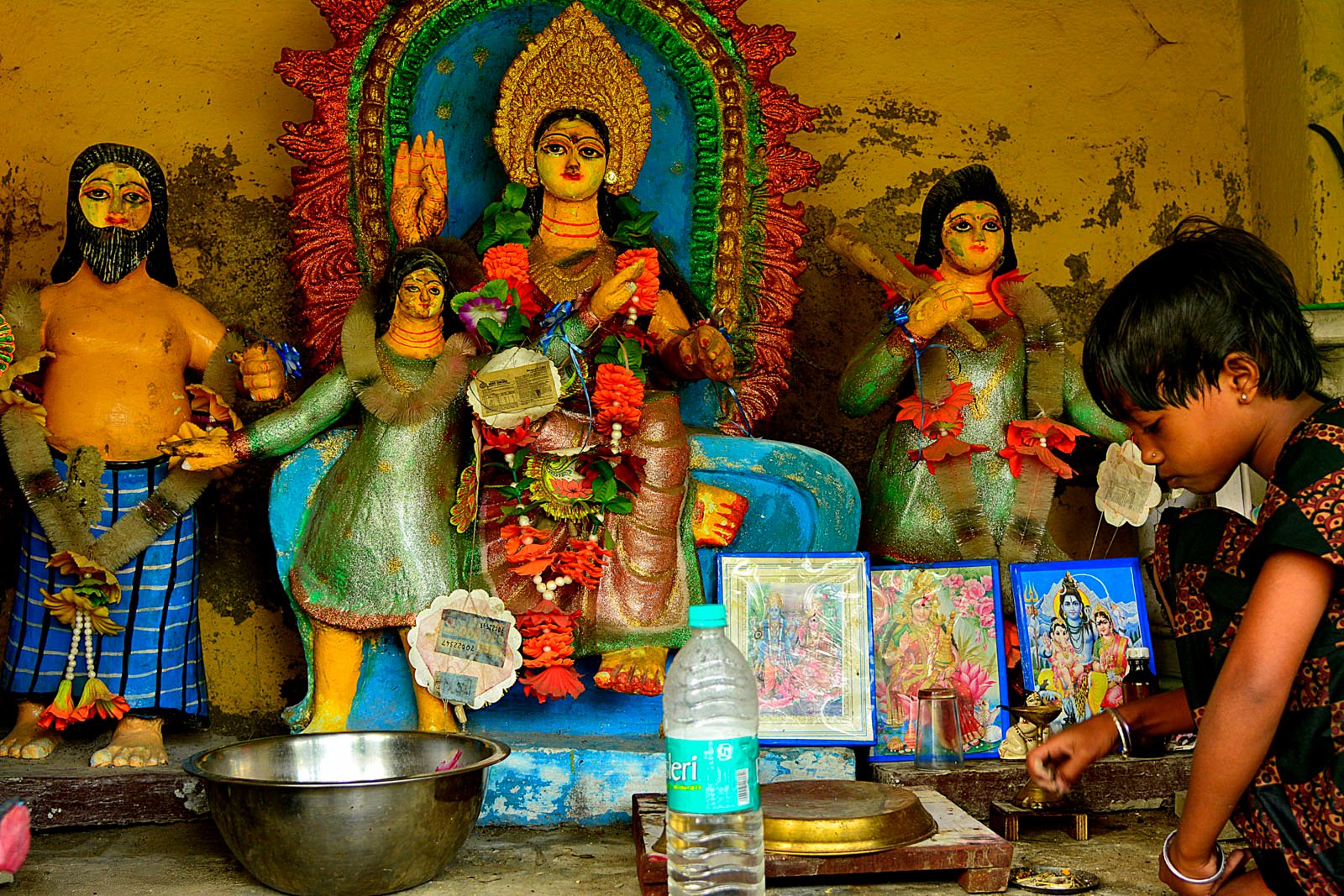
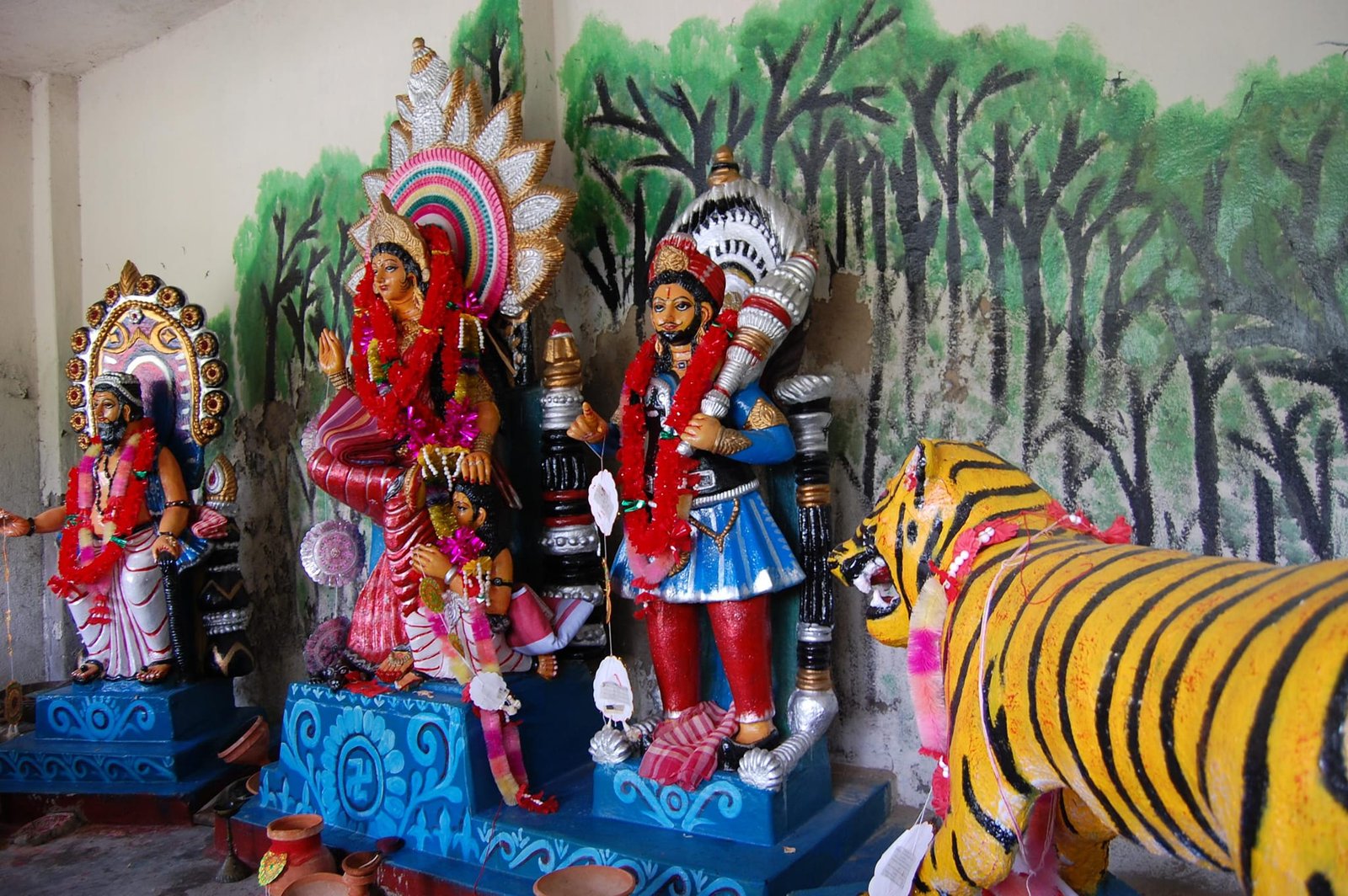
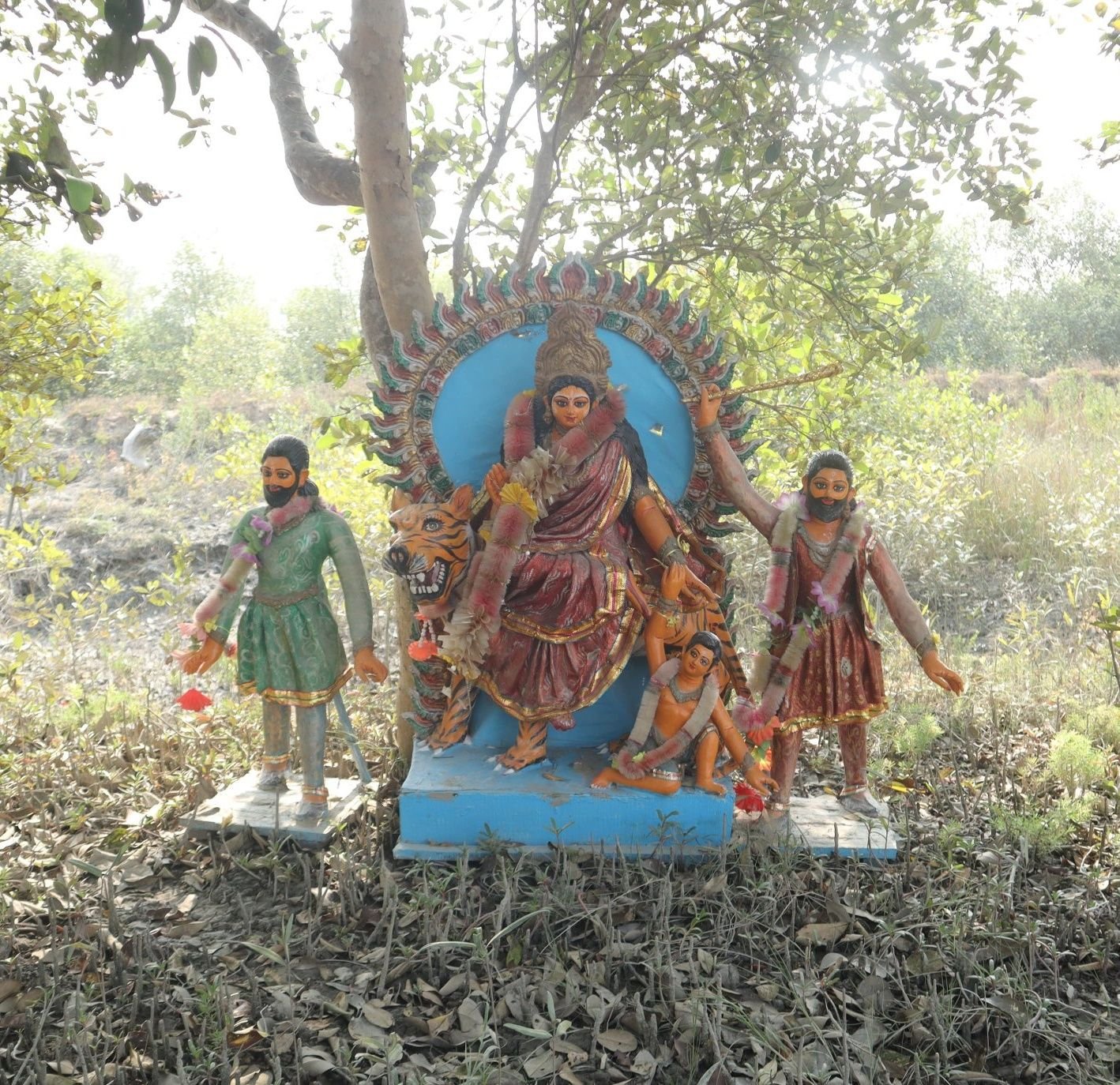
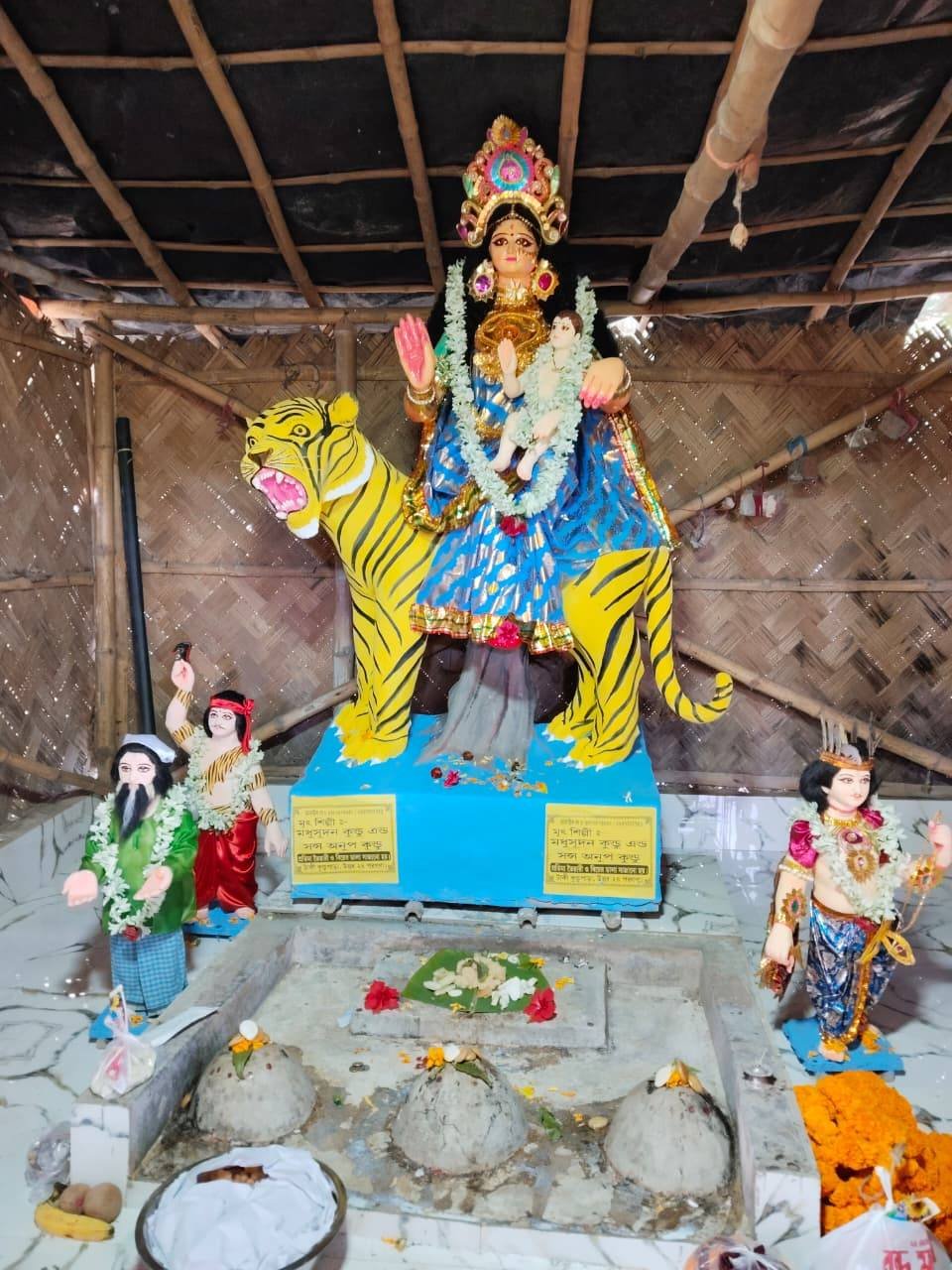
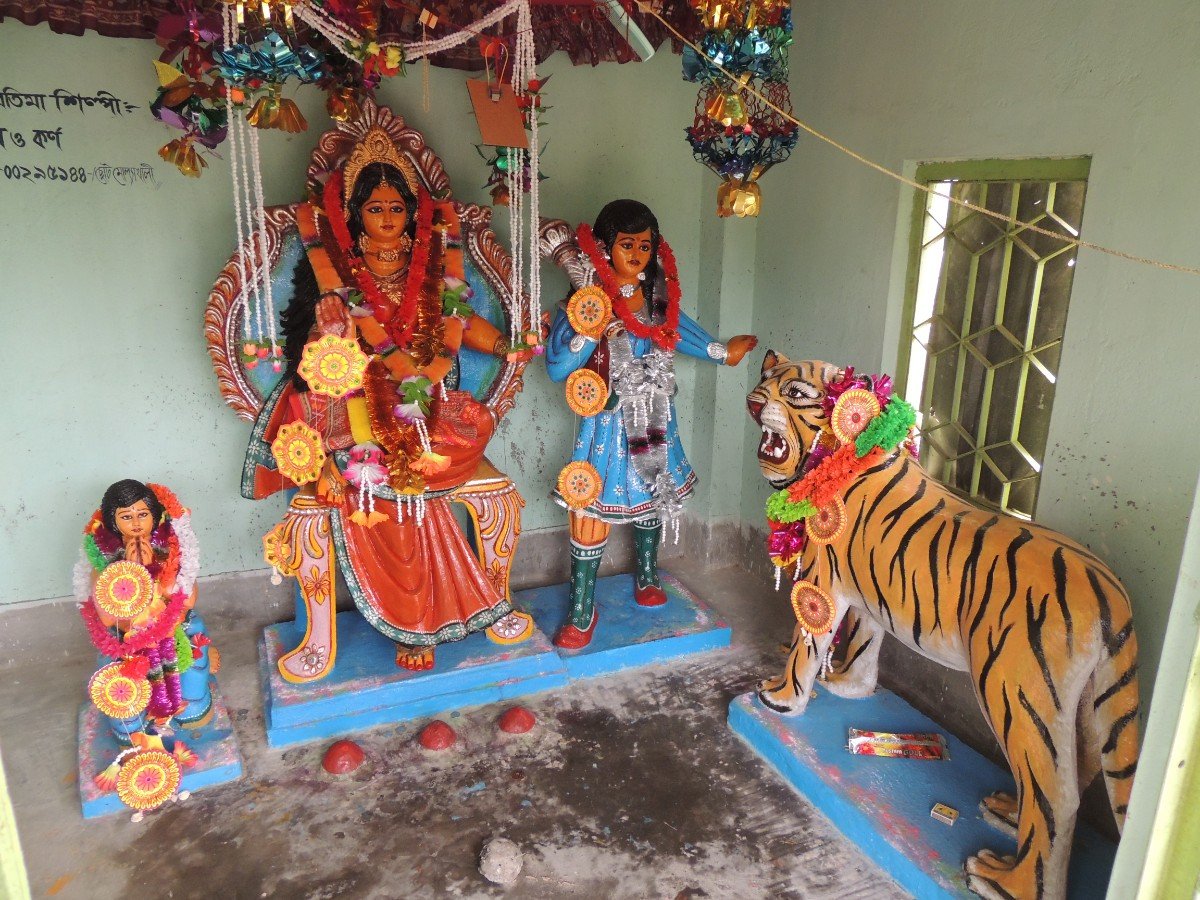
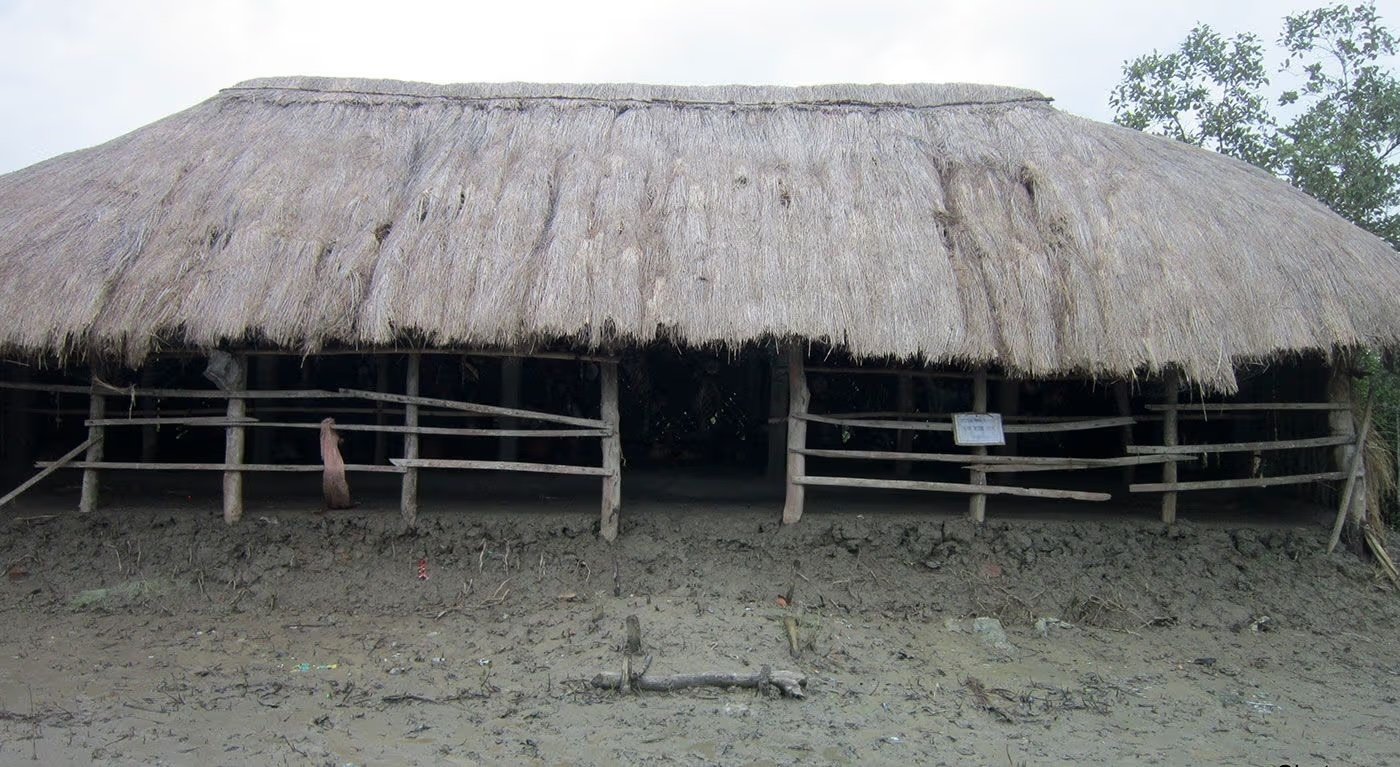
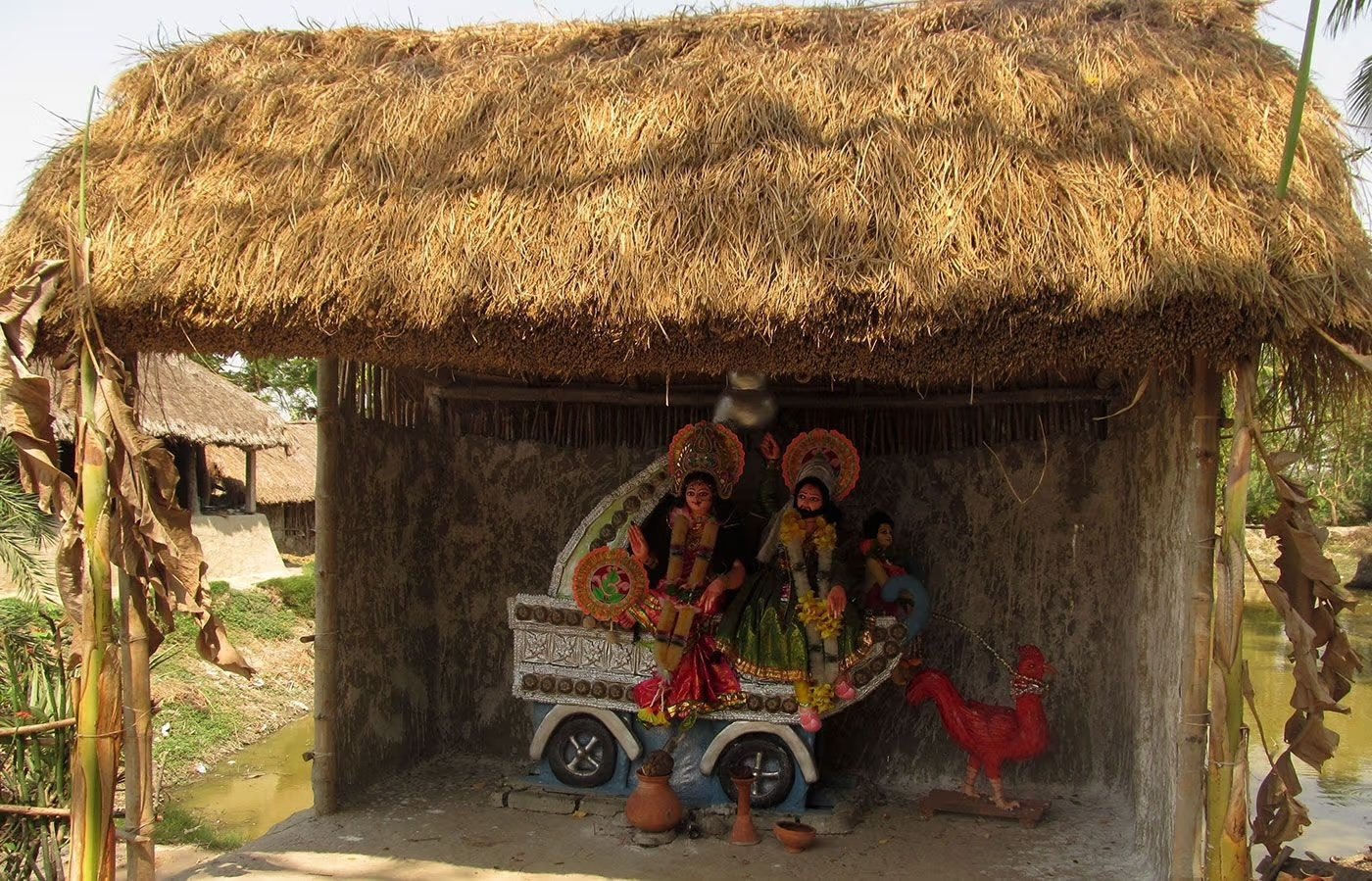
Material expressions of Bonbibi’s presence vary from understated to elaborate. In many places, the most traditional marker is an earthen mound, or thān, sometimes complemented by a stone slab situated along forest pathways or at settlement peripheries. Elsewhere, icons depict Bonbibi seated upon a tiger, holding the child Dukhe in her lap. These images encode a layered symbolism: the tiger, identified with Dakshin Ray, concentrates the forest’s capacity for harm, while Bonbibi’s composure and maternal posture convey assurance and moral order. Visual representation differs across communities, with Hindu and Muslim households displaying distinct iconographic preferences that nonetheless converge on Bonbibi’s guardianship.
Oral and musical forms are equally central. The Bonbibi Jahuranama is recited in Bengali verse meters, including dwipodi-poyar, and often intertwined with local song traditions. Performance genres such as Bonbibi-r Palagaan and jatra draw audiences into the myth’s emotional and ethical arcs, using song, speech, and stylized enactment to transmit doctrine and practical lessons. These forms do more than entertain; they scaffold collective memory, encode rules of forest conduct, and mark the calendar of community life.

The auditory world of forest rites includes magical mantras, chanted by ritual specialists in colloquial language with visible Islamic lexical influences. These utterances are not treated as metaphorical but as efficacious tools in the management of danger, aligning the party’s discipline with Bonbibi’s protective reach. Because such mantras are guarded as specialist knowledge, they contribute to the stratification of ritual authority even as public songs and stories diffuse shared ideals widely through the community.
Crafts associated with the cult—idol-making, painting, and the production of performance costumes and props—compose a discrete material economy that binds artistry and devotion. Artisans respond to the aesthetic preferences of local patrons while conforming to narrative conventions, ensuring that the tradition’s imagery remains legible across settings. Through these arts, Bonbibi worship manifests as a visible and audible presence that saturates public squares during festivals and asserts itself at the unadorned edges of the forest through humble, enduring markers.
Viewing / Participation Context
Participation in Bonbibi worship is broadly inclusive, cutting across Hindu and Muslim affiliations to emphasize the common concerns of forest-adjacent life. Public festivals during Magh bring neighborhoods together for collective offerings, recitations, and shared meals. Audiences gather for Palagaan performances that function both as ritual acts and as popular theater, and in many places these performances have been adapted for cultural festivals and tourist-oriented events. While such adaptations expand the tradition’s reach, communities distinguish between staged renditions and rites explicitly tied to forest entry, preserving the integrity of forms that manage actual risk.
Gendered participation has shifted over time. Forest expeditions and ritual leadership historically involved men to a greater degree, reflecting the occupational structure of honey collection, fishing, and woodcutting. However, women increasingly participate in forest-related activities and in public forms of worship. Their visibility at festivals and in community organizing aligns with gradual changes in household labor and livelihood strategies. The precise contours of women’s roles in specialist rites and forest expeditions vary by locality and remain an area that benefits from closer documentation.
The geography of participation matters. Shrines and altars are often located at the edges of settlements, at ferry points, or along pathways that lead into mangrove tracts. These sites serve as thresholds where social interactions—pledges, reconciliations, and instructions—are formalized before groups disperse toward particular creeks or forest blocks. The forest interior hosts a different ritual regime under the Gunin’s oversight. Here, collective silence, attentiveness to signs, and adherence to ritual purity inform decision-making moment by moment. The demarcation between the public, participatory space and the specialized, protective sphere is central to how Bonbibi worship organizes risk and marks boundaries between everyday and extraordinary conduct.
Pedagogically, the tradition carries an educational function that extends beyond formal ritual. Through stories of Dukhe and other characters, communities teach restraint in harvesting, caution in movement, and the necessity of group cohesion. Children encounter these narratives in performances and household recitations, learning a vocabulary of caution and gratitude that frames the forest not as an open resource to be mastered, but as a sacred domain approached through permission and discipline.
Conclusion
Bonbibi worship in the Sundarbans stands as a finely articulated system through which communities negotiate life within a demanding ecosystem. It anchors livelihoods in a shared moral grammar, translating ecological uncertainty into ritual forms that promote caution, solidarity, and reverence for the forest’s power. The tradition’s syncretic character—embracing Hindu and Muslim practitioners, integrating Islamic ritual vocabulary with locally rooted narratives—underscores its capacity to foster cohesion across lines of faith and ethnicity, especially among those living at the margins of cultivable land and formal employment.
Historically, the cult has flexed in response to waves of migration, infrastructural change, and evolving religious institutions. Processes of Hinduisation in some regions have reshaped public worship and the location of ritual authority, while in other areas folk ritual specialists continue to guide forest entry and protection. Across these variations, foundational elements persist: a calendar that orients communal life around festivals during Magh, a boundary that distinguishes public vows from specialist rites inside the forest, an iconography that opposes Bonbibi’s protective justice to the tiger’s malevolent sovereignty, and a performance culture that narrates ethical conduct through song and enactment.
As a cultural heritage of the Sundarbans—an ecology recognized internationally for its biodiversity and designated as a UNESCO World Heritage Site and Biosphere Reserve—Bonbibi worship does not merely decorate community life; it structures it. The cult regulates access to resources through norms that privilege restraint, it invests ritual specialists with a responsibility tethered to collective well-being, and it educates younger generations through narratives that dignify prudence over bravado. In doing so, it translates the raw fact of danger into a social covenant of protection and respect.
Continued documentation will enhance understanding of the tradition’s internal diversity and historical development. The precise chronology of Bonbibi-r Palagaan and its regional variants, the extent and modalities of Hinduisation across different settlements, the full spectrum of iconographic and ritual differences among Hindu and Muslim representations, and the changing roles of women within ritual leadership and forest work are all areas where further ethnographic and historical study would be valuable. Likewise, how broader contemporary forces interact with Bonbibi worship remains an open question that warrants careful, community-centered inquiry. What is clear is that the tradition endures as a resilient framework for negotiating risk and meaning in the Sundarbans, holding together myth and livelihood, devotion and discipline, in an integrated cultural system.