
Kalighat Painting and the Urban Popular Aesthetic of Nineteenth-Century Calcutta
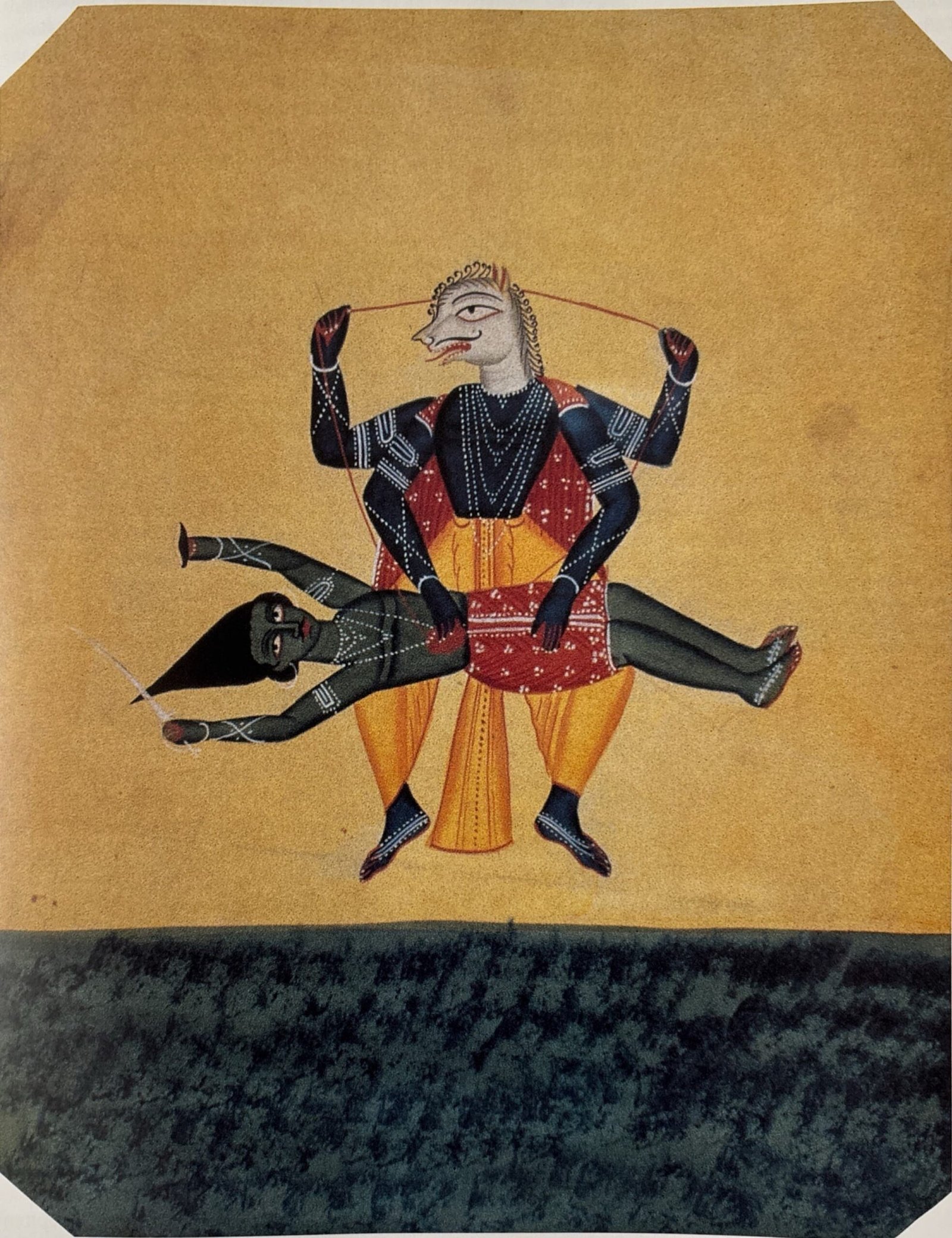
Kalighat painting crystallized in the early decades of the nineteenth century around the Kalighat temple precinct in Calcutta, now Kolkata, as a distinctive urban folk art born of migration, market pressures, and social transformation. Developed primarily by patuas-rural scroll painters who moved from the Bengal countryside to the expanding colonial metropolis-the genre shifted decisively from long, narrative scrolls to single-sheet watercolour works on mill-made paper designed for rapid sale to pilgrims and city visitors. Its brisk brushwork, translucent washes, and pointed social satire made Kalighat painting both a commodity and a commentary, reflecting the swiftly changing world of colonial Calcutta. While it flourished throughout the nineteenth century, the practice waned by the early twentieth century, increasingly displaced by lithographic and oleographic prints. Yet the paintings endure as a visual lexicon of urban modernity in Bengal: they register religious devotion and commercial exchange, mimic and critique the emergent middle-class ethos, and articulate a hybrid aesthetic poised between folk inheritance and new metropolitan sensibilities. This article surveys the historical context, stylistic profile, makers, materials, and techniques of Kalighat painting, and traces its considerable influence and legacy within modern Indian art, while highlighting areas where further research is required to clarify artists’ identities, workshop practices, and the full scope of the genre’s reception.
Historical Context
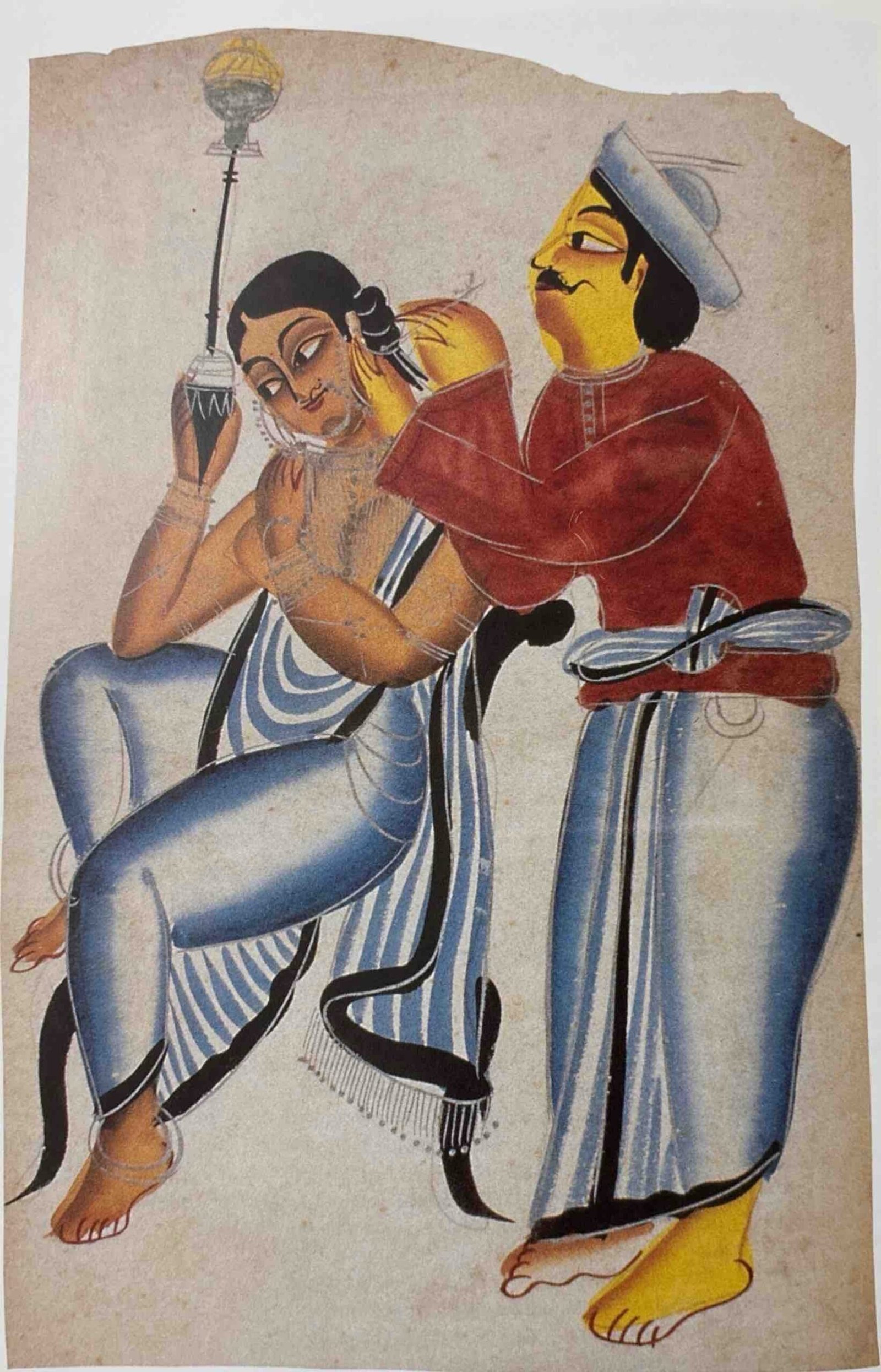
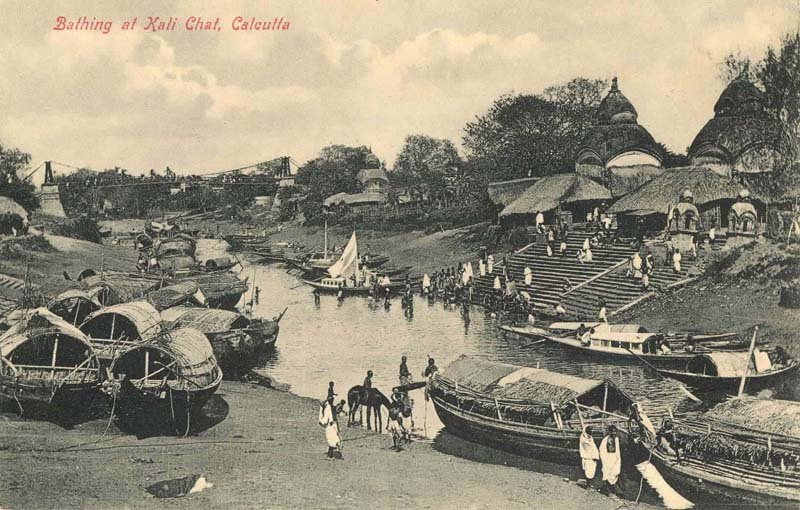
Nineteenth-century Calcutta, the capital of British India for much of the period, was a crucible of urbanization, migration, and cultural realignment. Against this backdrop, patua painters arrived from rural Bengal and settled near the Kalighat temple, where the steady flow of pilgrims and tourists created a reliable market for images with religious and souvenir value. Colonial modernity-manifest in new administrative structures, changing education systems, and shifting consumer habits-produced novel social distinctions and tensions, reflected not only in what patrons demanded but also in what artists chose to depict. Central to this evolving urban scene was the rise of the Bengali bhadralok, a self-consciously modern middle class whose embrace of Western manners, known broadly as babu culture, became a recurrent target of Kalighat satire. The genre’s pictorial field thus accommodated temple icons and urban types side by side, mapping both continuity and disruption in everyday life.
At the same time, the colonial discourse privileged classical, Sanskrit-inflected artistic canons and marginalised vernacular forms, a hierarchy that shaped how Kalighat painting was received and classified in both Indian and European venues. Debates on Indian identity in the era of emergent nationalism also conditioned interpretations of the pictures, which could be praised as indigenous ingenuity or dismissed as popular ephemera. Early audiences often encountered Kalighat works in markets and around the temple as affordable, portable objects; others saw them in European exhibitions categorized as decorative or industrial arts. The brisk museumization of the genre within a century of its birth speaks to the tensions at play: a practice grounded in street-side commerce and immediate social reference was rapidly recontextualized as an artifact within institutional collections, even as the original painting tradition diminished under the pressure of print technologies and shifting urban tastes.
Stylistic Characteristics
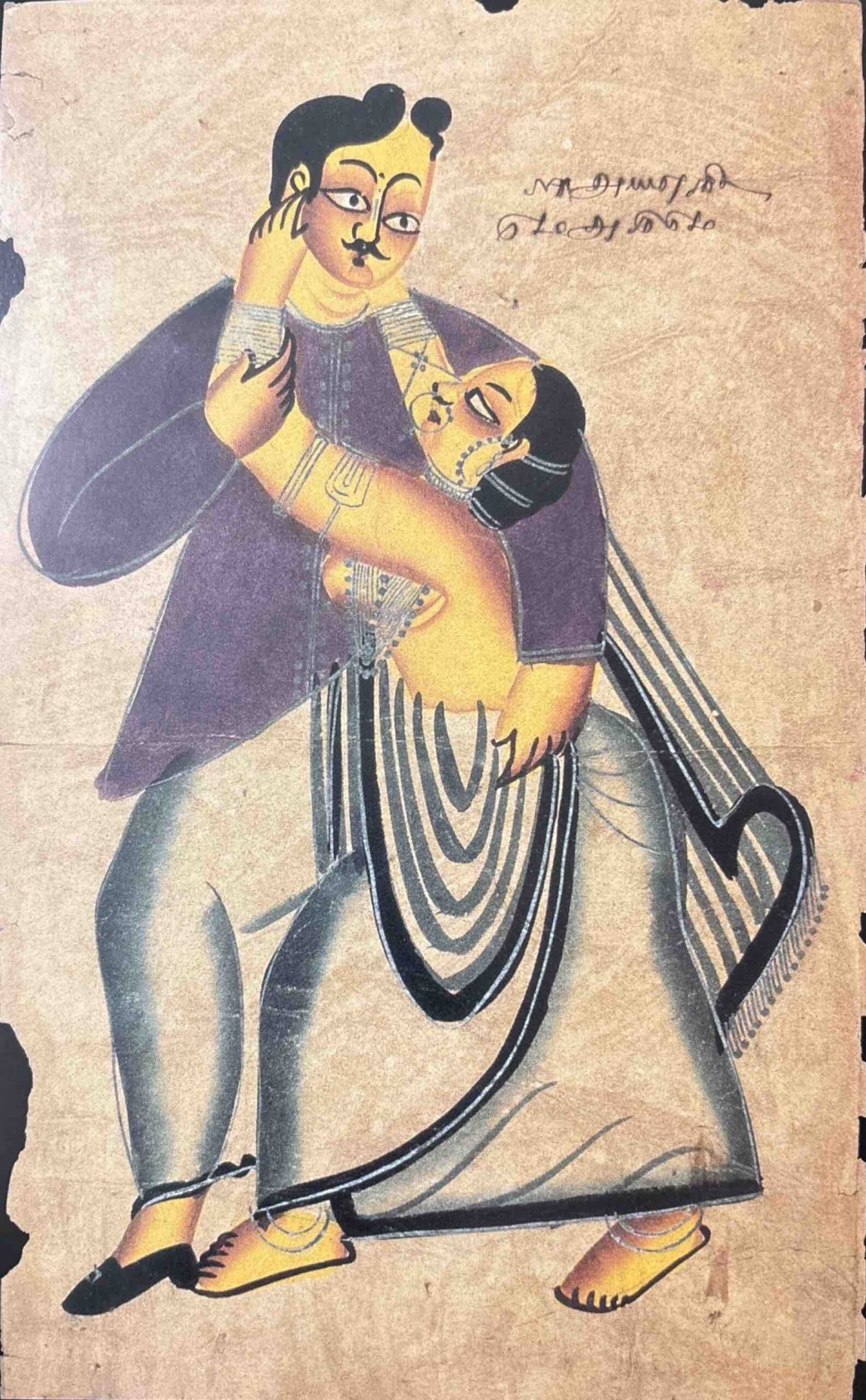
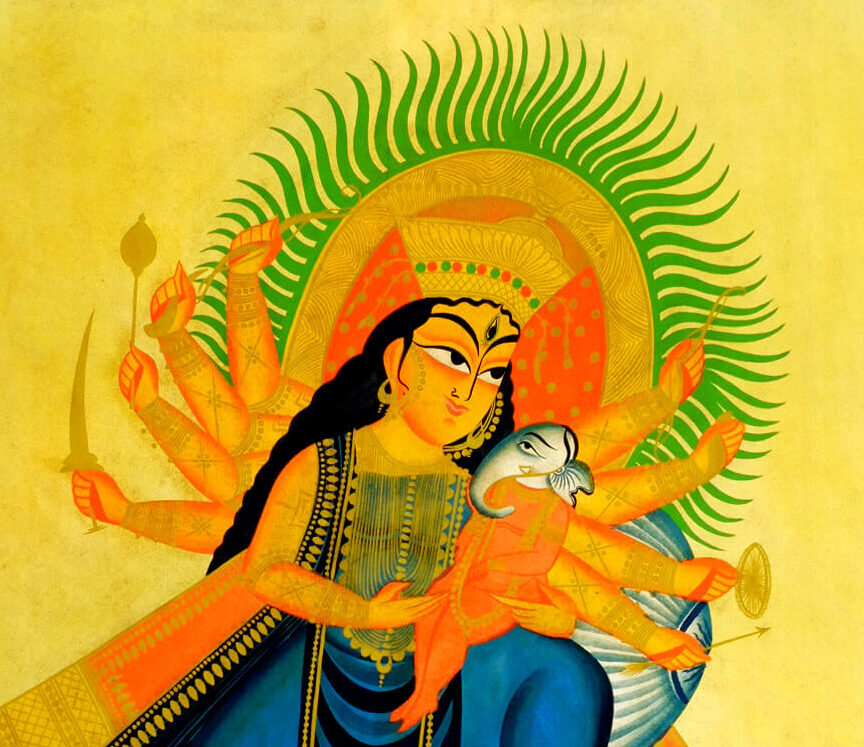
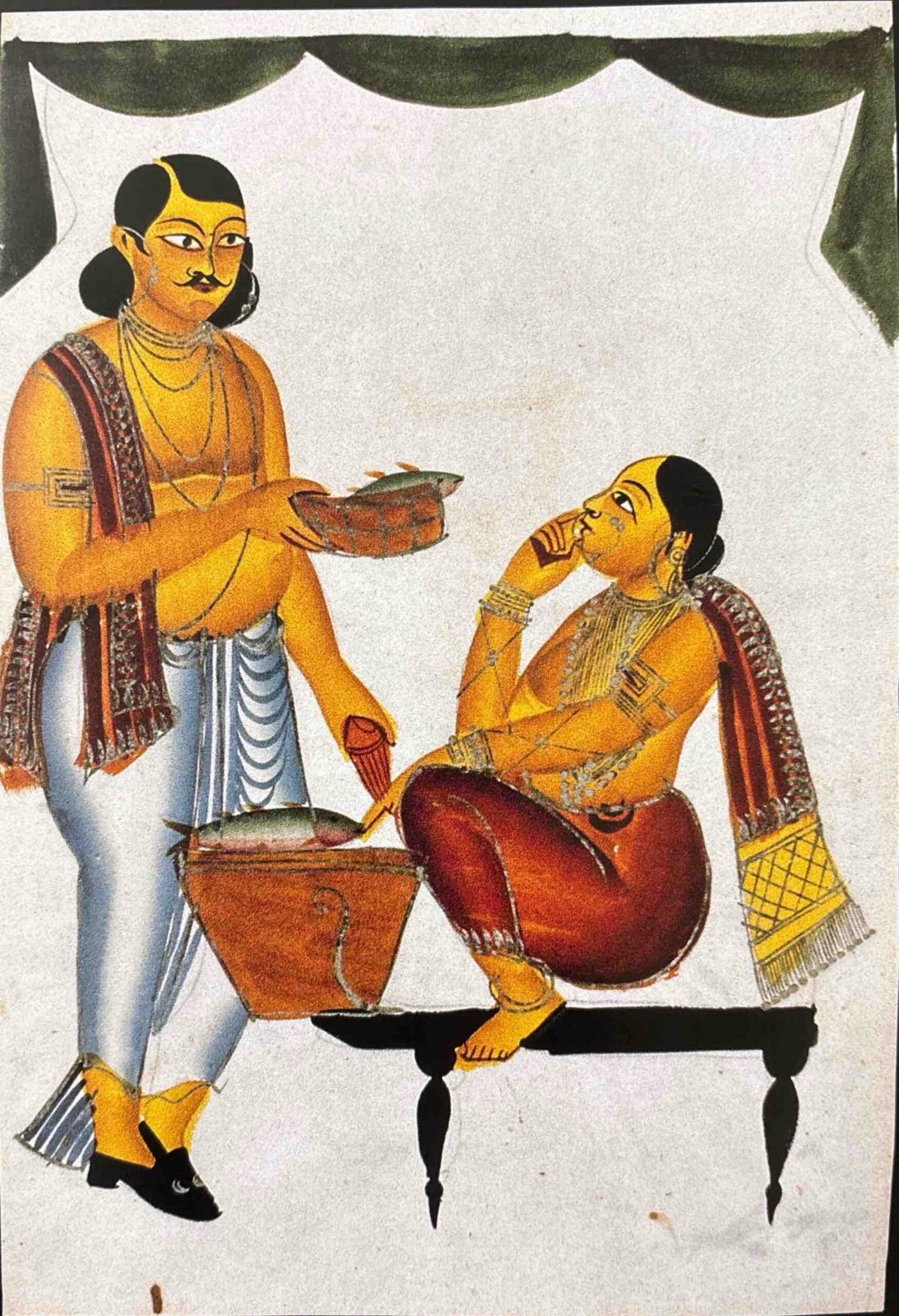
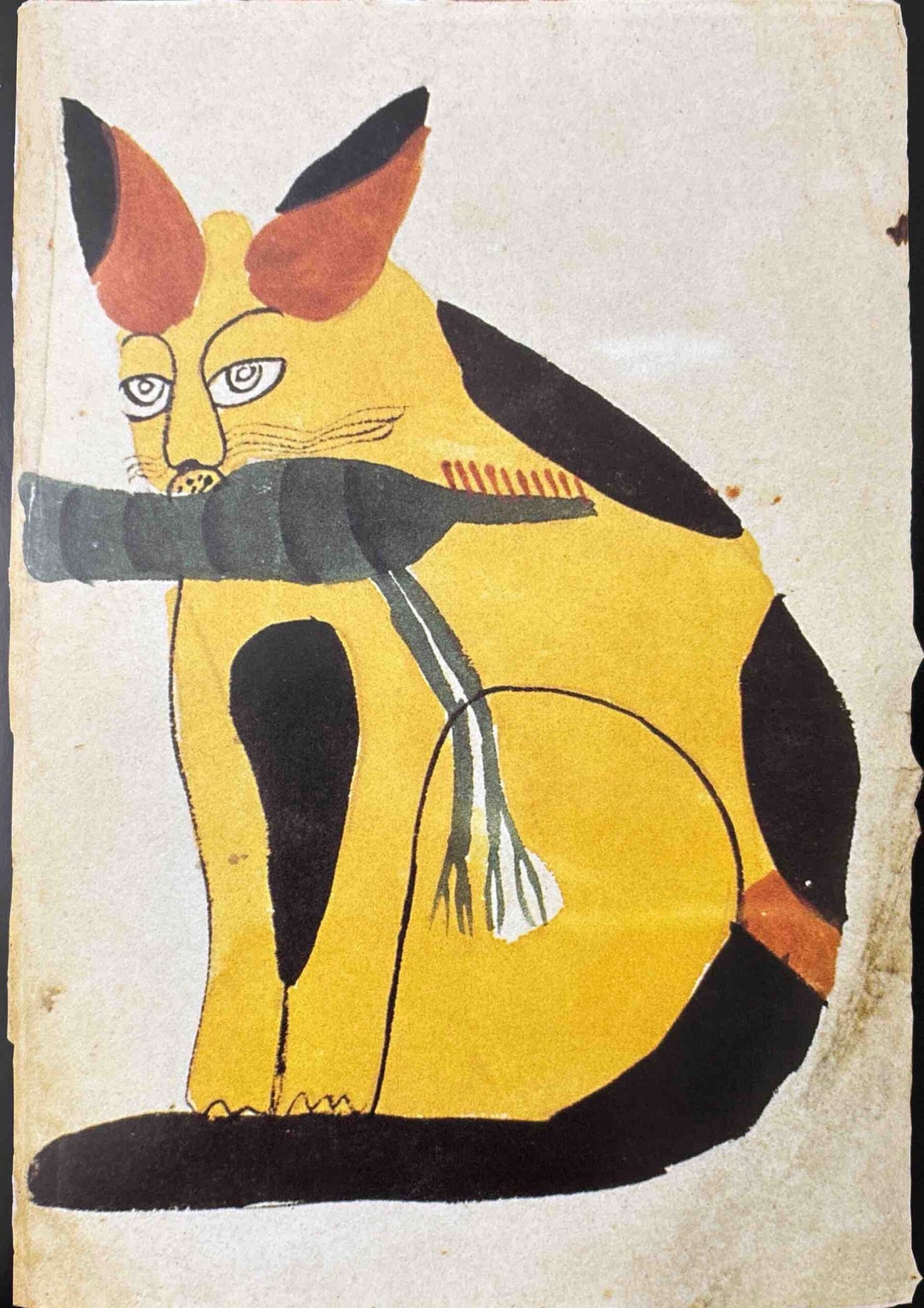
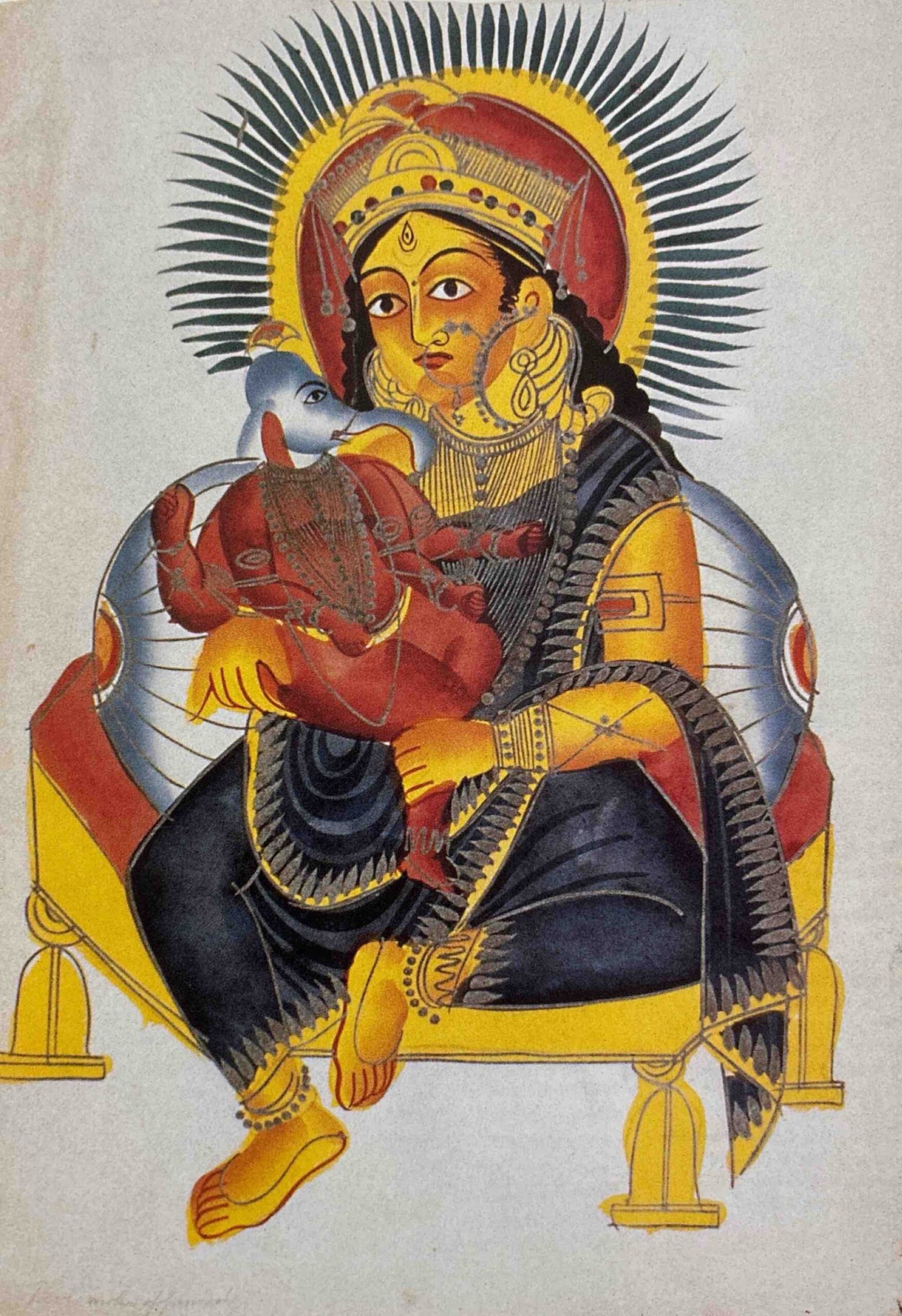
Kalighat painting is immediately legible through bold, calligraphic outlines and vividly translucent watercolours applied to mill-made paper, usually with minimal or blank grounds that push figures and gestures into striking relief. The defining line is often laid down in a single, assured stroke, a sign of both technical control and the speed demanded by the market. This economy of means is balanced by shrewd effects of chiaroscuro and shading-applied not as dense modelling but as measured tonal passages that give bodies and draperies a palpable sense of volume. Figures can appear theatrical, with poised silhouettes and staged confrontations, as if actors advancing toward the picture plane to engage the viewer directly. The pictorial language, while rooted in indigenous idioms inherited from scroll painting, assimilates aspects of Western visuality introduced in the colonial city, including academic-style shading and a sense of spatial focus that heightens the immediacy of the subject. As the genre matured, its repertoire expanded beyond devotional imagery to encompass contemporary city life: dandified babus and their entourages, courtesans, and headline-making scandals became staples alongside gods and goddesses. Exaggerated physiognomies, elongated eyes, and accentuated accessories sharpen the satirical edge and convert social observation into caricature, yet without sacrificing clarity or compositional balance. The absence of elaborate background settings is not a mere short-cut; it operates as a strategic frame that concentrates attention on posture, costume, and expression, allowing a compact image to carry narrative and critique. Above all, Kalighat painting demonstrates a hybrid aesthetic: indigenous formats and ritual functions align with techniques and stagecraft inflected by the colonial city. The result is a nimble, urban popular style whose agility lies in distillation-of line, colour, and motive-rather than descriptive abundance.
Key Artists & Works
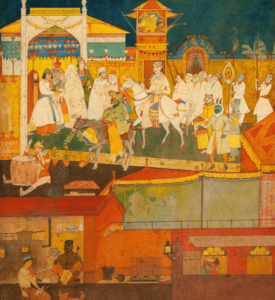
Kalighat painting developed within a largely collective and commercial milieu in which individual signatures were rare and biographies seldom recorded. As a result, specific authorial identities remain mostly anonymous, a circumstance that complicates strict attribution and chronology but also foregrounds workshop practice and shared vocabularies. Early critical attention provided a foundation for modern appreciation of the genre: Ajit Ghose in 1926 and Mukul Dey in 1932 drew notice to its confident linearity and urban sensibility; later, W.G. Archer’s studies in 1953, 1962, and 1971 established a scholarly framework that situated Kalighat painting within broader art historical narratives. Further contextualization was offered by Hana Knizkova, whose work emphasized the continuum between traditional craft training and evolving modern influences. In the later twentieth century and beyond, contemporary artists such as Kalam Patua have maintained the spirit of Kalighat imagery through adapted vocabularies, underscoring the form’s capacity for renewal. At the same time, Jamini Roy-one of the best-known modern painters to engage with the Kalighat lineage-appropriated its motifs while diverging stylistically and ideologically, favouring an emphasis on rural purity rather than the urban folk hybridity that defined Kalighat’s genesis. As for subjects, the range is both devotional and topical. Images of Hindu deities retained a constant presence due to the temple’s draw, yet the attention directed at babu culture, courtesans, and urban theatricals signalled a genre deeply attuned to social theatre. The Tarakeshwar (Elokeshi) affair-emblematic of public scandal-entered the repertoire as a telling instance of the genre’s responsiveness to current events. These works combined moral commentary with sly humour, revealing how a temple-side practice also served as a platform for reflecting on the evolving mores and contradictions of nineteenth-century Calcutta.
Materials & Techniques
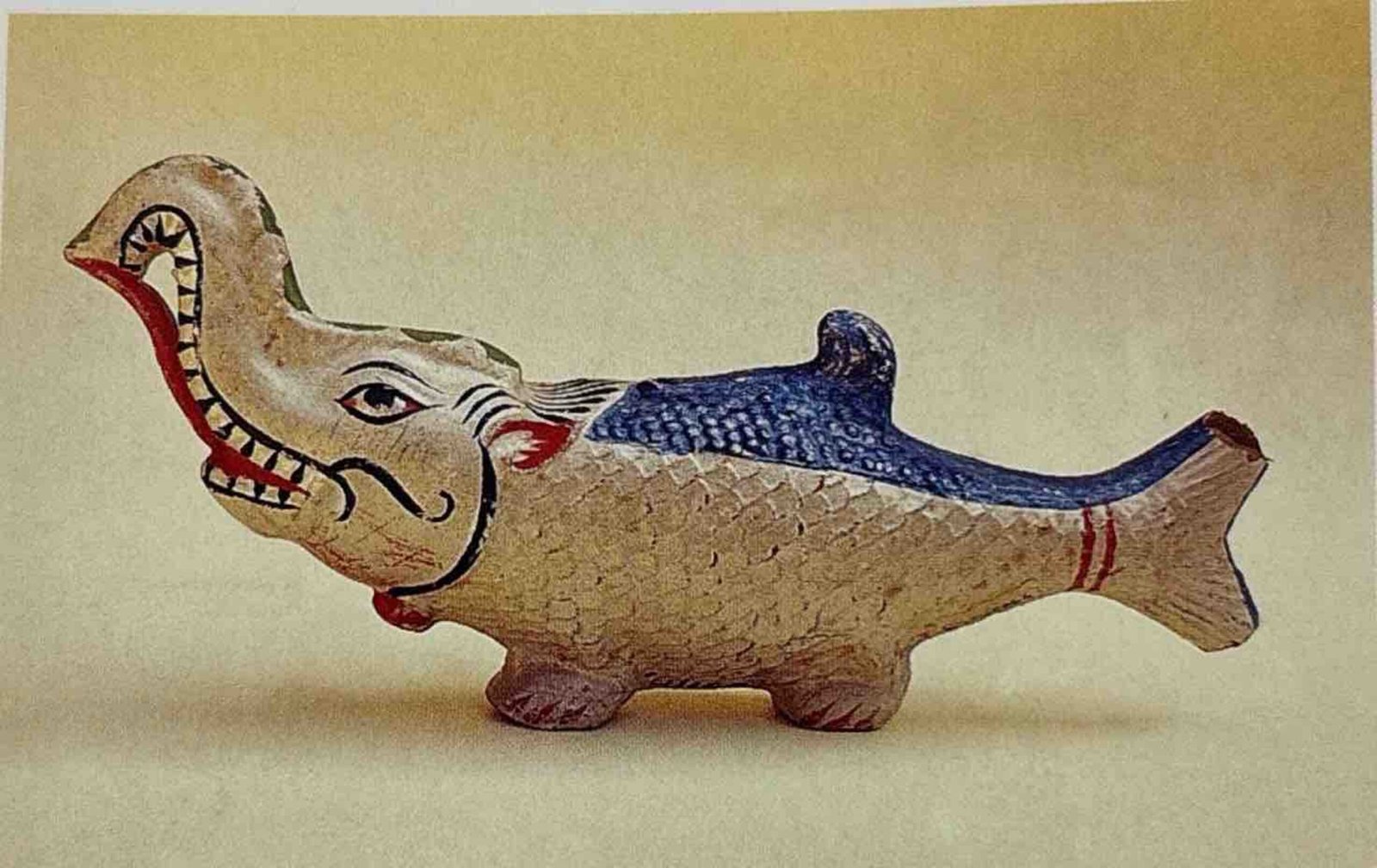
The material core of Kalighat painting is watercolour applied to mill-made paper, a choice aligned with the need for portability, speed, and cost-effectiveness in a bustling urban market. Translucent pigments facilitated layering and subtle tonal transitions that animated body contours, textiles, and ornaments without the encumbrance of heavy modelling. Brushes were handled with particular virtuosity to produce bold, sweeping outlines in a single continuous movement; the fluency of these strokes is integral to the genre’s visual identity and underscores the economy of labour central to its production. The painters’ rapid pace met the demands of a clientele composed of pilgrims and casual visitors who frequently sought images on request and within short time frames, a condition that influenced format and scale. The shift from narrative scrolls-long works intended for sequential, performative storytelling-to compact, single-sheet compositions constituted a major technical and conceptual realignment. Instead of unfolding a tale panel by panel, artists learned to encapsulate a scene or type in one frame, relying on emphatic contour, controlled shading, and emblematic detail to convey character and situation.
While this approach privileged immediacy, it did not preclude nuance; rather, it honed pictorial decision-making to the salient sign. In the later phase of the tradition, lithographic and oleographic technologies expanded the circulation of Kalighat imagery, making its motifs widely available beyond the temple precinct. However, such reproduction also contributed to the decline of hand-painted originals by shifting consumer expectations and altering the economics of production. This technological transition, while well recognized, still invites study to clarify how it affected workshop organization, pricing, and the stylistic tendencies of artists adapting to a changing visual marketplace.
Influence & Legacy
Kalighat painting stands at a critical juncture in the genealogy of modern Indian art, mediating between vernacular practice and metropolitan culture while documenting the lived experience of colonial modernity in Calcutta. Its images serve as a visual archive of nineteenth-century Bengali society: they register devotions enacted at the Kalighat temple and, with equal clarity, capture the self-fashioning of the bhadralok and the public theatre of scandal, leisure, and consumption. In doing so, the genre challenged art historical priorities that long privileged classical and elite traditions, asserting the interpretive force of popular visual languages and the perspectives of artisanal communities. This challenge reverberated into the twentieth century, where artists and movements-among them the Bengal School and figures like Jamini Roy-absorbed, rearticulated, or resisted Kalighat’s strategies and motifs within evolving debates on national art and cultural authenticity. The satirical temper and topical acuity of Kalighat painting also anticipated the more overt social critique found in later forms of popular culture and modern Indian art, establishing a precedent for images that traffic in immediacy while sustaining complex commentary. Institutionally, collections in museums such as the Victoria and Albert Museum in London, the Cleveland Museum of Art, the Ashutosh Museum at Calcutta University, the Gurusaday Museum, and the Victoria Memorial in Kolkata have anchored the genre’s preservation and study, aided by the cataloguing and interpretive efforts of scholars including W.G. Archer.
ছাপচিত্র থেকে ক্যালেন্ডার আর্ট: ভারতে মুদ্রিত ছবির ইতিহাস ও নন্দনতত্ত্ব
This growth in curatorial and academic attention has reframed Kalighat works from temple-side souvenirs to key documents in the history of urban aesthetics. Yet significant questions remain open to research: the identities and biographies of individual painters are elusive; precise periodization by style is complicated by collective production; the degree and character of European influence remain debated; and the socio-economic makeup of patronage networks requires deeper archival inquiry. Moreover, the dynamics of the shift from hand-painted images to lithographic and oleographic reproductions, the roles of other artisan groups in shaping the genre, and the varied receptions of these paintings among different social strata warrant further, sustained investigation. The legacy of Kalighat painting thus resides not only in its stylistic DNA but also in the questions it continues to pose about modernity, authorship, and the status of the popular in art history.
Conclusion
Kalighat painting emerged from a specific historical setting-nineteenth-century Calcutta’s expanding urban world near the Kalighat temple-and forged an urban popular aesthetic that combined artisanal skill, agile observation, and pointed wit. Migrant patuas adapted their narrative skills to single-sheet compositions, perfecting a language of assertive line and translucent colour that could carry religious themes and social critique with equal clarity. If the genre declined as lithographic and oleographic prints reshaped the marketplace in the early twentieth century, its visual grammar continued to resonate, informing artists and movements that sought to articulate a modern Indian art grounded in local forms yet alert to changing cultural conditions. The pictures’ economy of means-compressed staging, minimal backgrounds, deft shading-produces images that are concise yet capacious, able to condense complex social realities into readily legible forms. Institutional collecting and scholarship have preserved this corpus and emphasized its historical and aesthetic significance, even as ongoing research seeks to clarify authorship, workshop practices, and the precise contours of stylistic evolution. Kalighat painting remains consequential not as an isolated folk survivance but as a marker of cultural negotiation in colonial Bengal, a field where devotion, commerce, satire, and spectacle meet. Its continued relevance lies in this hybridity: a reminder that modern visual culture in South Asia did not arise only from academic studios or nationalist manifestos, but also from temple thresholds and street-side stalls, where painters translated a transforming city into a distinctive art of line, light, and social insight.