
Kolkata Tramways: Infrastructure, Decline, and the Question of Urban Continuity
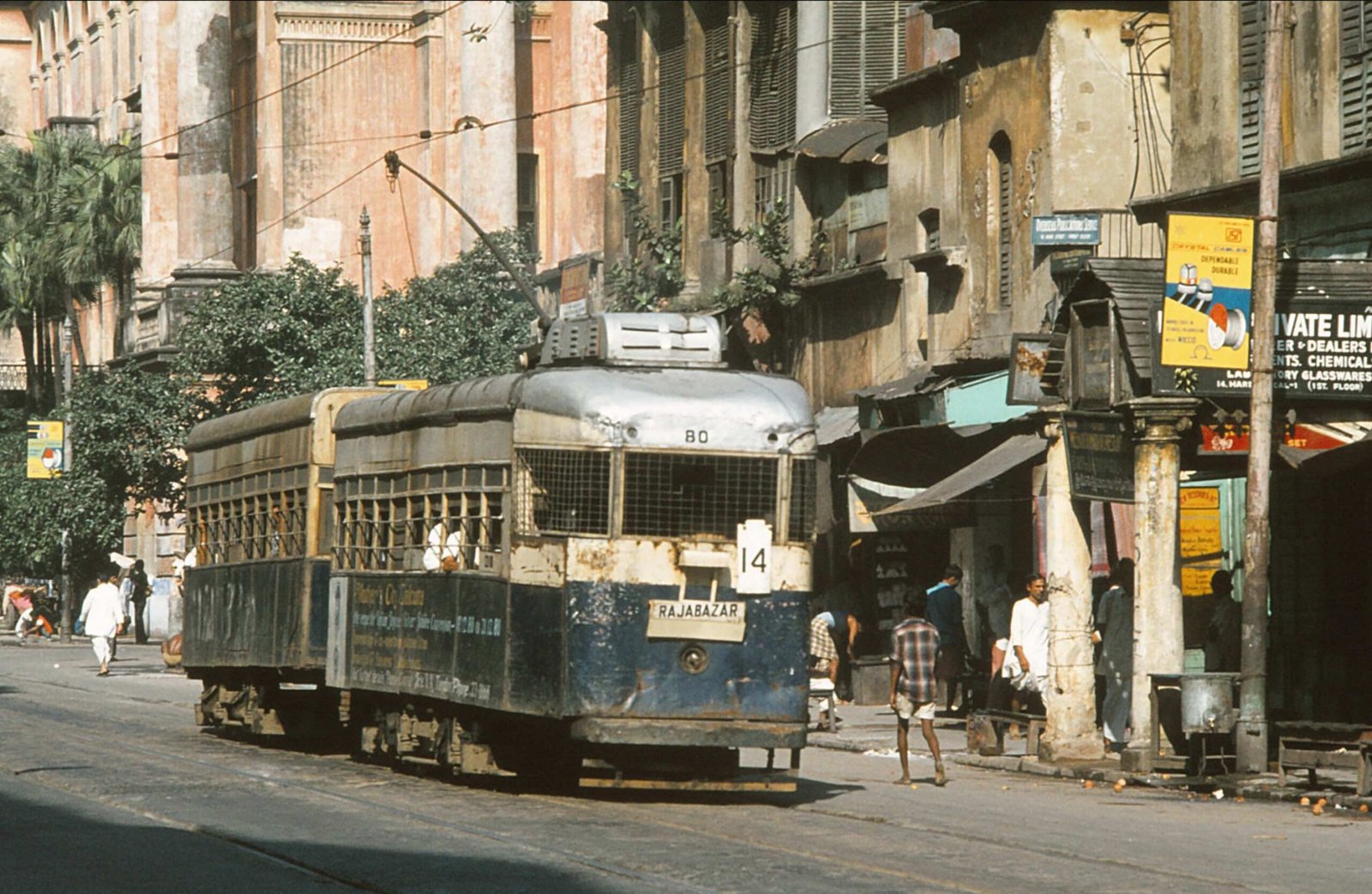
Kolkata’s tramways form a distinctive strand in the city’s urban fabric. As the only operational tram system in India, they mark out an infrastructural lineage that is rare in the subcontinent and singular in South Asian metropolitan history. The network once traced a broad geography across central, north, and south Kolkata and into the Howrah area, threading together commercial hubs, residential districts, and institutional precincts. Today, operations continue on a drastically reduced scale, with services concentrated on two routes from Esplanade to Shyambazar and to Ballygunge, together covering about 14 kilometres. Yet even at this limited extent, the tramways connect an assemblage of material elements-track, power, depots, and rolling stock-with a cultural vocabulary that is intimately associated with the city’s memory and everyday life.
Understanding Kolkata’s trams requires attending to their layered history and the technical quietness of their design. Their evolution, from horse-drawn beginnings to electric operation, mirrored the city’s own shifts in mobility, commerce, and governance. Their architecture is not monumental but infrastructural: the measuring-out of street space in rails, the overhead lines and trolley poles, the pragmatic forms of depots and termini. Through this lens, the system becomes a record of continuity as much as of change. It registers expansions and contractions, modernization and stagnation, civic attachments and administrative pressures.
The system’s present precariousness forces a broader question. Can an urban technology survive as both heritage and utility? Kolkata’s trams invite a considered appraisal of urban continuity-continuity not as a static preservation of form, but as the capacity of an older system to adapt to contemporary transport needs while retaining its historical identity. The tramways’ story, traversing colonial introduction, post-independence transformation, and present-day contestation, offers a complex case study in how cities carry forward, reconfigure, or abandon infrastructure that has shaped their streets and imaginaries for generations.
Historical Background
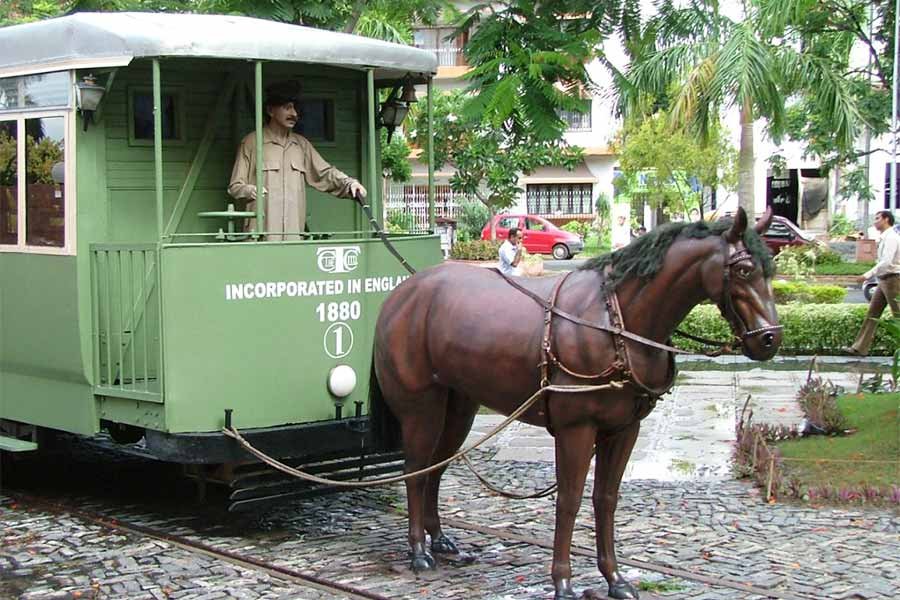
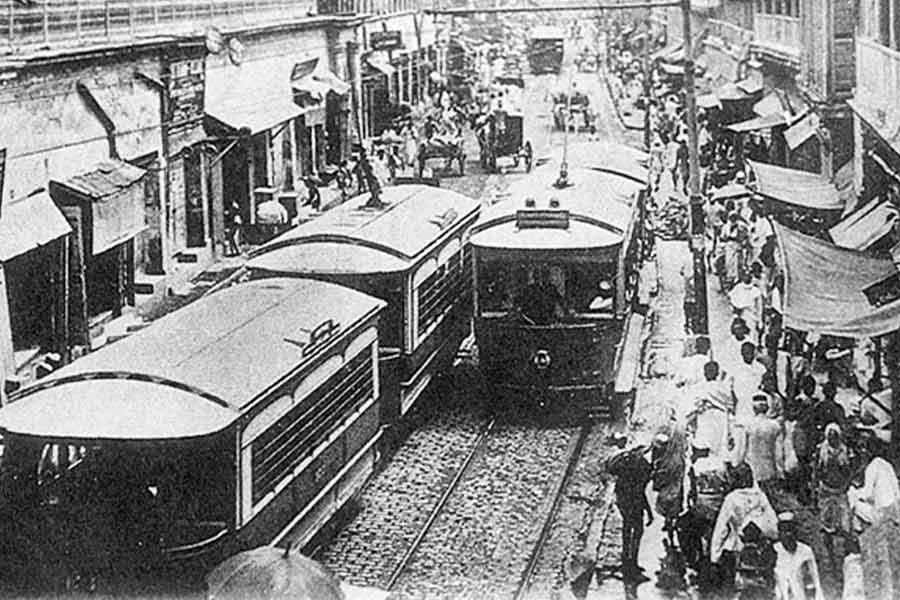
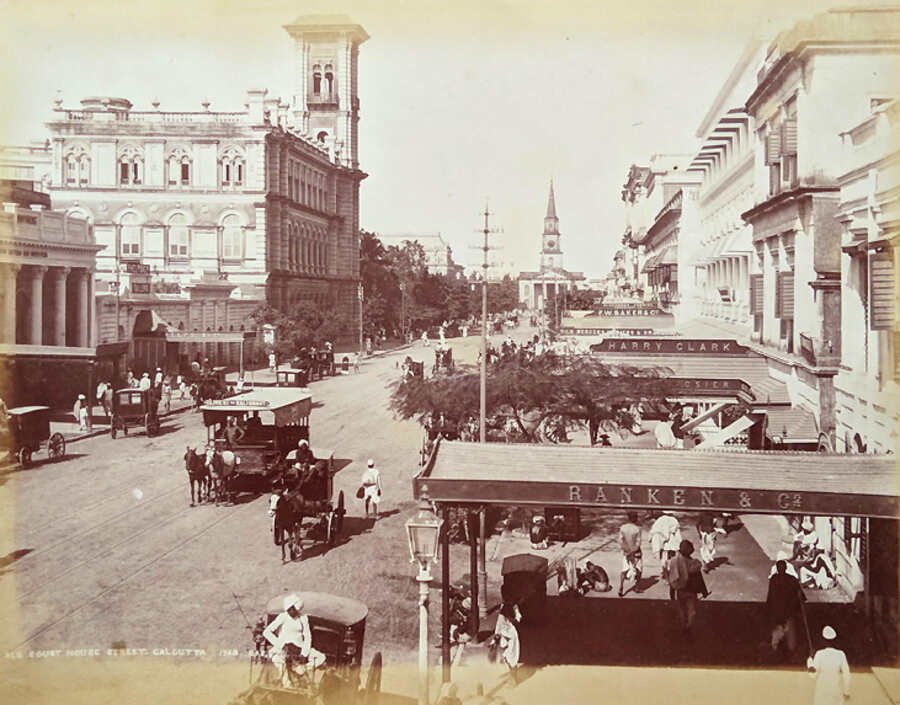
The first chapter of Kolkata’s trams began in 1873, when a horse-drawn service briefly connected Sealdah and Armenian Ghat. Financial losses halted the operation within the same year, a reminder that even at their inception, tramways were subject to the exacting tests of capital and patronage. The formation of the Calcutta Tramways Company (CTC) in 1880 set the groundwork for a more durable service. Trams returned to the streets as horse-drawn carriages on metre-gauge tracks, later joined-in an experimental interlude-by steam-powered trams in the early 1880s.
The decisive transition came with electrification. Conversion to standard gauge (1435 mm) began in 1900, and in 1902 the first electric tramcar ran in the city, making Kolkata the first Asian city to operate electric tramways. This technological leap coincided with the imperatives and patterns of British colonial urbanism. Electric trams responded to the demands of a growing metropolis-moving workers to offices, students to schools, and goods and people to marketplaces-while establishing a rhythmic regularity on the city’s avenues and narrower thoroughfares. By the 1940s, the network had enlarged its ambit, extending its services to suburban edges and consolidating tram travel as a routine modality.
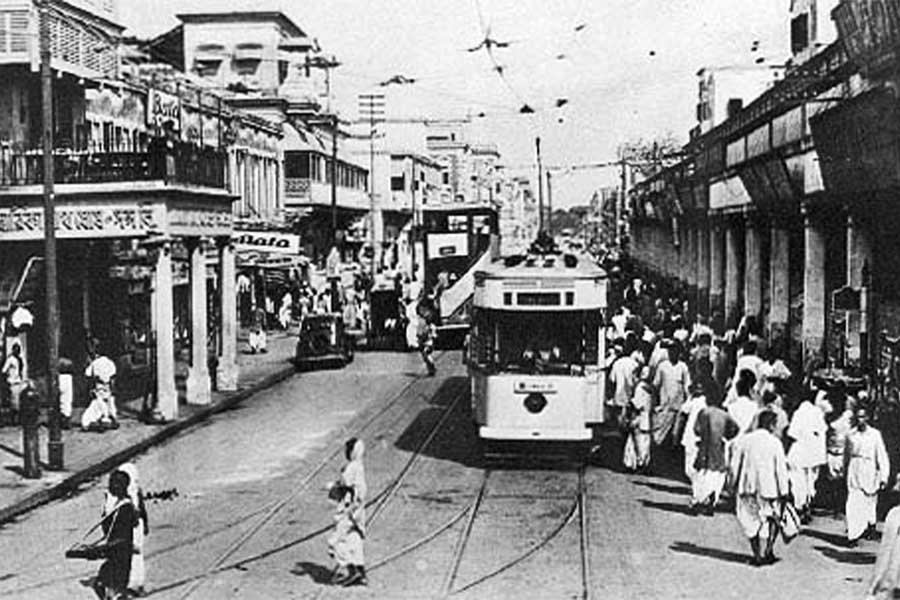
After independence, stewardship of the system gradually shifted to the West Bengal government, culminating in nationalization in 1976. These changes reflected broader transformations of urban governance and of state involvement in public transport. Through the mid-20th century, the tramways were a central component of Kolkata’s mobility ecosystem. In the 1960s, the network counted more than 340 trams working across 37 routes, linking major nodes such as Sealdah, Esplanade, Shyambazar, Ballygunge, Howrah, and many districts in between. The alignment of tracks within commercial and residential areas allowed the tramways to braid together the city’s economic and social life.
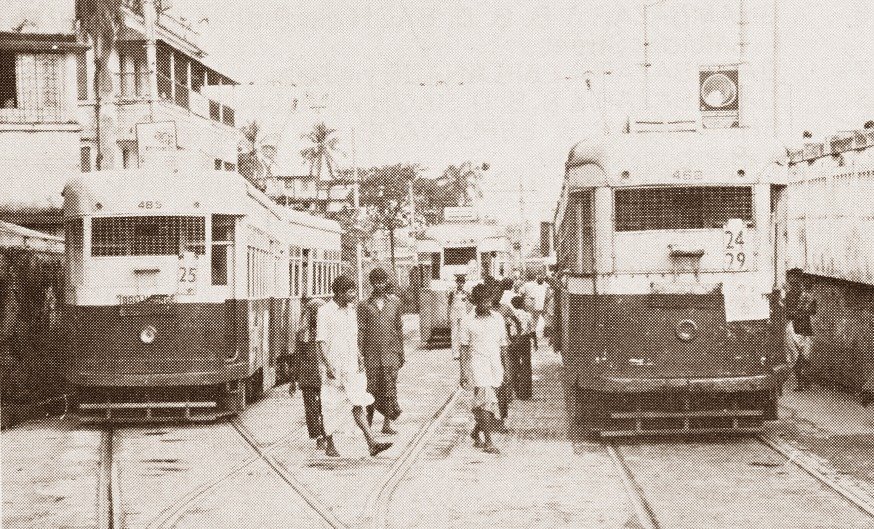
From the 1970s onward, the balance began to tilt. Buses, private vehicles, and later the metro introduced new capacities and different spatial logics into city travel. Urban development pressures intensified. As construction priorities shifted-towards flyovers and, more recently, metro expansions-tram tracks were often removed or sidelined. The system faced maintenance backlogs and the friction of operating a legacy network within streets increasingly optimized for other traffic patterns. Routes closed, depots were shuttered or repurposed, and passenger numbers fell. The result is a deeply pruned network that continues to run but not at the breadth or frequency that characterized its middle decades.
Throughout these shifts, the tramways retained a paradoxical visibility. Their presence in the cityscape and in narratives of Kolkata’s identity kept them in public debate even as operations contracted. Attempts at modernization-introducing refurbished cars, air-conditioned coaches, and specialized services-reflected efforts to reconcile heritage value with contemporary expectations. Proposals for Light Rail Transit on selected corridors and legal encouragement to preserve tram services suggested a framework for renewal, even as financial constraints and infrastructure deterioration posed persistent obstacles.
The historical record also notes moments when trams performed social functions beyond mobility. During periods of communal tension, the steady circulation of trams through mixed neighborhoods contributed to everyday patterns of contact and normalcy. Tram workers were part of trade union movements, placing the system within the history of labor and civic organization. These threads underscore how the tramways have operated not only as a transport technology but also as a civic institution with contours shaped by wider historical forces.
Architecture & Design
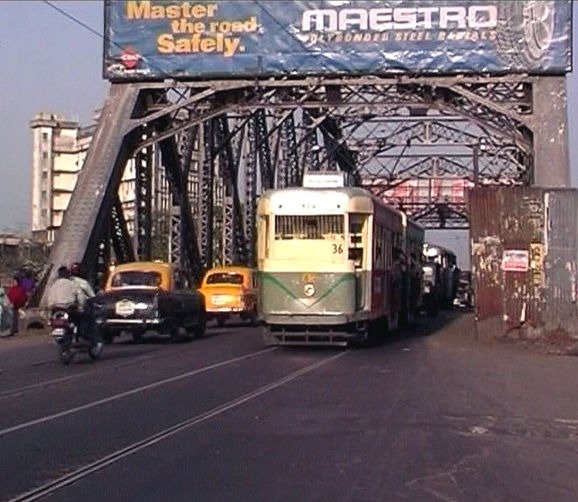
The architecture of Kolkata’s tramways is infrastructural rather than monumental: it is made of rails embedded into roads, standardized power supply systems, functional depots, and rolling stock designed for frequent stop–start service. The tracks are standard gauge (1435 mm), a conversion undertaken alongside electrification at the turn of the twentieth century. Power is delivered at 550 V DC via overhead lines, with trolley poles connecting each tram to the grid. Taken together, these elements comprise a system calibrated to urban scale-physically modest, readily perceptible in the street, and interdependent with other layers of the city’s circulation networks.
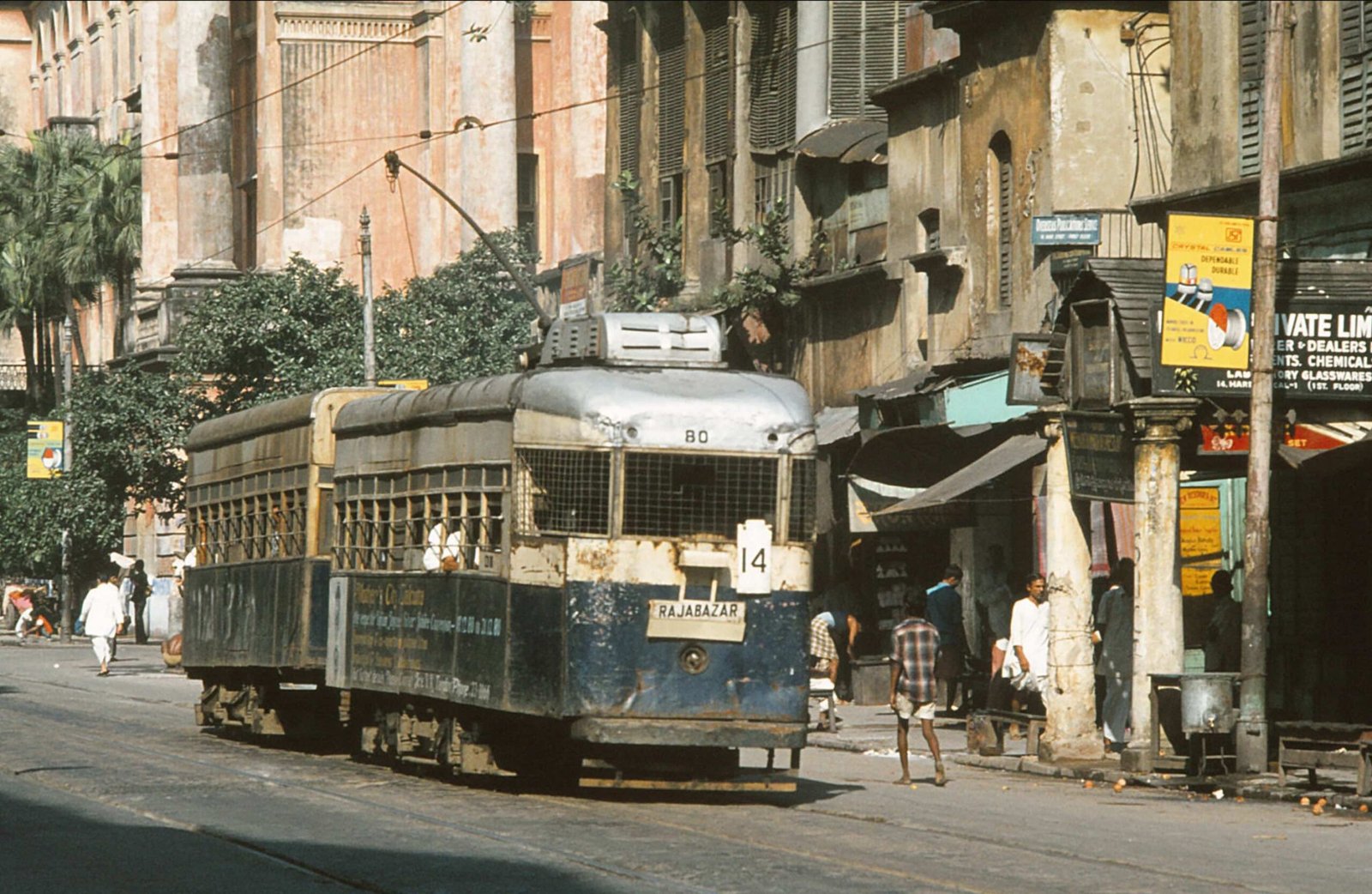
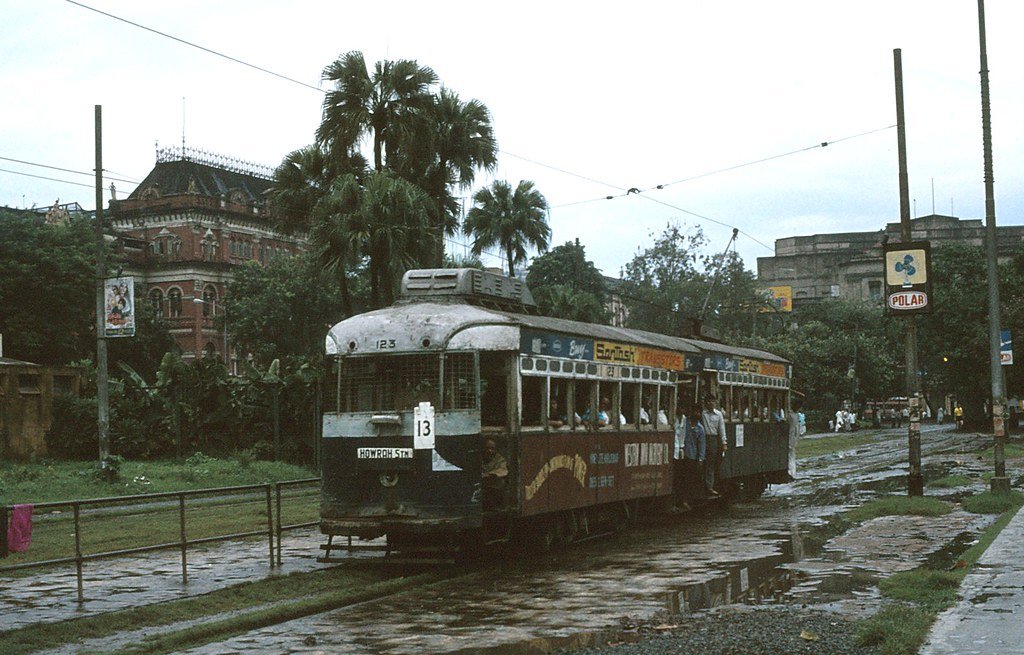
The tramcars themselves evolved across distinct typologies. Early generations were wooden-bodied, first pulled by horses and then, in a short-lived phase, coupled to steam power. With electrification, the fleet diversified into classes that responded to varying demands and service patterns. Single-coach J class cars provided compact service. Articulated K and L class formations extended capacity and improved distribution of weight over tracks. A notable variant, colloquially known as Sundari trams, offered double first-class accommodation within wooden articulated shells, an index of social hierarchies then encoded in urban services.
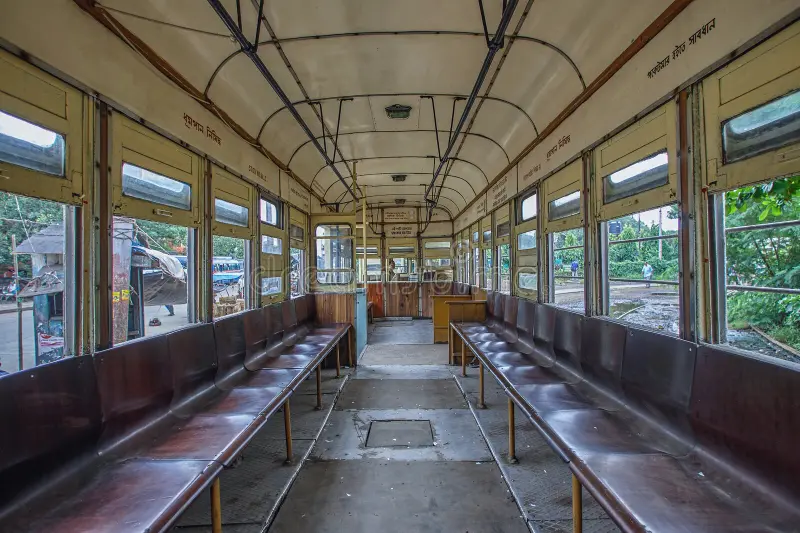
Industrial production shaped later fleets. Burn Standard and Jessop trams, with steel bodies introduced in 1982, signaled a different material logic-greater durability, ease of maintenance, and the aesthetic of an industrially modernized vehicle. Across these lines, the typical Kolkata tramcar settles into articulated double-coach form, approximately 17.5 meters in length and 2.1 meters in width. Seating for 62 passengers and a maximum carrying capacity of up to 200 organized the cars as high-throughput, low-speed conveyors suitable for dense urban corridors where short inter-stop distances and predictable schedules were more critical than peak velocities.
In recent decades, innovations have included polycarbonate-sheet coverings to reduce weight and weather exposure, air-conditioned trams targeting comfort, and special-purpose adaptations such as tram libraries and restaurants. Decorated heritage cars underscore the system’s symbolic significance while demonstrating that a tram can carry more than commuters-it can carry exhibitions, narratives, and curated experiences of the city. These interventions exemplify an architectural and programmatic elasticity: the ability of a basic vehicular platform to host multiple functions while remaining recognizable as a tram.
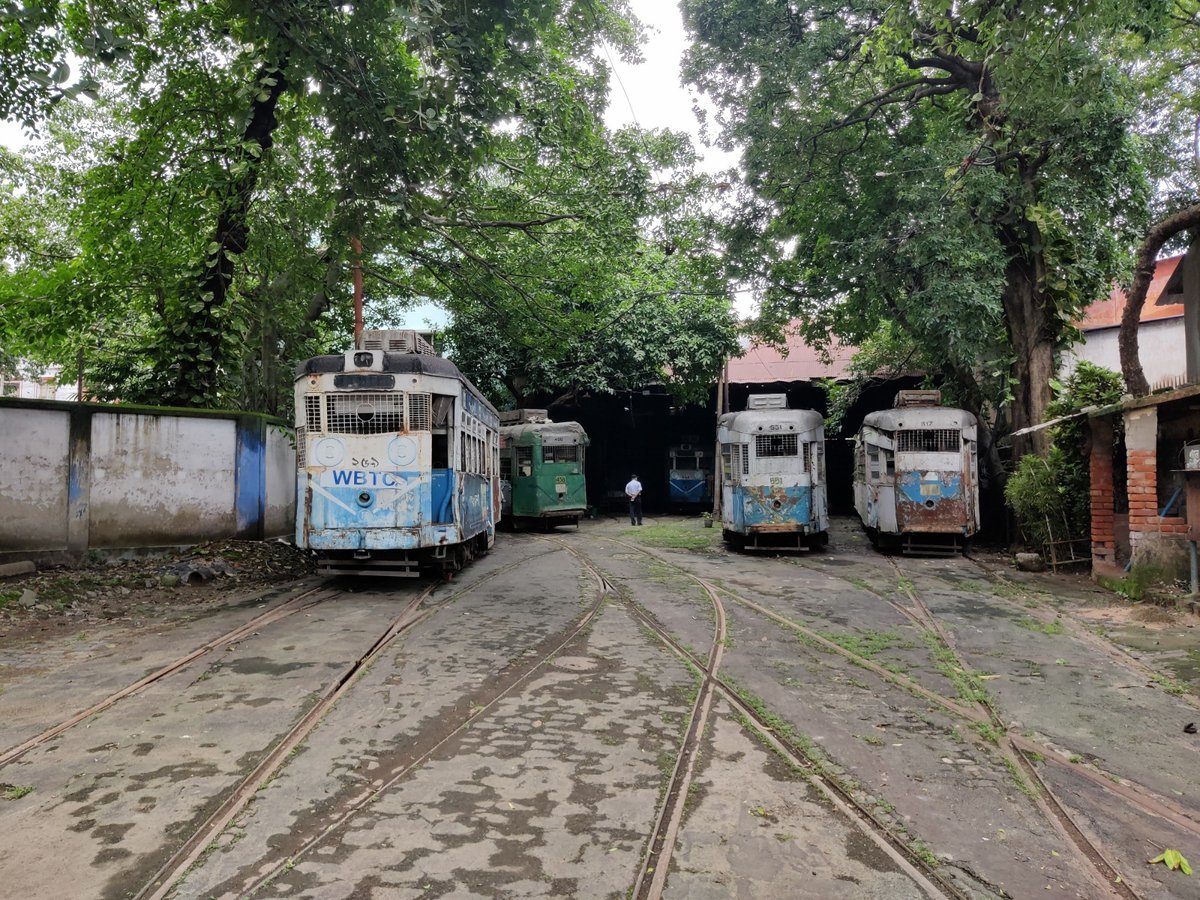
Depots and termini, although rarely celebrated, contribute to the architectural identity of the system. Many originated in the late nineteenth and early twentieth centuries as straightforward industrial complexes-combinations of sheds, workshops, track yards, and administrative rooms. Their design prioritized maintainability and circulation rather than facade. Over time, some depots were closed or reconfigured, their footprints absorbed by other urban projects. Where they persist, they stand as utilitarian heritage assets: less ornamental than bridges or public halls but essential to the operational continuity of the tramway.
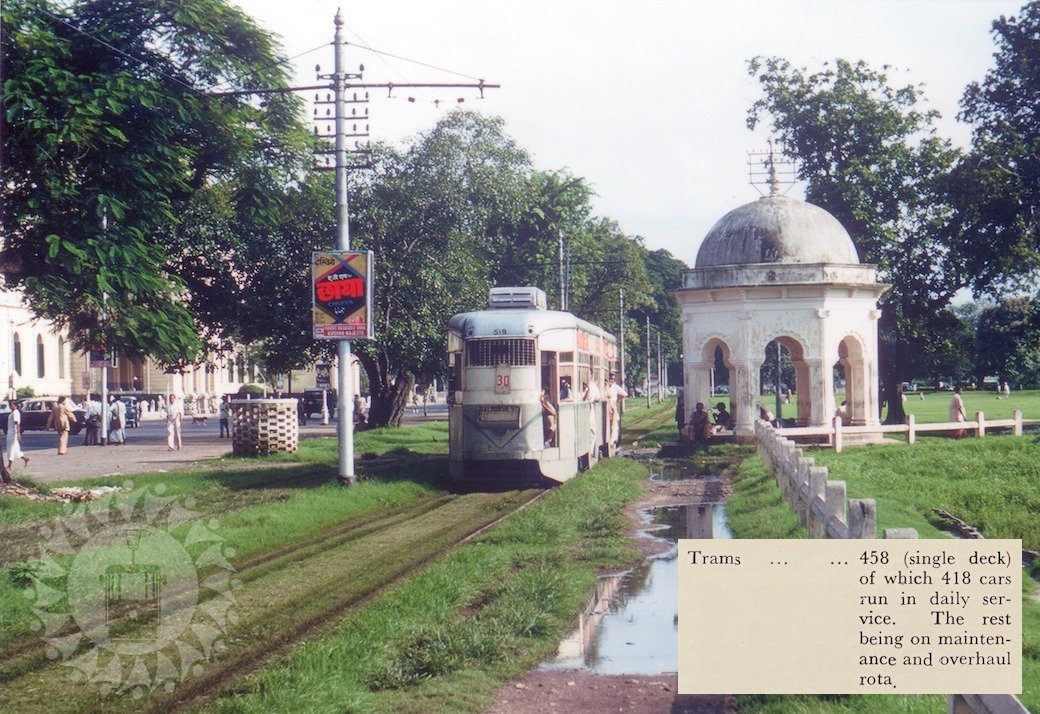
The street is the final, decisive component of architecture for Kolkata’s trams. Rails embedded within carriageways mediate how vehicles, pedestrians, and trams negotiate shared space. The tram stop, often little more than a marked point or a modest shelter, places emphasis on proximity and integration rather than separation. This spatial ethic-close to curbs, interleaved with everyday movement-makes the tram a visible part of streetscape life. At the same time, it underlines the vulnerabilities of a system whose performance depends on the condition of road surfaces, track beds, and overhead equipment.
More than a century after electrification, the ensemble of gauge, overhead power, articulated rolling stock, and compact depots continues to define the technical essence of Kolkata’s tramways. While modernization has introduced new materials and comfort features, the fundamentals remain consistent. This continuity of design frames the system not as an anachronism but as a durable urban technology-one that must, however, be maintained and sometimes reinterpreted to remain viable within changing transport ecologies.
Social Context & Cultural Memory
Kolkata’s trams are transport, but they are also text: a record inscribed on streets and in memory. In films, literature, and popular narratives, the tram appears as a shorthand for a certain Kolkata-unhurried yet purposeful, public and shared. This cultural presence does not arise solely from nostalgia. It is rooted in the tramways’ long service to daily mobility across mixed neighborhoods and varied occupations. Office workers, schoolchildren, and the elderly have used trams for predictable, affordable travel whose routines etched themselves into personal timelines and the city’s collective sense of time.
As an institution, the tramways sit within the history of labor and civic organization. Tram workers were actors in trade union movements, and the tram’s continuous passage through different quarters of the city provided, at various times, a shared frame of reference across communities. Historical accounts attribute to the system a calm continuity during periods of unrest, when a tram’s presence marked a persistence of the ordinary. While such episodes should not be romanticized, they show how an urban service can hold symbolic weight in moments that test civic cohesion.
Environmental considerations also bring the trams into present conversations about sustainable mobility. Electric operation at 550 V DC, quiet acceleration, and a high passenger-to-space ratio make trams a comparatively low-emission, space-efficient mode within a densely populated city whose road capacity is constrained. Even as the system’s coverage has contracted, the logic remains: steel wheels on steel rails can carry many people comfortably with minimal local pollution. This property is not a matter of aesthetics; it is a tangible public health and urban design benefit.
The tramways’ cultural resonance has spurred preservation efforts from citizens’ groups and institutional actors alike. Organizations such as the Calcutta Tram Users Association have campaigned to conserve and modernize the system rather than abandon it, arguing for integration with other modes and for the repair of core infrastructure. Legal interventions have emphasized the importance of maintaining tram services, including the formation of advisory committees to explore restoration and modernization. While these steps do not, in themselves, guarantee revival, they indicate a social and institutional will to reckon with the system’s heritage and potential.
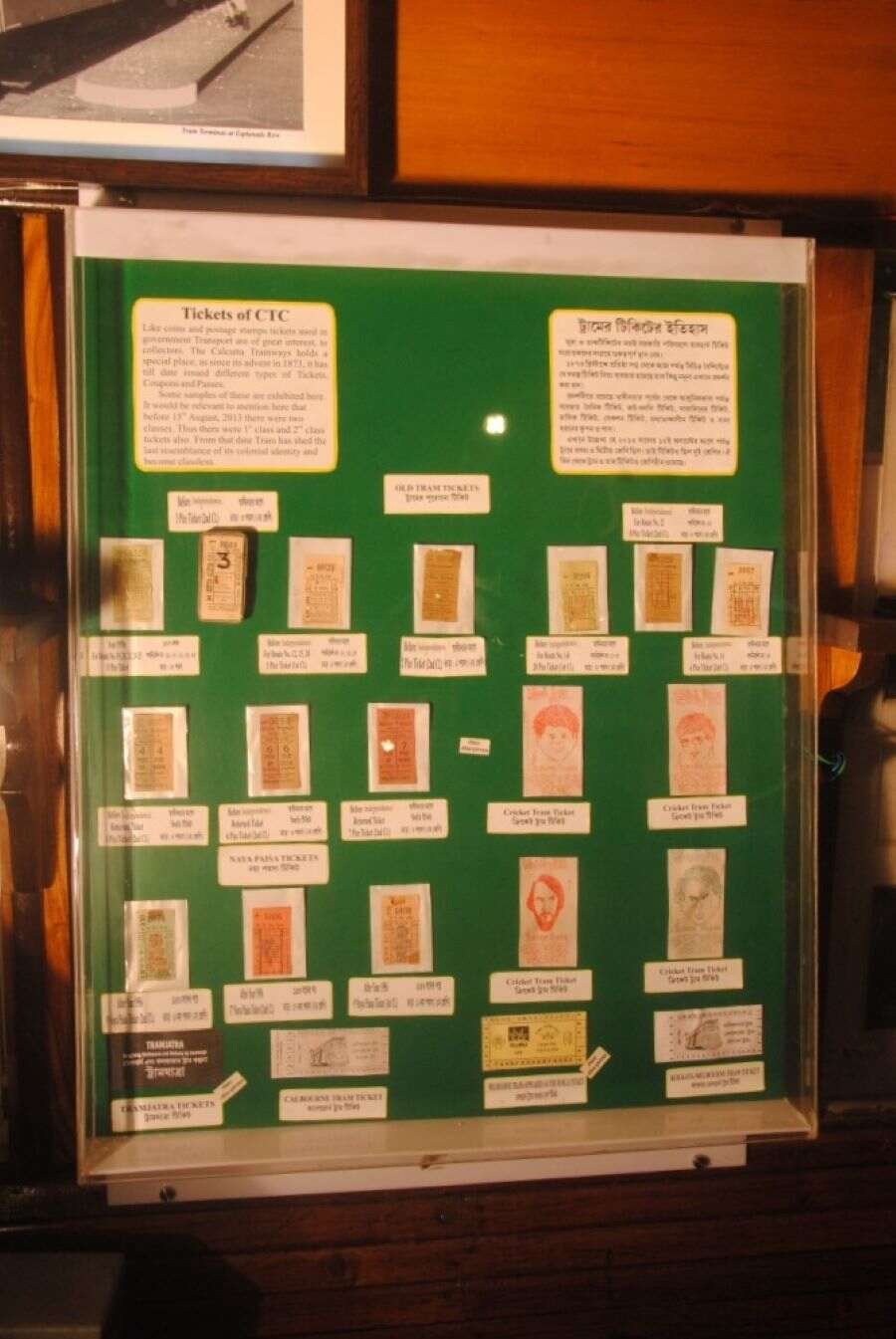
Curated heritage initiatives add another layer. The ‘Smaranika’ Tram Museum at Esplanade stores and interprets artifacts-mechanical components, documents, tickets-and displays a historic tram bogie. Functioning both as a repository and as an educational platform, it renders the tramways’ material culture visible, enabling new audiences to engage with the system beyond the frame of everyday commuting. At the same time, public events such as the Tramjatra festival have animated tram culture through art and community participation, showing how the tram can operate as a moving stage for civic expression.
Yet cultural value alone has not protected the tramways from attrition. Urban redevelopment projects, including metro construction and flyover building, have permanently removed tracks on several corridors. Routes have closed, and some depots have been abandoned or absorbed into other land uses. Without sustained technical maintenance and clear policy direction, heritage risks being reduced to a small number of decorated cars and exhibitions. The deeper question-how to keep a functional network alive-requires addressing track conditions, scheduling, and integration with buses and metro lines, all within a framework that recognizes both the costs and the social returns of electric surface transit.
Visiting / Access Information
The ‘Smaranika’ Tram Museum provides a focal point for understanding Kolkata’s tram heritage. Located at 6, Esplanade East, Kolkata, near the Esplanade metro station (gate no. 2), it is readily accessible within the city’s central transport hub. Visitors pay a nominal entry fee-commonly cited as twenty rupees-and can view displays that include mechanical parts, historical documents, old tickets, and interpretive panels. A small tram café underscores the everyday sociality that has long surrounded tram travel.
Riding the remaining active routes offers an experiential complement to the museum. Services currently operate between Esplanade and Shyambazar and between Esplanade and Ballygunge, allowing passengers to observe how the tram integrates with Kolkata’s streets, shops, and neighborhoods. The experience differs from that of buses or metro: the tram’s pace, its alignment within the roadway, and the interior arrangements of articulated double-coach cars offer a distinct spatial reading of the city. On select occasions, heritage and themed trams run for cultural programs, and public awareness events such as the Tramjatra festival draw attention to the tramways’ enduring presence.
Access information for services and special trams is best confirmed locally, as schedules and offerings can vary with operational conditions and city events. The museum and the active routes together allow visitors and residents to understand both the technical composition and the lived culture of Kolkata’s tramways without recourse to promotion or spectacle.
Conclusion
Kolkata’s tramways present an urban paradox. They are at once fragile-reduced to two operational routes, challenged by maintenance needs and competing priorities-and durable-surviving across more than a century of technological change and urban growth. Their built form is modest: standard-gauge rails, 550 V DC overhead power, articulated cars with seating for 62 and capacity up to 200, and functional depots that once anchored a city-spanning network. But the sum of these parts constitutes more than mere utility. It is a system of continuity, connecting past and present through a repeatable, legible pattern of movement in shared public space.
The story of decline is, therefore, also a story about choice. Urban development has, at times, removed the conditions under which surface rail can thrive. Routes have closed due to metro works and flyovers, and infrastructure deterioration has compounded financial pressures. Yet these trends are not a verdict inscribed in stone. Modernization proposals, from refurbished and air-conditioned trams to Light Rail Transit on selected corridors, suggest that the tram’s technical base is adaptable. Legal attention to preservation indicates institutional recognition that what vanishes from the street can be difficult to recover, both materially and in memory.
What should be preserved is not only a fleet of heritage cars, but a practical capacity for electric surface mobility that fits the city’s scale and road conditions. That requires investment in track beds and overhead equipment, integration with other modes, and thoughtful land-use coordination so that depots and termini remain viable urban fixtures. It also requires acknowledging what the tram already provides: comfort at low speeds, affordability, and an accessible service favored by those for whom pace and predictability matter as much as, or more than, speed.
Urban continuity is not a synonym for stasis. It is the ability of an older technology to be renewed without erasing its character, to carry forward the social meanings it has accrued while meeting present needs. Kolkata’s tramways, with their long arc from horse-drawn origins to electric operation and beyond, remain a test case of this idea. Their future will depend on whether the city can see in their infrastructure not an impediment but a resource: a way to move people, to sustain memory, and to align heritage with the practical life of the streets.